I’m still the President of Venezuela: Maduro as he pleads not guilty in US court
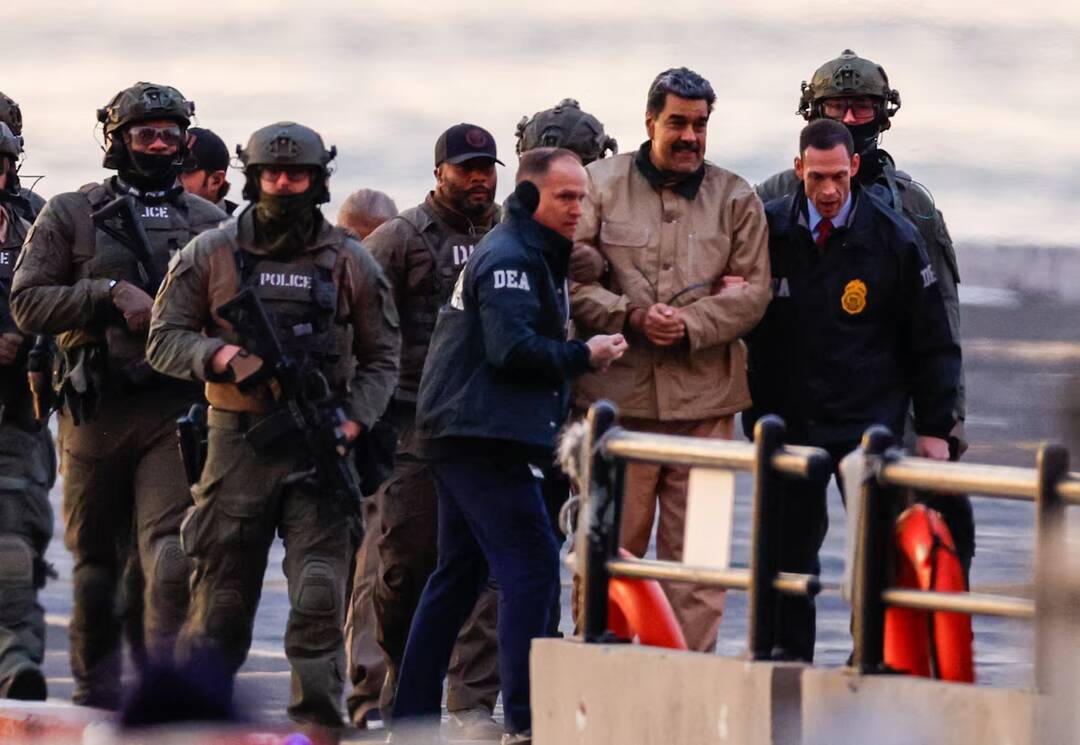
In a dramatic turn of events, Venezuelan President Nicolas Maduro appeared before a court in New York, where he was asked to identify himself. In a bold statement, Maduro replied in Spanish, “I am the President of Venezuela and was captured at my home.” He further asserted his innocence, stating, “I am innocent, I am a decent man, I am still the President.” These words marked the beginning of a high-stakes trial, as Maduro pleaded not guilty to narco-terrorism charges.
The court appearance of the Venezuelan President has sent shockwaves around the globe, sparking intense debate and speculation about the implications of this development. As the trial unfolds, it is essential to examine the context and circumstances surrounding Maduro’s court appearance, as well as the potential consequences of this unprecedented event.
Maduro’s statement, in which he reaffirmed his position as the President of Venezuela, is a clear indication of his defiance and determination to assert his authority. Despite facing intense pressure and criticism from the international community, Maduro remains resolute in his claim to the presidency. This stance is likely to exacerbate tensions between Venezuela and the United States, which have been strained for years.
The narco-terrorism charges against Maduro are a significant aspect of the case, with the US government alleging that he has been involved in a conspiracy to traffic cocaine and support terrorist organizations. The charges are based on evidence gathered by US authorities, which purportedly links Maduro to a network of drug traffickers and terrorists. However, Maduro’s lawyers have vehemently denied these allegations, arguing that they are baseless and politically motivated.
The court appearance of Maduro has also raised questions about the legitimacy of the US legal system and its ability to try a foreign head of state. The Venezuelan government has denounced the trial as a “kidnapping” and a violation of international law, arguing that Maduro enjoys immunity as a head of state. This argument is based on the principle of sovereign immunity, which holds that a head of state cannot be prosecuted in a foreign court.
As the trial progresses, it is likely that the issue of immunity will be a central point of contention. Maduro’s lawyers will argue that he is entitled to immunity, while the US government will contend that the charges against him are too serious to be dismissed on grounds of immunity. The outcome of this debate will have significant implications for international law and the relationships between nations.
The US-Venezuela tension has been escalating for years, with the two countries engaging in a war of words and diplomatic maneuvers. The US has imposed economic sanctions on Venezuela, which have had a devastating impact on the country’s economy. In response, Venezuela has accused the US of interfering in its internal affairs and attempting to overthrow the government.
The appearance of Maduro in a US court has added a new dimension to this conflict, with the Venezuelan government accusing the US of “aggression” and “provocation.” The situation is further complicated by the fact that the US has recognized Juan Guaido, the opposition leader, as the legitimate President of Venezuela. This move has been seen as an attempt to undermine Maduro’s authority and pave the way for a regime change.
As the world watches the unfolding drama, it is clear that the stakes are high, and the consequences of this trial will be far-reaching. The US-Venezuela tension is likely to escalate, with both sides engaging in a war of words and diplomatic maneuvers. The international community will be watching closely, as the trial raises fundamental questions about sovereignty, immunity, and the rule of law.
In conclusion, the court appearance of Nicolas Maduro is a significant development in the ongoing saga of US-Venezuela relations. As the trial progresses, it is essential to examine the context and implications of this event, including the potential consequences for international law and the relationships between nations. The world will be watching closely, as the drama unfolds and the fate of the Venezuelan President is decided.
About the Author