I’m still the President of Venezuela: Maduro as he pleads not guilty in US court
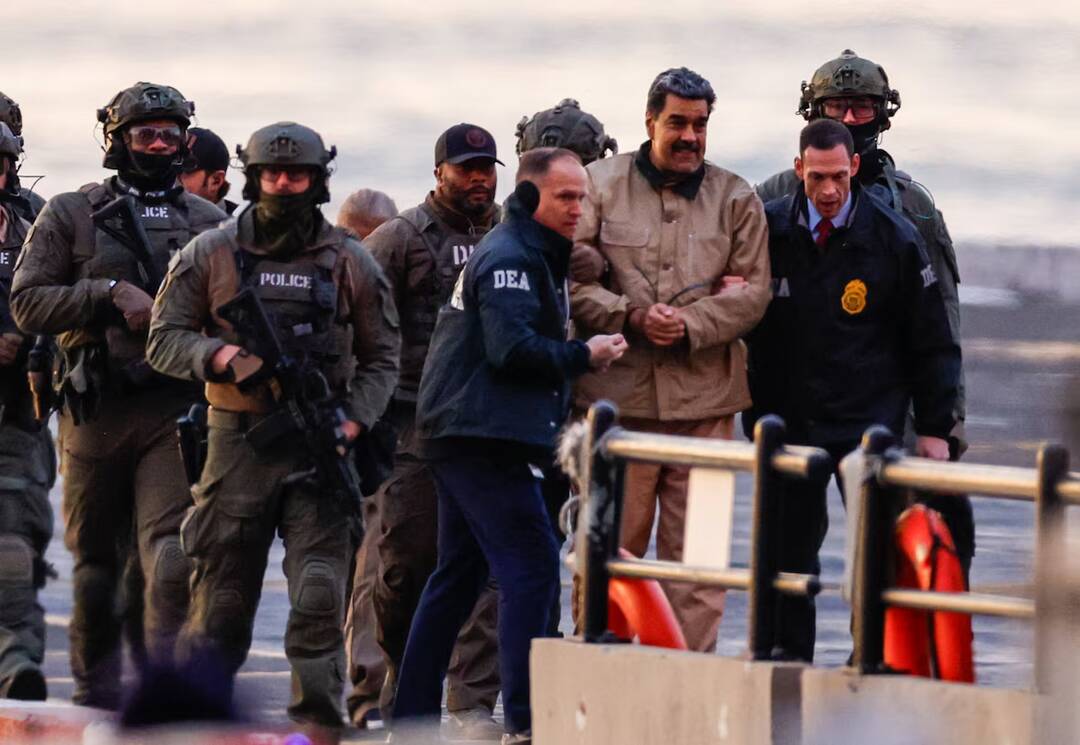
In a dramatic turn of events, Venezuelan President Nicolas Maduro appeared before a court in New York, where he was asked to identify himself. In a bold statement, Maduro replied in Spanish, “I am the President of Venezuela,” emphasizing his position despite the ongoing tensions between the United States and Venezuela. The Venezuelan leader was captured at his home and subsequently brought to the United States to face charges of narco-terrorism.
As Maduro stood before the court, he was resolute in his assertion of innocence. “I am innocent, I am a decent man, I am still the President,” he declared, as he pleaded not guilty to the charges brought against him. This statement not only reflects Maduro’s unwavering commitment to his position but also highlights the complexities of the situation. The fact that Maduro continues to claim the presidency of Venezuela, despite the United States’ recognition of Juan Guaidó as the interim president, underscores the deep-seated divisions within the country.
The charges against Maduro are severe, with the US Department of Justice accusing him of participating in a narco-terrorism conspiracy. The indictment alleges that Maduro and other high-ranking Venezuelan officials conspired to flood the United States with cocaine, using the proceeds to enrich themselves and maintain their grip on power. The US government has also imposed sanctions on Venezuela, citing human rights abuses and corruption.
Maduro’s appearance in court marks a significant escalation in the tensions between the United States and Venezuela. The relationship between the two countries has been strained for years, with the US imposing economic sanctions and supporting opposition leader Juan Guaidó as the legitimate president of Venezuela. The Venezuelan government, on the other hand, has accused the US of interfering in its internal affairs and attempting to overthrow Maduro.
The US-Venezuela tensions have been further complicated by the involvement of other countries, including Russia and China. Both nations have provided significant economic and military support to Maduro’s government, which has helped to prop up his regime despite the country’s deepening economic crisis. The US, on the other hand, has sought to isolate Venezuela diplomatically and economically, in an effort to pressure Maduro to step down.
As the situation continues to unfold, it remains to be seen how the US court will proceed with the case against Maduro. The Venezuelan leader’s assertion of innocence and his continued claim to the presidency will likely be major points of contention in the trial. The US government will need to provide convincing evidence to support the charges against Maduro, while the Venezuelan leader will need to demonstrate that he is innocent of the allegations.
The implications of this case extend far beyond the courtroom, with significant consequences for the people of Venezuela and the wider region. The country is already facing a severe economic crisis, with widespread poverty, hunger, and shortages of basic goods. The ongoing political instability has only exacerbated these problems, leaving many Venezuelans without access to basic necessities like food, water, and healthcare.
In conclusion, the appearance of Nicolas Maduro in a US court marks a significant development in the ongoing tensions between the United States and Venezuela. Maduro’s assertion of innocence and his continued claim to the presidency reflect the complexities of the situation and the deep-seated divisions within the country. As the trial proceeds, it will be essential to monitor the developments closely, given the significant implications for the people of Venezuela and the wider region.
For the latest updates on this story, please visit the Hindustan Times website.
About the Author