I’m still the President of Venezuela: Maduro as he pleads not guilty in US court
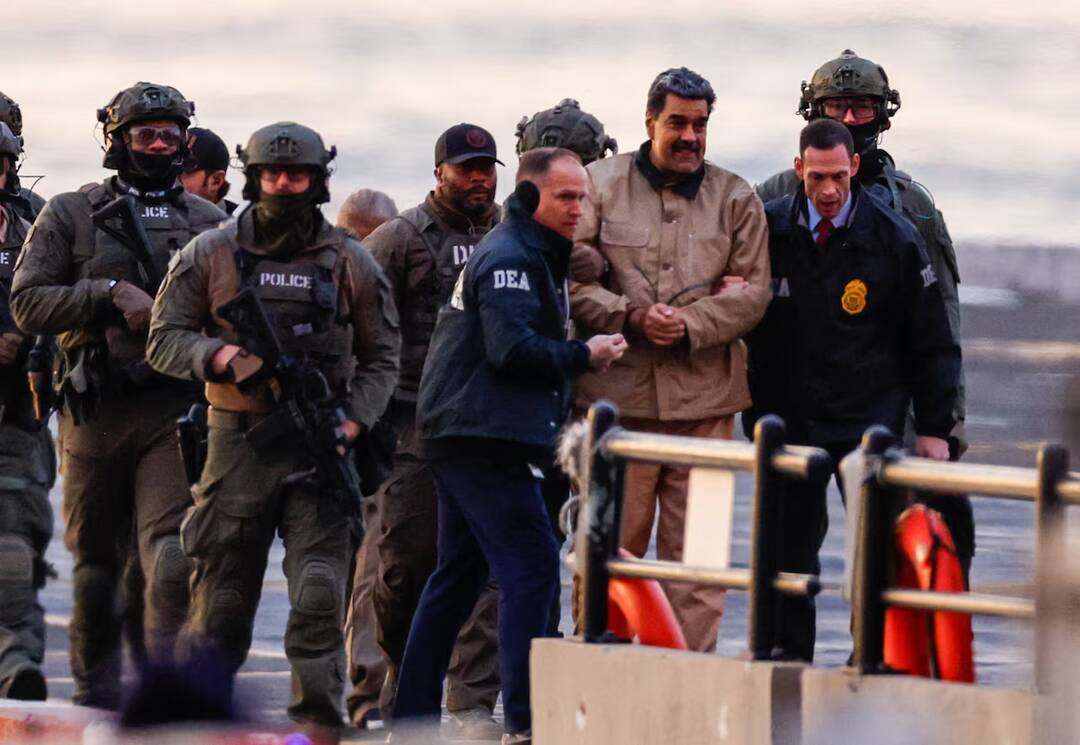
In a dramatic turn of events, Venezuelan President Nicolas Maduro appeared before a court in New York, where he was asked to identify himself. Responding in Spanish, Maduro proudly declared, “I am the President of Venezuela,” and added that he was captured at his home. Maintaining his innocence, Maduro pleaded not guilty to the narco-terrorism charges brought against him. “I am innocent, I am a decent man, I am still the President,” he stated, emphasizing his unwavering claim to the presidency.
The court appearance marked a significant moment in the ongoing saga between the United States and Venezuela, with tensions escalating in recent years. Maduro’s appearance in a US court is a rare occurrence, and his defiant stance has sparked widespread interest and debate. As the Venezuelan leader stood before the judge, he remained resolute in his assertion of innocence and his claim to the presidency.
The charges against Maduro are related to alleged involvement in narco-terrorism, with the US accusing him of collaborating with Colombian guerrilla groups to traffic cocaine. The Venezuelan government has consistently denied these allegations, characterizing them as a politically motivated attempt to destabilize the country.
Maduro’s plea of not guilty is a clear indication that he intends to contest the charges, and his statement in court reflects his determination to defend himself and his country. The Venezuelan President’s words, “I am innocent, I am a decent man, I am still the President,” convey a sense of conviction and resolve, as he prepares to face the legal proceedings ahead.
The US-Venezuela relationship has been strained for several years, with the two countries engaging in a war of words and diplomatic maneuvers. The US has imposed economic sanctions on Venezuela, citing concerns over human rights and democratic governance. In response, Venezuela has accused the US of interference and aggression, with Maduro frequently denouncing the US as a “empire” seeking to undermine his government.
The court appearance of Maduro has significant implications for the region, as it may exacerbate tensions between the US and Venezuela. The Venezuelan government has long accused the US of seeking to overthrow Maduro, and this latest development may reinforce those perceptions. Meanwhile, the US has maintained that its actions are aimed at promoting democracy and human rights in Venezuela.
As the legal proceedings against Maduro unfold, the international community will be watching closely. The outcome of the case may have far-reaching consequences for Venezuela, the region, and the global community. The US-Venezuela relationship is likely to remain a contentious issue, with both sides digging in their heels.
In the midst of this complex and sensitive situation, it is essential to consider the broader context. Venezuela has faced significant economic and humanitarian challenges in recent years, with widespread poverty, inflation, and shortages of basic goods. The country’s political landscape is deeply polarized, with Maduro’s government facing opposition from various groups and individuals.
The US has been a vocal critic of Maduro’s government, with President Donald Trump imposing sanctions and calling for regime change. However, the US approach has been met with skepticism by some, who argue that it may exacerbate the humanitarian crisis and undermine efforts to find a peaceful solution.
As the world watches the developments in the Maduro case, it is crucial to prioritize a nuanced understanding of the complex issues at play. The situation in Venezuela is multifaceted, with deep-seated economic, social, and political challenges that require a comprehensive and sustainable approach.
In conclusion, the court appearance of Nicolas Maduro marks a significant moment in the US-Venezuela saga. As the Venezuelan President pleads not guilty to narco-terrorism charges, he remains defiant in his claim to the presidency. The outcome of the case will have far-reaching implications for Venezuela, the region, and the global community. As the international community navigates this complex and sensitive situation, it is essential to prioritize a nuanced understanding of the issues at play and to seek a peaceful and sustainable resolution.
About the Author