I’m still the President of Venezuela: Maduro as he pleads not guilty in US court
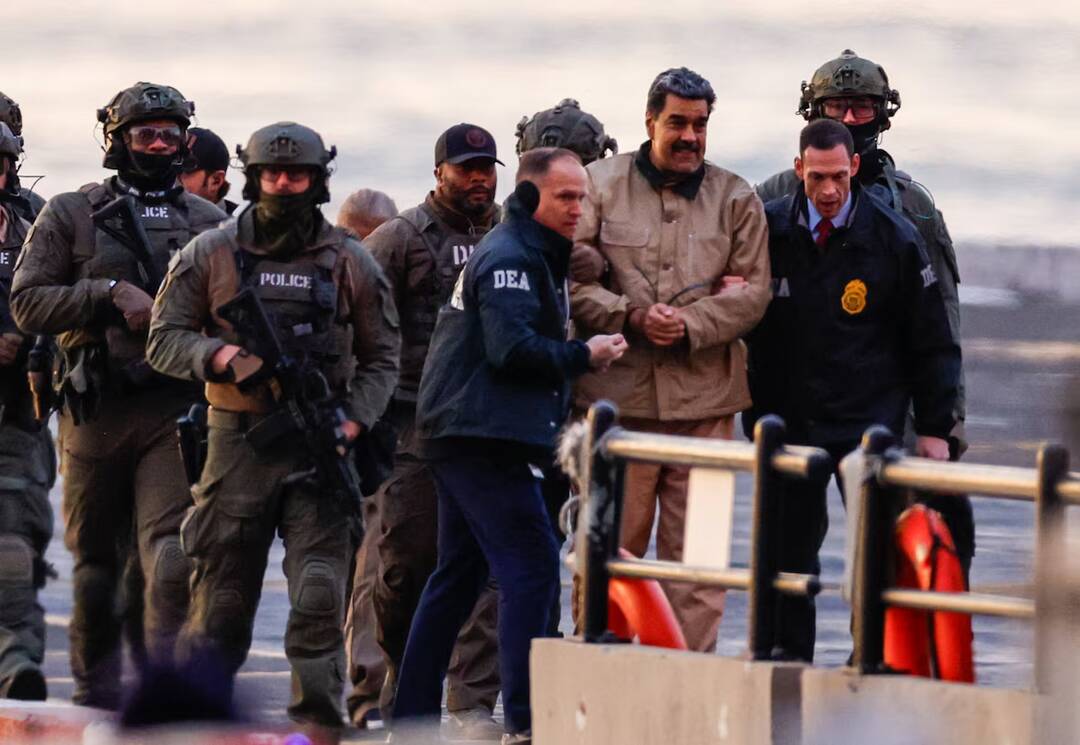
In a dramatic turn of events, Venezuelan President Nicolas Maduro appeared before a court in New York, where he was asked to identify himself. In a bold statement, Maduro replied in Spanish, “I am the President of Venezuela, and I was captured at my home.” He further asserted his innocence, stating, “I am innocent, I am a decent man, I am still the President.” These words were spoken as he pleaded not guilty to the narco-terrorism charges brought against him.
The court appearance of Maduro marks a significant escalation in the tensions between the United States and Venezuela. The US government has been a vocal critic of Maduro’s regime, accusing him of human rights abuses, corruption, and narco-terrorism. The charges against Maduro are related to his alleged involvement in a conspiracy to traffic cocaine and support terrorist groups.
As Maduro stood before the court, he was resolute in his assertion of innocence and his claim to the presidency of Venezuela. His statement, “I am still the President,” is a clear indication that he does not recognize the legitimacy of the charges against him or the authority of the US court to try him. This stance is consistent with the position of the Venezuelan government, which has dismissed the charges as a “fabrication” and a “coup attempt” by the US.
The US government, on the other hand, has been clear in its intentions to hold Maduro accountable for his alleged crimes. The Department of Justice has stated that Maduro’s actions have “devastated” the people of Venezuela and “threatened” the security of the region. The US has also imposed severe economic sanctions on Venezuela, which have further exacerbated the country’s economic crisis.
The court appearance of Maduro has also sparked a reaction from other countries in the region. The Venezuelan opposition, led by Juan Guaido, has welcomed the charges against Maduro, seeing them as a significant step towards bringing an end to his regime. However, other countries, such as Cuba and Nicaragua, have expressed their support for Maduro, condemning the US for its “interference” in Venezuelan affairs.
The case against Maduro is complex and multifaceted, involving allegations of corruption, narco-terrorism, and human rights abuses. The prosecution will likely rely on evidence gathered from various sources, including former Venezuelan officials and intelligence agencies. Maduro’s defense team, on the other hand, will likely argue that the charges are politically motivated and that their client is innocent of all allegations.
As the trial of Maduro proceeds, it is likely to have significant implications for the future of Venezuela and the region. The outcome of the case will depend on the evidence presented and the arguments made by both the prosecution and the defense. However, one thing is certain: the case against Maduro has marked a new chapter in the tense relations between the US and Venezuela.
The US-Venezuela tensions have been escalating for years, with the US imposing sanctions and supporting the opposition, while Venezuela has accused the US of attempting to overthrow its government. The appearance of Maduro in a US court is a significant development in this saga, and it remains to be seen how the case will unfold.
In conclusion, the court appearance of Nicolas Maduro is a significant event that has marked a new chapter in the tensions between the US and Venezuela. As Maduro pleaded not guilty to the charges against him, he was resolute in his assertion of innocence and his claim to the presidency of Venezuela. The case against him is complex and multifaceted, and its outcome will have significant implications for the future of Venezuela and the region.
About the Author