I’ll Fire All H-1B Workers at State Agency: Florida Guv Candidate
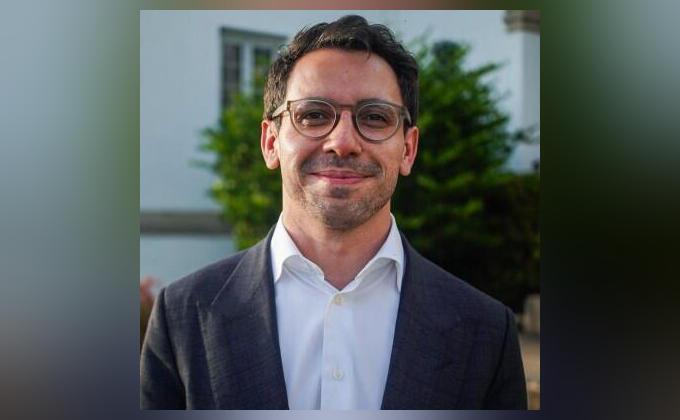
The debate over H-1B visas has been a contentious issue in the United States for years, with proponents arguing that they are essential for filling skilled labor gaps and opponents claiming that they displace American workers. Recently, James Fishback, a Republican candidate running for Governor of Florida, has sparked controversy by vowing to fire all H-1B workers employed at state agencies if he is elected.
In a statement, Fishback declared, “If I am elected, I will fire every H-1B [visa holder] working at a state agency.” He further emphasized his commitment to prioritizing the employment of American citizens, stating, “I will cancel state contracts with companies that employ H-1Bs instead of qualified Floridians… will incentivize companies to hire Americans again.” Fishback’s stance on H-1B visas is clear: he believes that they are being used to supplant American workers and that it is time to take action to protect domestic jobs.
Fishback’s comments have ignited a firestorm of debate, with some hailing his pledge as a bold move to protect American workers and others condemning it as a misguided and xenophobic policy. Proponents of H-1B visas argue that they are essential for filling critical skills gaps in the US labor market, particularly in fields such as technology and engineering. They claim that H-1B visa holders are highly skilled workers who contribute significantly to the US economy and that their presence helps to drive innovation and growth.
On the other hand, opponents of H-1B visas argue that they are being used to displace American workers and drive down wages. They claim that companies are using H-1B visas to hire cheaper foreign labor, rather than investing in training and hiring American workers. Fishback’s pledge to fire all H-1B workers at state agencies and cancel contracts with companies that employ them is seen as a drastic measure to address these concerns.
However, critics argue that Fishback’s policy is not only unrealistic but also potentially damaging to the Florida economy. They point out that H-1B visa holders are already subject to rigorous screening and background checks, and that they are required to have specialized skills and qualifications that are in short supply in the US labor market. Moreover, many H-1B visa holders are already integrated into their communities and are making significant contributions to the US economy.
Fishback’s comments have also sparked concerns about the potential impact on the tech industry, which is a significant contributor to Florida’s economy. The tech industry relies heavily on H-1B visas to fill critical skills gaps, and a blanket ban on H-1B workers could have devastating consequences for the sector. Moreover, Fishback’s pledge to deport “illegals” and H-1B visa holders has raised concerns about the potential for xenophobic and discriminatory policies.
In addition to his pledge to fire H-1B workers, Fishback has also vowed to incentivize companies to hire American workers. He believes that by canceling contracts with companies that employ H-1B visa holders, he can create jobs for American citizens. However, critics argue that this approach is overly simplistic and fails to take into account the complexities of the US labor market. They point out that many American workers lack the specialized skills and qualifications required for high-tech jobs, and that H-1B visa holders are often filling critical gaps in the labor market.
In conclusion, James Fishback’s pledge to fire all H-1B workers at state agencies and cancel contracts with companies that employ them has sparked a heated debate about the role of H-1B visas in the US labor market. While some see his policy as a bold move to protect American workers, others condemn it as a misguided and xenophobic approach. As the debate over H-1B visas continues to rage, it is essential to consider the complexities of the issue and the potential consequences of drastic measures like Fishback’s pledge.
About the Author