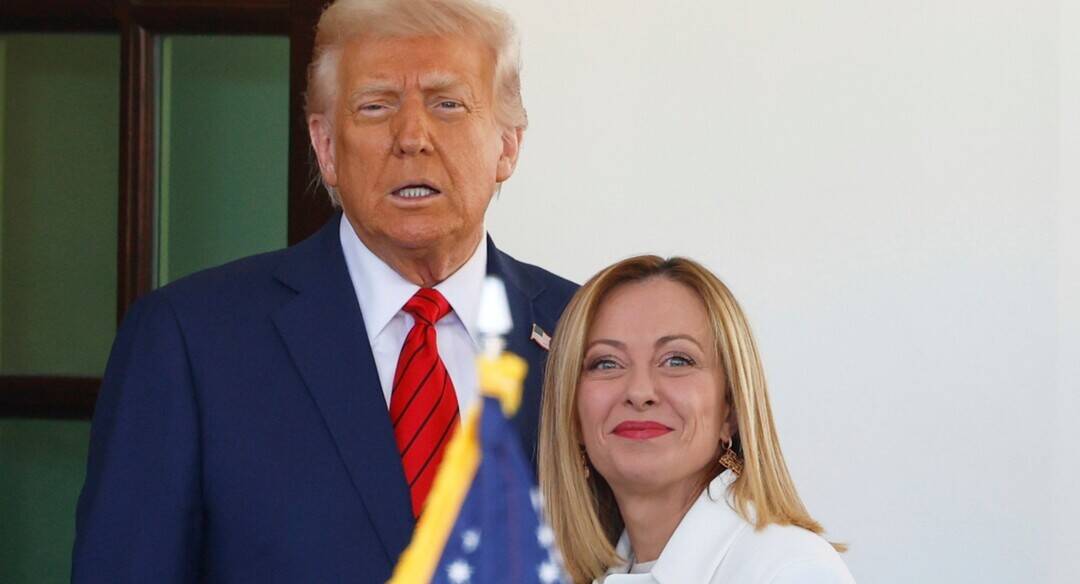
I Believe Trump Won’t Use Force to Seize Greenland: Meloni
The world of international politics is never short of surprises, and the recent statements made by Italian Prime Minister Giorgia Meloni have once again brought the spotlight on the sensitive topic of territorial sovereignty. In a recent interview, Meloni expressed her skepticism regarding the possibility of the United States using military force to seize Greenland, a self-governing territory within the Kingdom of Denmark. This statement comes in the wake of previous comments made by former US President Donald Trump, who had suggested that the United States should consider purchasing Greenland from Denmark.
Meloni’s remarks are significant, not just because they reflect her personal opinion on the matter, but also because they underscore the potential consequences of such an action for the North Atlantic Treaty Organization (NATO). As a key member of NATO, Italy’s stance on international issues, particularly those involving the security and territorial integrity of other nations, carries considerable weight. By stating that she does not believe Trump would use force to seize Greenland and emphasizing that she would not support any such move, Meloni is essentially reaffirming the principles of sovereignty and non-interference that are fundamental to international law and the NATO alliance.
The idea of the United States purchasing or annexing Greenland is not new and has been a topic of discussion for several decades. However, the issue gained renewed attention in 2019 when President Trump expressed interest in buying the island, citing its strategic location and potential resources. The suggestion was met with widespread criticism and ridicule, with many pointing out the absurdity of the proposal, given Greenland’s status as an autonomous territory with its own government and the strong historical and cultural ties it shares with Denmark.
Meloni’s agreement with Trump on certain international issues, such as the situation in Venezuela, highlights the complexity of international diplomacy, where nations may find common ground on some matters while disagreeing on others. Her statement, “I agreed with Trump on Venezuela. I do not agree with him on Greenland,” illustrates this point clearly, demonstrating that even among allies, there can be significant divergences in opinion and policy.
The potential consequences of the United States attempting to seize Greenland by force would indeed be grave, not just for NATO but for global stability and the principles of international law. Such an action would undermine the trust and cooperation that are essential for the functioning of alliances and the peaceful resolution of disputes. It would also set a dangerous precedent, suggesting that powerful nations can unilaterally decide the fate of smaller territories without regard for their sovereignty or the will of their people.
Moreover, the geopolitical implications of such a move would be far-reaching. It could lead to a significant escalation of tensions between the United States and other NATO member states, particularly Denmark, which has sovereignty over Greenland. It could also strain relationships with other countries, potentially leading to a realignment of alliances and a shift in the global balance of power.
In conclusion, Italian Prime Minister Giorgia Meloni’s comments on the possibility of the United States using force to seize Greenland reflect a nuanced understanding of international relations and the importance of respecting sovereignty. Her stance against supporting any such move underscores the commitment of Italy and, by extension, the broader NATO alliance to the principles of international law and the peaceful resolution of disputes. As the world navigates an increasingly complex and challenging geopolitical landscape, statements like Meloni’s serve as important reminders of the need for diplomacy, cooperation, and a commitment to the principles that underpin global stability.
About the Author