I Believe Trump Won’t Use Force to Seize Greenland: Meloni
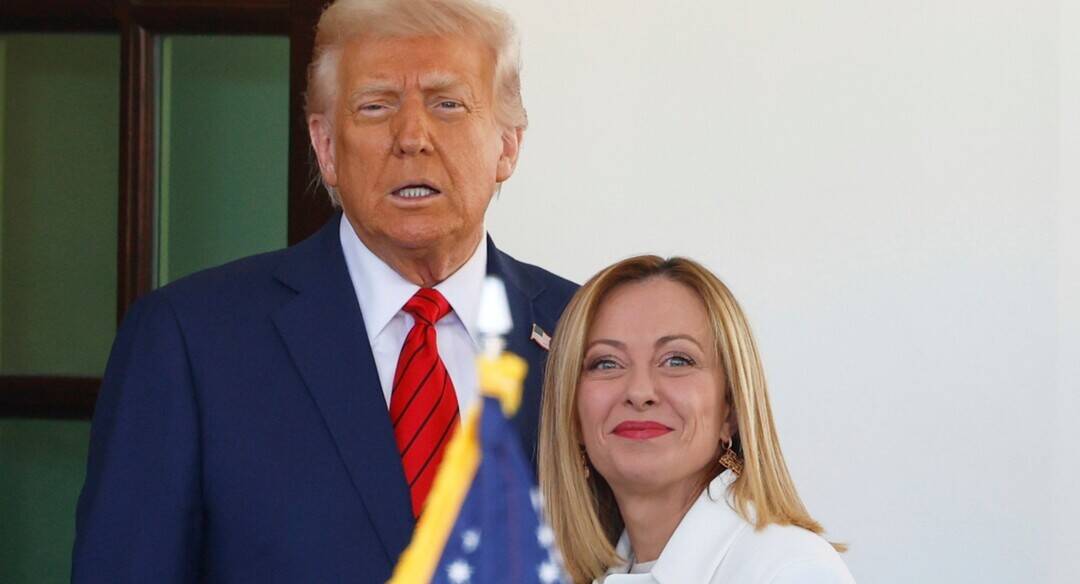
In a recent statement, Italian Prime Minister Giorgia Meloni expressed her skepticism regarding the possibility of the United States using military force to seize Greenland. This comment comes amidst ongoing speculation about the intentions of former US President Donald Trump, who had previously expressed interest in purchasing the autonomous Danish territory. Meloni’s remarks not only reflect her own stance on the matter but also underscore the potential consequences of such an action for the North Atlantic Treaty Organization (NATO).
The notion of the United States attempting to acquire Greenland, either through purchase or force, has been a topic of discussion since 2019, when Trump first floated the idea. The proposal was met with widespread criticism and ridicule, with many viewing it as an unrealistic and potentially destabilizing move. Despite the initial backlash, the idea has continued to simmer in the background, with some speculating that Trump might still pursue the acquisition of Greenland if given the opportunity.
However, according to Meloni, the use of military force to seize Greenland is not a viable or likely scenario. In a statement, she emphasized that she does not believe the United States would resort to such drastic measures, citing the potential consequences for NATO and the international community at large. Meloni’s comments suggest that she is confident in the ability of the US and its allies to navigate complex geopolitical situations without resorting to force, and that the acquisition of Greenland is not a priority for the current administration.
It is worth noting that Meloni’s stance on Greenland is not entirely consistent with her views on other international issues. For example, she has expressed support for Trump’s policies on Venezuela, suggesting that she is not entirely opposed to US interventionism in certain contexts. However, when it comes to Greenland, Meloni appears to be drawing a clear line, emphasizing that she would not support any move to use force to acquire the territory.
The potential consequences of a US attempt to seize Greenland through military force would indeed be severe. Such an action would likely be viewed as a blatant violation of international law and the sovereignty of Denmark, which has administrative control over Greenland. The move would also have significant implications for NATO, potentially straining relationships between the US and its European allies. In the worst-case scenario, it could even lead to a broader crisis of confidence in the alliance, undermining its ability to respond to emerging security challenges.
Meloni’s warning about the potential consequences of a US move on Greenland is not simply a matter of speculation. The Italian Prime Minister is well aware of the complex web of alliances and relationships that underpin European security, and she recognizes the importance of maintaining stability and cooperation within the region. By speaking out against the use of force to acquire Greenland, Meloni is sending a clear signal that she values the integrity of NATO and the principles of international law, and that she will not support any action that could potentially destabilize the region.
In conclusion, Meloni’s comments on Greenland reflect a nuanced understanding of the complex geopolitical dynamics at play. While she may have areas of agreement with Trump on certain issues, she is clearly drawing a line when it comes to the use of military force to acquire territory. By emphasizing the potential consequences of such an action for NATO and the international community, Meloni is underscoring the importance of cooperation, diplomacy, and respect for sovereignty in international relations.
As the debate over Greenland continues to unfold, it is essential to consider the perspectives of European leaders like Meloni, who are well-positioned to understand the potential implications of US actions on the region. By prioritizing stability, cooperation, and respect for international law, we can work towards a more peaceful and secure world, where the use of force is not seen as a viable solution to complex geopolitical challenges.
About the Author