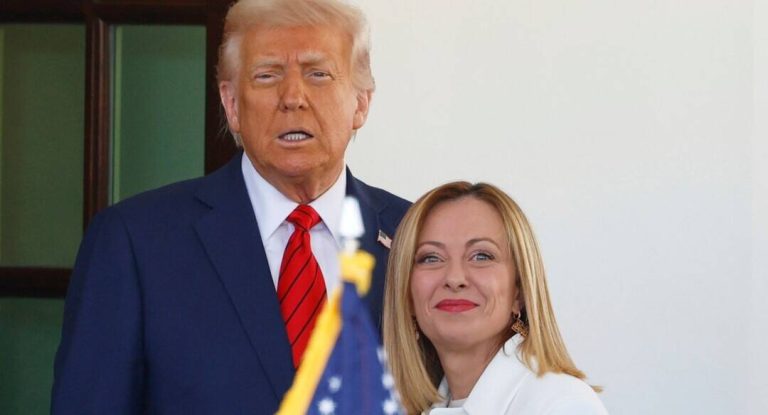
I Believe Trump Won’t Use Force to Seize Greenland: Meloni
The world of international politics has been abuzz with the recent statements made by Italian Prime Minister Giorgia Meloni regarding the potential seizure of Greenland by the United States. In a bold declaration, Meloni expressed her skepticism about the possibility of the United States using military force to annex the autonomous territory within the Kingdom of Denmark. This stance is particularly noteworthy, given the complex web of alliances and diplomatic relationships that exist between nations.
At the heart of this matter lies the assertion made by Meloni that she does not believe the United States, under the leadership of former President Donald Trump, would resort to using military force to seize control of Greenland. This statement is significant, as it reflects a deep understanding of the geopolitical landscape and the potential consequences of such an action. Meloni’s conviction is rooted in her assessment of the situation, where she believes that the use of force would not be a viable or desirable option for the United States.
Furthermore, Meloni has categorically stated that she would not support any move by the United States to seize Greenland by force. This declaration underscores her commitment to upholding the principles of international law and respecting the sovereignty of nations. By taking a firm stance against the use of military force, Meloni is sending a clear message that such actions would be unacceptable and would have far-reaching consequences for the global community.
One of the most critical aspects of Meloni’s statement is her warning about the potential impact on NATO. The North Atlantic Treaty Organization (NATO) is a military alliance that has played a pivotal role in maintaining stability and security in the North Atlantic region. Any action that undermines the sovereignty of a nation within the alliance could have grave consequences for NATO’s cohesion and effectiveness. Meloni’s concern about the potential repercussions for NATO highlights her nuanced understanding of the complex relationships between nations and the importance of maintaining a delicate balance of power.
It is also interesting to note that Meloni has been vocal about her agreement with Trump on certain issues, such as Venezuela. However, she has made it clear that she does not agree with him on the issue of Greenland. This distinction underscores the complexity of international politics, where leaders may find common ground on certain issues while disagreeing on others. Meloni’s willingness to engage in diplomatic dialogue while maintaining her principles is a testament to her leadership style and her commitment to upholding the interests of her nation.
The context of Meloni’s statement is also worthy of examination. The idea of the United States seizing Greenland is not a new concept, but it has gained significant attention in recent years. The strategic importance of Greenland, with its rich natural resources and geographic location, makes it an attractive proposition for nations seeking to expand their influence. However, any attempt to seize control of the territory by force would be a blatant violation of international law and would likely be met with widespread condemnation from the global community.
In conclusion, Meloni’s statement reflects a deep understanding of the complexities of international politics and the potential consequences of using military force to seize control of a sovereign territory. Her commitment to upholding the principles of international law and respecting the sovereignty of nations is a testament to her leadership style and her dedication to maintaining a stable and secure global environment. As the world navigates the intricacies of international relationships, it is essential to prioritize diplomacy, cooperation, and mutual respect. By doing so, nations can work together to address common challenges and promote a more peaceful and prosperous world.
About the Author