Hyundai Stock Falls 4% After Trump Imposes 25% Tariff on S-Korea
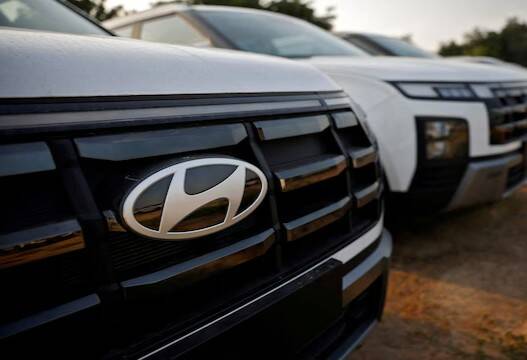
The global economy has been witnessing a series of trade tensions and tariffs imposed by various countries, and the latest to feel the heat is South Korea, particularly its automobile industry. The shares of Hyundai, one of the biggest automobile companies in South Korea, saw a sharp decline on Tuesday, as it fell as much as 4.77% on Tuesday, according to CNBC TV18. This came after Donald Trump imposed a 25% tariff on the Southeast Asian country. The move is expected to have far-reaching implications for the South Korean economy, and the automobile industry, in particular, is likely to bear the brunt.
The tariffs imposed by Trump are part of his administration’s efforts to renegotiate trade agreements with various countries, including South Korea. The US has been seeking to reduce its trade deficit with South Korea, and the tariffs are seen as a measure to achieve this goal. However, the move has been met with criticism from various quarters, with many arguing that it will harm the US economy as well.
Hyundai’s subsidiary Kia dropped nearly 3.5%, and the affiliated Hyundai Mobis was down 5%. The decline in the shares of these companies reflects the uncertainty and concern among investors about the impact of the tariffs on the South Korean automobile industry. The industry is a significant contributor to the country’s economy, and any adverse impact on it is likely to have far-reaching consequences.
The tariffs imposed by Trump are not limited to the automobile industry. The US has also imposed tariffs on various other products, including pharmaceuticals, which are a significant export item for South Korea. The move is expected to affect the pharmaceutical industry in South Korea, which has been growing rapidly in recent years.
The decline in the shares of Hyundai and other affiliated companies is a reflection of the uncertainty and concern among investors about the impact of the tariffs on the South Korean economy. The tariffs are likely to increase the cost of production for Hyundai and other automobile companies, which could lead to a decline in their competitiveness in the global market. This, in turn, could affect the sales and revenue of these companies, leading to a decline in their stock prices.
The South Korean government has been trying to negotiate with the US to exempt its automobile industry from the tariffs. However, the negotiations have not been successful so far, and the tariffs remain in place. The government has also been trying to diversify its trade relationships with other countries to reduce its dependence on the US market.
The impact of the tariffs on the South Korean economy is not limited to the automobile industry. The tariffs are likely to affect various other sectors, including the pharmaceutical industry, which is a significant export item for South Korea. The move is expected to increase the cost of production for pharmaceutical companies, which could lead to a decline in their competitiveness in the global market.
The tariffs imposed by Trump are part of a broader trade war between the US and various other countries, including China, Canada, and Mexico. The trade war has been ongoing for several years, and it has had a significant impact on the global economy. The tariffs have led to a decline in trade between the US and other countries, which has affected various industries, including the automobile and pharmaceutical industries.
The decline in the shares of Hyundai and other affiliated companies is a reflection of the uncertainty and concern among investors about the impact of the tariffs on the South Korean economy. The tariffs are likely to increase the cost of production for Hyundai and other automobile companies, which could lead to a decline in their competitiveness in the global market. This, in turn, could affect the sales and revenue of these companies, leading to a decline in their stock prices.
In conclusion, the imposition of a 25% tariff on South Korea by Trump has had a significant impact on the country’s automobile industry, particularly Hyundai. The decline in the shares of Hyundai and other affiliated companies reflects the uncertainty and concern among investors about the impact of the tariffs on the South Korean economy. The tariffs are likely to increase the cost of production for Hyundai and other automobile companies, which could lead to a decline in their competitiveness in the global market. The South Korean government needs to negotiate with the US to exempt its automobile industry from the tariffs to mitigate the impact of the tariffs on the economy.
About the Author