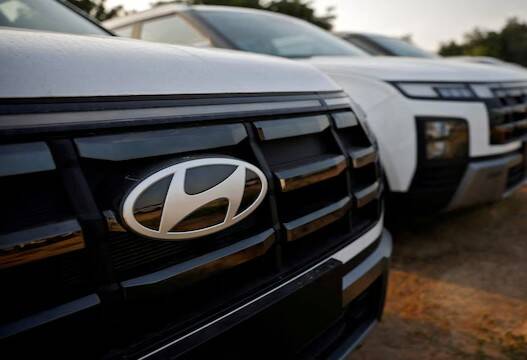
Hyundai stock falls 4% after Trump imposes 25% tariff on S-Korea
The global trade landscape has been witnessing significant turmoil in recent times, with the ongoing tensions between the United States and several countries, including South Korea. In a move that sent shockwaves across the automotive industry, US President Donald Trump imposed a 25% tariff on South Korea, citing concerns over the country’s growing trade surplus with the US. This decision has had a profound impact on the stock market, particularly on the shares of Hyundai, one of the biggest automobile companies in South Korea.
According to reports from CNBC TV18, the shares of Hyundai saw a sharp decline on Tuesday, falling as much as 4.77%. This significant drop in stock value is a direct result of the imposed tariff, which is expected to increase the costs of Hyundai’s exports to the US. The company’s subsidiary, Kia, also witnessed a decline in its stock value, dropping nearly 3.5%. Furthermore, the affiliated Hyundai Mobis was down 5%, indicating the widespread impact of the tariff on the automotive industry.
The imposition of a 25% tariff on South Korean goods is a significant blow to the country’s economy, which is heavily reliant on exports. The automotive industry, in particular, is a major contributor to South Korea’s GDP, with Hyundai and Kia being two of the largest players in the sector. The increased tariff will make it more expensive for these companies to export their vehicles to the US, which is one of their largest markets.
The move by Trump is seen as a negotiating tactic to persuade South Korea to revise its trade agreements with the US. The US President has been vocal about his concerns over the trade deficit with South Korea, which he believes is unfair to American businesses. However, the imposition of tariffs is likely to have far-reaching consequences, not only for the automotive industry but also for the broader economy.
The impact of the tariff on Hyundai’s stock value is a clear indication of the uncertainty and volatility that surrounds the global trade landscape. The company’s exports to the US are likely to be severely affected, which could lead to a decline in sales and revenue. This, in turn, could have a ripple effect on the entire automotive industry, with other manufacturers also feeling the pinch.
In addition to the automotive industry, the pharmaceutical sector in South Korea is also likely to be impacted by the tariff. The US is a significant market for South Korean pharmaceutical companies, and the increased tariff could make their products more expensive and less competitive. This could lead to a decline in sales and revenue for these companies, which could have a negative impact on the overall economy.
The reaction of the stock market to the imposition of the tariff is a clear indication of the concerns that investors have about the impact of trade tensions on the global economy. The decline in Hyundai’s stock value is a warning sign that the ongoing trade wars could have far-reaching consequences, not only for the automotive industry but also for the broader economy.
As the trade tensions between the US and South Korea continue to escalate, it remains to be seen how the situation will unfold. The imposition of a 25% tariff on South Korean goods is a significant development, and its impact will be closely watched by investors and economists around the world. One thing is certain, however – the ongoing trade wars will have a profound impact on the global economy, and companies like Hyundai will be at the forefront of this battle.
In conclusion, the imposition of a 25% tariff on South Korean goods has had a significant impact on the stock market, particularly on the shares of Hyundai. The decline in stock value is a clear indication of the uncertainty and volatility that surrounds the global trade landscape. As the trade tensions between the US and South Korea continue to escalate, it remains to be seen how the situation will unfold. One thing is certain, however – the ongoing trade wars will have a profound impact on the global economy, and companies like Hyundai will be at the forefront of this battle.
About the Author