Hyundai Stock Falls 4% After Trump Imposes 25% Tariff on S-Korea
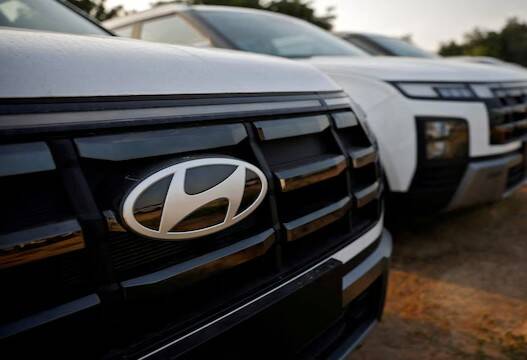
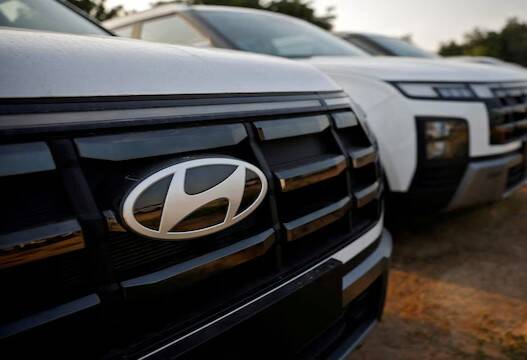
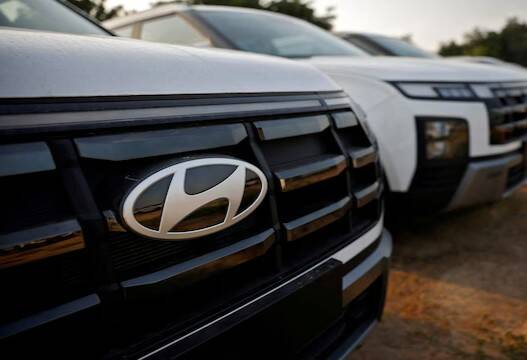
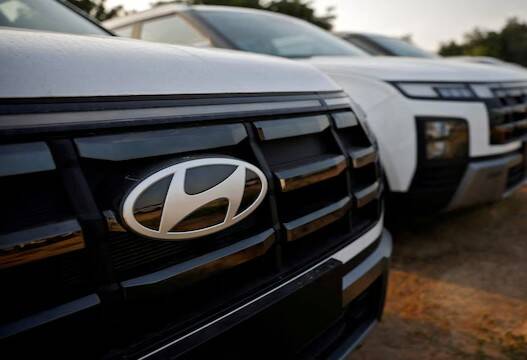
The shares of Hyundai, one of the biggest automobile companies in South Korea, saw a sharp decline on Tuesday, as it fell as much as 4.77% on Tuesday, according to CNBC TV18. This came after Donald Trump imposed a 25% tariff on the Southeast Asian country. Hyundai’s subsidiary Kia dropped nearly 3.5%, and the affiliated Hyundai Mobis was down 5%. The sudden decline in the stock prices of these major automobile companies has sent shockwaves throughout the industry, leaving investors and analysts wondering about the potential long-term implications of this move.
The imposition of a 25% tariff on South Korean goods is a significant development, and it is likely to have far-reaching consequences for the country’s economy. The tariff is expected to affect a wide range of industries, including automobiles, pharmaceuticals, and electronics. The move is seen as a part of Trump’s broader strategy to reduce the trade deficit between the United States and its trading partners. However, the decision has been met with resistance from South Korea, which has argued that the tariff is unfair and will harm the country’s economy.
The impact of the tariff on Hyundai and other South Korean automobile companies is likely to be significant. The company exports a significant portion of its vehicles to the United States, and the imposition of a 25% tariff will make its products more expensive for American consumers. This could lead to a decline in sales and revenue for the company, which could have a negative impact on its stock price. Additionally, the tariff could also lead to a decline in the competitiveness of South Korean automobile companies in the global market, as they will be at a disadvantage compared to their American and European counterparts.
The decline in the stock prices of Hyundai and other South Korean automobile companies is not just limited to the imposition of the tariff. The move is also seen as a sign of the increasingly protectionist trade policies of the Trump administration. The administration has been critical of South Korea’s trade practices, and the imposition of the tariff is seen as a way to pressure the country into renegotiating its trade agreements with the United States. This has created uncertainty and volatility in the markets, as investors are unsure about the future of trade relations between the two countries.
The impact of the tariff on the broader economy is also a concern. The imposition of a 25% tariff on South Korean goods could lead to a decline in trade between the two countries, which could have a negative impact on economic growth. The tariff could also lead to a decline in investment, as companies may be hesitant to invest in a country with uncertain trade policies. Additionally, the move could also lead to a decline in consumer spending, as the higher prices of imported goods could reduce the purchasing power of American consumers.
In the short term, the imposition of the tariff is likely to have a negative impact on the stock prices of Hyundai and other South Korean automobile companies. The move is seen as a significant escalation of the trade tensions between the United States and South Korea, and it is likely to create uncertainty and volatility in the markets. However, in the long term, the impact of the tariff will depend on a variety of factors, including the response of the South Korean government and the ability of the company to adapt to the new trade environment.
Hyundai and other South Korean automobile companies have been working to diversify their exports and reduce their dependence on the United States. The company has been investing in new technologies, such as electric vehicles and autonomous driving, and it has been expanding its presence in new markets, such as China and India. These efforts are likely to help the company mitigate the impact of the tariff and position itself for long-term success.
In conclusion, the imposition of a 25% tariff on South Korean goods is a significant development that is likely to have far-reaching consequences for the country’s economy. The decline in the stock prices of Hyundai and other South Korean automobile companies is a reflection of the uncertainty and volatility created by the move. However, the long-term impact of the tariff will depend on a variety of factors, including the response of the South Korean government and the ability of the company to adapt to the new trade environment. As the situation continues to evolve, investors and analysts will be watching closely to see how the company responds to the challenges posed by the tariff.
About the Author