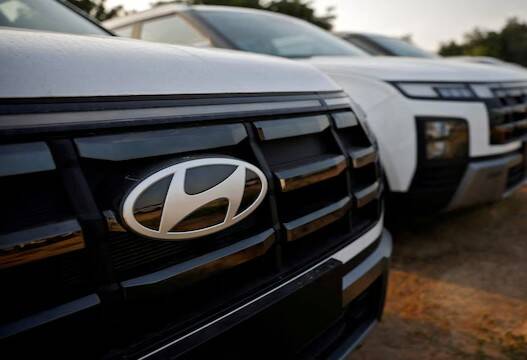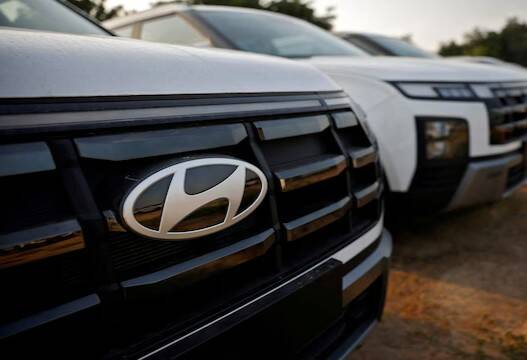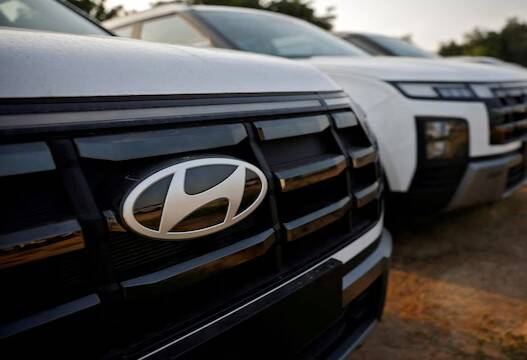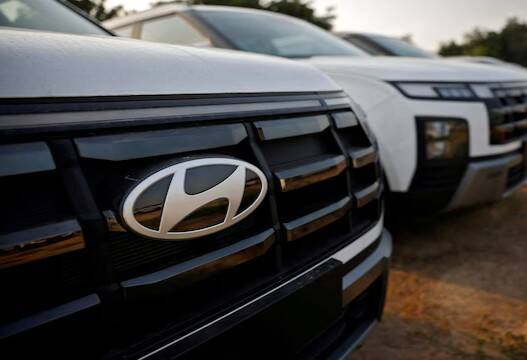
Hyundai Stock Falls 4% After Trump Imposes 25% Tariff on S-Korea
The global automotive industry has been facing numerous challenges in recent years, from shifting consumer preferences to rising trade tensions. The latest development in this regard is the imposition of a 25% tariff on South Korea by the United States, which has sent shockwaves through the stock market. The shares of Hyundai, one of the biggest automobile companies in South Korea, saw a sharp decline on Tuesday, as it fell as much as 4.77% on Tuesday, according to CNBC TV18. This came after Donald Trump imposed a 25% tariff on the Southeast Asian country. Hyundai’s subsidiary Kia dropped nearly 3.5%, and the affiliated Hyundai Mobis was down 5%.
The tariffs imposed by the Trump administration are part of a broader effort to renegotiate trade agreements with various countries, including South Korea. The move is aimed at reducing the trade deficit between the two countries and protecting American industries. However, the decision has been met with criticism from various quarters, with many arguing that it will harm the global economy and lead to higher prices for consumers.
Hyundai is one of the largest automobile manufacturers in South Korea, and the company has a significant presence in the global market. The company’s stock price has been affected by the tariffs, as investors worry about the potential impact on the company’s sales and profits. The decline in Hyundai’s stock price is a reflection of the uncertainty and volatility that has gripped the global markets in recent times.
The imposition of tariffs on South Korea is not an isolated incident. The Trump administration has been engaged in a trade war with various countries, including China, Canada, and Mexico. The move has led to a significant increase in trade tensions, with many countries retaliating against the US with their own tariffs. The global economy has been affected by the trade war, with many companies facing higher costs and reduced demand.
The automotive industry is one of the most affected sectors by the trade war. The industry is highly globalized, with companies relying on complex supply chains that span across multiple countries. The imposition of tariffs has disrupted these supply chains, leading to higher costs and reduced efficiency. Many companies, including Hyundai, have been forced to reassess their business strategies and adapt to the new trade environment.
The decline in Hyundai’s stock price is not just a reflection of the company’s own performance but also a reflection of the broader market trends. The global stock market has been volatile in recent times, with many investors worried about the potential impact of the trade war on the global economy. The imposition of tariffs on South Korea has added to these concerns, with many investors selling their shares and reducing their exposure to the market.
The impact of the tariffs on Hyundai’s business is likely to be significant. The company relies heavily on exports to the US market, and the imposition of tariffs will make its products more expensive for American consumers. This could lead to a decline in sales and revenue, which could have a negative impact on the company’s profitability. Additionally, the tariffs could also lead to higher costs for Hyundai, as the company may be forced to pay more for raw materials and components.
The situation is not just limited to Hyundai. The imposition of tariffs on South Korea will have a broader impact on the country’s economy. South Korea is a significant player in the global automotive industry, and the tariffs could lead to a decline in exports and economic growth. The country’s government has been engaged in negotiations with the US to try and reduce the tariffs, but so far, no agreement has been reached.
In conclusion, the imposition of a 25% tariff on South Korea by the Trump administration has had a significant impact on the stock price of Hyundai, one of the largest automobile manufacturers in the country. The decline in the company’s stock price is a reflection of the uncertainty and volatility that has gripped the global markets in recent times. The tariffs imposed by the US will have a broader impact on the global economy, with many companies facing higher costs and reduced demand. As the trade war continues to escalate, it remains to be seen how companies like Hyundai will adapt to the new trade environment.
The situation is being closely watched by investors and analysts, who are trying to gauge the potential impact of the tariffs on the global economy. The imposition of tariffs on South Korea is just one part of a broader trade strategy by the Trump administration, which has been aimed at reducing the trade deficit and protecting American industries. However, the move has been met with criticism from many quarters, with many arguing that it will harm the global economy and lead to higher prices for consumers.
As the global economy continues to evolve, it remains to be seen how companies like Hyundai will navigate the new trade environment. The imposition of tariffs on South Korea is just one of the many challenges that the company will face in the coming months and years. With the global automotive industry facing significant disruption, companies will need to be agile and adaptable to survive and thrive.
About the Author