‘Humbled’ by Yunus, B’desh Prez wants to step down before completing term
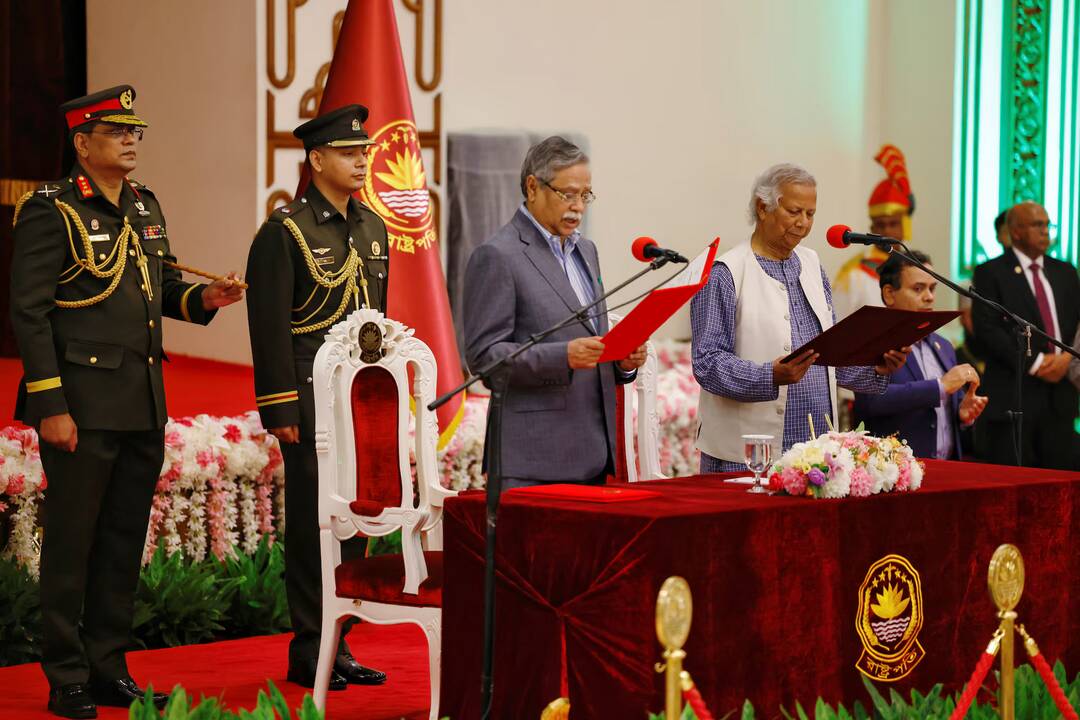
The political landscape of Bangladesh is about to witness a significant shift, as the country’s President, Mohammed Shahabuddin, has expressed his intention to step down from his post before completing his term. In a recent interview with Reuters, Shahabuddin revealed that he plans to quit after the parliamentary election scheduled for February 12. This unexpected move has sent shockwaves throughout the nation, leaving many to wonder about the reasons behind the President’s decision.
According to Shahabuddin, his decision to resign is largely driven by the humiliation he has faced at the hands of the interim government, particularly the interim chief, Mohammed Yunus. The President stated that he felt deeply humiliated when his portraits were taken down from Bangladeshi embassies, a move that he perceives as a direct attack on his authority and dignity. This incident, coupled with the fact that Yunus hasn’t met him in seven months, has led Shahabuddin to conclude that his position has become untenable.
The relationship between Shahabuddin and Yunus has been strained for quite some time, with the President feeling increasingly marginalized and isolated. The fact that Yunus has not met with Shahabuddin in over seven months is a clear indication of the rift between the two leaders. This lack of communication and cooperation has created an environment of distrust and hostility, making it difficult for Shahabuddin to effectively discharge his duties as President.
Shahabuddin’s decision to step down is not only a personal response to the humiliation he has faced but also a reflection of the deeper political tensions that exist within Bangladesh. The country has been experiencing a period of significant turmoil, with the interim government struggling to establish its authority and legitimacy. The upcoming parliamentary election, scheduled for February 12, is seen as a critical moment in the country’s political calendar, with many hoping that it will bring about a sense of stability and normalcy.
However, Shahabuddin’s resignation is likely to add to the uncertainty and chaos that already pervades the political landscape. The President’s decision to quit before completing his term will create a power vacuum, which could be exploited by various factions and interest groups. This, in turn, could lead to further instability and conflict, undermining the prospects for a peaceful and democratic transition of power.
The international community will be watching the developments in Bangladesh with great interest, as the country navigates this critical phase in its political history. The role of the interim government, particularly Mohammed Yunus, will be under scrutiny, as many will be looking to see how they respond to Shahabuddin’s resignation and the challenges that lie ahead.
In conclusion, the decision of Bangladesh President Mohammed Shahabuddin to step down before completing his term is a significant development that has the potential to reshape the country’s political landscape. The reasons behind his decision, including the humiliation he has faced at the hands of the interim government and the lack of communication with Mohammed Yunus, are a reflection of the deeper tensions and conflicts that exist within Bangladesh. As the country prepares for the parliamentary election on February 12, it remains to be seen how the resignation of the President will impact the outcome and the future trajectory of the nation.
About the Author