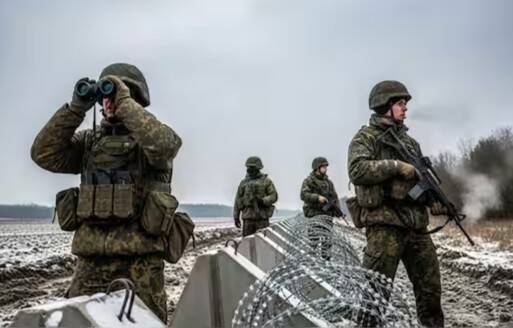
Germany to send troops to Poland border amid threats from Russia
In a move to bolster the defense of its eastern European ally, Germany has announced that it will be sending a contingent of troops to Poland to assist the country in fortifying its border. The decision comes amid rising concerns over potential threats from Russia, which has been engaging in aggressive military posturing in recent months. According to Berlin’s defense ministry, the deployed troops will be tasked with engineering work, aimed at strengthening Poland’s eastern frontier.
The duties of the German troops will involve a range of activities, including building defensive structures, excavating trenches, and installing barbed wire and anti-tank obstacles. This move is seen as a significant escalation of Germany’s involvement in regional defense efforts, and is likely to be viewed as a signal of solidarity with Poland and other eastern European nations that are wary of Russian aggression.
The decision to send troops to Poland is a response to the changing security landscape in Europe, which has been marked by increased tensions between Russia and the West. In recent years, Russia has been accused of engaging in a range of provocative activities, including the annexation of Crimea, the support of separatist rebels in eastern Ukraine, and the deployment of troops to the borders of NATO member states.
The German government has been keen to emphasize that the deployment of troops to Poland is a defensive measure, aimed at deterring potential aggression rather than provoking it. However, the move is likely to be viewed with skepticism by Russia, which has long been wary of NATO’s expansion into eastern Europe. Moscow has repeatedly accused the alliance of seeking to encircle and contain Russia, and has responded with a range of military measures, including the deployment of troops to the borders of NATO member states.
Despite the risks of escalation, Germany’s decision to send troops to Poland is seen as a necessary measure to ensure the security of its eastern European allies. Poland, in particular, has been vocal about its concerns over Russian aggression, and has been seeking greater support from its NATO allies in recent months. The deployment of German troops to the country’s eastern border is likely to be seen as a welcome move, and is expected to help bolster Poland’s defenses against potential threats.
The engineering work that the German troops will be undertaking is a critical component of Poland’s defense strategy. The construction of defensive structures, such as trenches and barbed wire, will help to slow down any potential Russian advance, giving Polish forces time to respond and mobilize. The installation of anti-tank obstacles will also help to neutralize the threat posed by Russian armor, which has been a key component of Moscow’s military strategy in recent years.
In addition to the engineering work, the German troops will also be providing training and support to their Polish counterparts. This will help to enhance the capabilities of Poland’s military, and will ensure that the country is better equipped to respond to potential threats. The training and support will also help to foster greater cooperation and interoperability between German and Polish forces, which will be critical in the event of a crisis.
The deployment of German troops to Poland is also significant because it marks a shift in Germany’s approach to regional defense. In the past, Germany has been reluctant to take a leading role in defense efforts, preferring instead to focus on diplomatic and economic initiatives. However, the changing security landscape in Europe has forced Berlin to re-evaluate its approach, and to take a more active role in defending its allies.
The move is also likely to have implications for Germany’s relations with Russia. Moscow has long been wary of Germany’s growing influence in eastern Europe, and has sought to undermine Berlin’s relationships with its allies in the region. The deployment of German troops to Poland is likely to be seen as a challenge to Russia’s interests, and may lead to a further deterioration in relations between the two countries.
In conclusion, Germany’s decision to send troops to Poland is a significant move that reflects the changing security landscape in Europe. The deployment of troops to the country’s eastern border is a defensive measure, aimed at deterring potential aggression and bolstering the defenses of a key ally. The engineering work that the German troops will be undertaking is a critical component of Poland’s defense strategy, and will help to enhance the capabilities of the country’s military. As tensions between Russia and the West continue to escalate, the move is likely to be seen as a welcome development by Poland and other eastern European nations, and is expected to help foster greater cooperation and interoperability between German and Polish forces.
About the Author