European Union systematically raping law: Hungarian PM
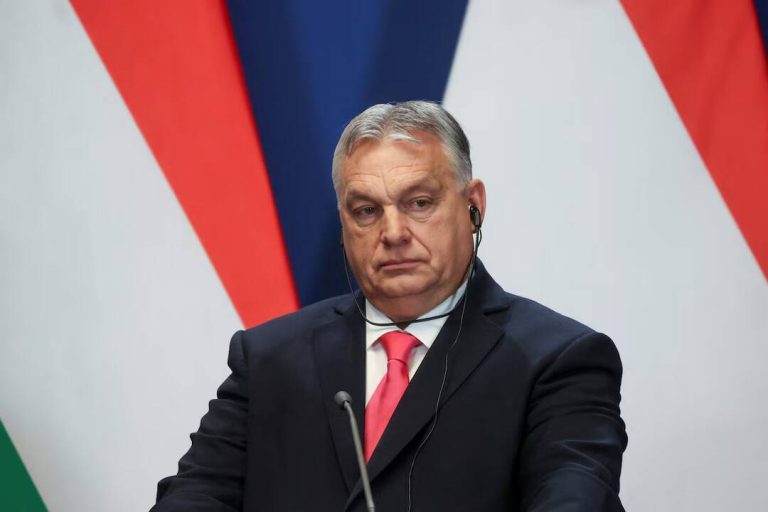
In a scathing attack on the European Union, Hungarian Prime Minister Viktor Orban has accused EU officials of “systematically raping European law” over a proposal to bypass member-state vetoes and indefinitely freeze Russian assets. The plan, which would allow decisions to be made by majority vote, has sparked outrage in Hungary, with Orban vowing to fight against what he calls a “Brusselian dictatorship”.
At the heart of the controversy is Article 122, a provision that allows the EU to take measures to protect the bloc’s financial stability. However, Orban argues that the proposed use of this article to freeze Russian assets and channel profits to Ukraine is a blatant abuse of power. By bypassing the traditional requirement for unanimity among member states, the EU would be able to make decisions without the consent of all its members, a move that Orban sees as a fundamental threat to the principles of democracy and the rule of law.
The Hungarian Prime Minister’s comments come at a time of heightened tensions between the EU and Russia, following the latter’s invasion of Ukraine. While the EU has imposed numerous sanctions on Russia in response to the conflict, Orban has been a vocal critic of these measures, arguing that they harm the interests of Hungarian businesses and citizens. The proposed use of Article 122 to freeze Russian assets and channel profits to Ukraine has only added fuel to the fire, with Orban accusing the EU of attempting to impose its will on member states without their consent.
Orban’s use of the phrase “systematically raping European law” is particularly striking, as it suggests a deliberate and sustained attempt by EU officials to undermine the principles of democracy and the rule of law. The Hungarian Prime Minister has long been a critic of the EU’s approach to governance, arguing that the bloc’s institutions are overly bureaucratic and remote from the concerns of ordinary citizens. However, his latest comments take this criticism to a new level, implying that the EU is engaged in a systematic effort to subvert the law and impose its will on member states.
The proposal to use Article 122 to freeze Russian assets and channel profits to Ukraine is part of a broader package of measures aimed at supporting Ukraine in its conflict with Russia. While the EU has pledged to provide significant financial and military aid to Ukraine, Orban has been skeptical of these efforts, arguing that they are unlikely to achieve their intended goals and may even exacerbate the conflict. The Hungarian Prime Minister has instead called for a more nuanced approach to the crisis, one that takes into account the complex geopolitical realities of the region and seeks to find a peaceful resolution to the conflict.
The implications of the EU’s proposal are far-reaching, and could have significant consequences for the future of the bloc. If the EU is able to bypass member-state vetoes and make decisions by majority vote, it could mark a fundamental shift in the balance of power within the bloc. While some member states may welcome this development, seeing it as a way to streamline decision-making and enhance the EU’s effectiveness, others may view it as a threat to their sovereignty and democracy.
Orban’s warning that the EU’s proposal marks the end of unanimity and the beginning of a “Brusselian dictatorship” is particularly ominous. The Hungarian Prime Minister has long been a champion of national sovereignty and democracy, and his comments suggest that he sees the EU’s proposal as a fundamental threat to these values. By vowing to fight against the proposal and restore lawful order, Orban is taking a strong stance against what he sees as an attempt by the EU to impose its will on member states without their consent.
In conclusion, the European Union’s proposal to use Article 122 to freeze Russian assets and channel profits to Ukraine has sparked a major controversy, with Hungarian Prime Minister Viktor Orban accusing EU officials of “systematically raping European law”. The implications of this proposal are far-reaching, and could have significant consequences for the future of the EU. As the debate over this issue continues to unfold, it remains to be seen whether the EU will be able to find a way to balance its desire to support Ukraine with the need to respect the sovereignty and democracy of its member states.
Source: https://www.rt.com/news/629357-orban-eu-raping-law/amp/
About the Author