EU banks now allowed to open 15 branches in India under FTA
In a significant development, India has agreed to allow European Union (EU) banks to open up to 15 branches in the country over a period of four years, under the newly signed Free Trade Agreement (FTA). This move is expected to strengthen economic ties between India and the EU, and provide a boost to the Indian banking sector. In return, India will not be subject to any numerical limits on opening branches in the EU, giving Indian banks a level playing field to expand their operations in the union.
The FTA, which has been in the works for several years, aims to reduce trade barriers and increase economic cooperation between India and the EU. The agreement on banking services is a key component of the FTA, and is expected to lead to increased investment and trade between the two regions. Currently, there are five EU banks with 33 branches in India, while three Indian banks maintain branches in the EU. With the new agreement, EU banks will be able to expand their presence in India, and provide a range of banking services to Indian customers.
The decision to allow EU banks to open up to 15 branches in India is a significant liberalization of the country’s banking sector. Previously, foreign banks were subject to strict regulations and limits on their expansion in India. However, with the new FTA, the Indian government has signaled its commitment to opening up the banking sector to foreign investment and competition. This move is expected to lead to increased innovation and efficiency in the Indian banking sector, as well as improved services for Indian customers.
The FTA also provides for the free movement of financial services between India and the EU. This means that Indian banks will be able to provide a range of financial services, including banking, insurance, and asset management, to customers in the EU. Similarly, EU banks will be able to provide financial services to customers in India. The agreement also includes provisions for the regulation and supervision of banks, to ensure that they operate in a safe and sound manner.
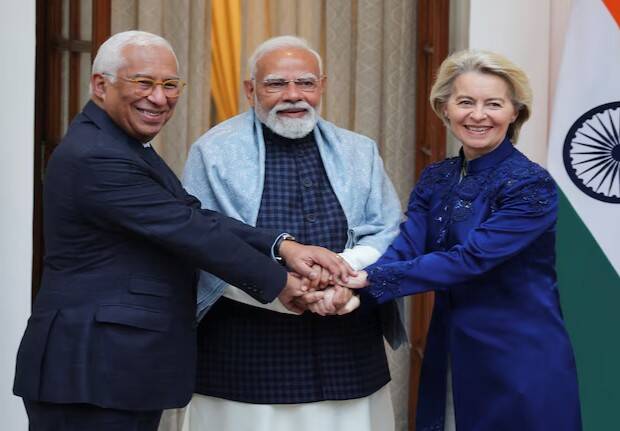
The signing of the FTA is a significant milestone in the development of economic ties between India and the EU. The two regions have a long history of trade and investment, and the FTA is expected to take this relationship to a new level. The agreement is also expected to provide a boost to the Indian economy, which has been growing rapidly in recent years. With the FTA, India will be able to attract more foreign investment, and increase its exports to the EU.
The FTA is also expected to lead to increased cooperation between Indian and EU regulators. The agreement includes provisions for the exchange of information and cooperation on regulatory matters, to ensure that banks and financial institutions operate in a safe and sound manner. This cooperation will help to prevent money laundering and terrorist financing, and ensure that the financial system is stable and secure.
In conclusion, the decision to allow EU banks to open up to 15 branches in India under the FTA is a significant development in the Indian banking sector. The move is expected to lead to increased competition and innovation in the sector, as well as improved services for Indian customers. The FTA is also expected to provide a boost to the Indian economy, and lead to increased cooperation between Indian and EU regulators. With the FTA, India and the EU are taking a significant step towards strengthening their economic ties, and creating a more integrated and interconnected financial system.
The new FTA is a win-win for both India and the EU. India will benefit from increased foreign investment and access to new markets, while the EU will gain greater access to the Indian market and a more stable and secure financial system. The agreement is also expected to lead to increased job creation and economic growth in both regions.
The Indian government has welcomed the FTA, and has stated that it will help to attract more foreign investment and increase economic growth. The government has also stated that the FTA will help to improve the competitiveness of Indian banks, and provide them with greater access to international markets.
The EU has also welcomed the FTA, and has stated that it will help to strengthen economic ties between the EU and India. The EU has also stated that the FTA will help to increase trade and investment between the two regions, and provide a boost to economic growth.
Overall, the FTA is a significant development in the Indian banking sector, and is expected to have a major impact on the economy. With the FTA, India and the EU are taking a significant step towards creating a more integrated and interconnected financial system, and strengthening their economic ties.
For more information on this topic, please visit: https://www.moneycontrol.com/news/business/eu-banks-can-open-up-to-15-branches-in-india-over-4-years-under-fta-13795598.html/amp
About the Author