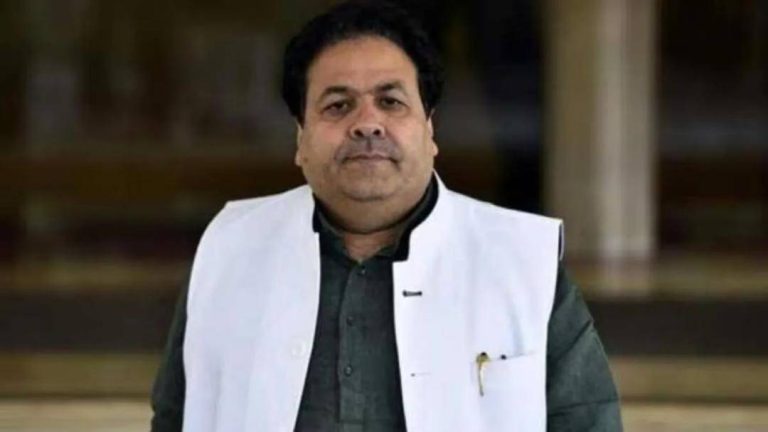
CMs meeting CMs in Switzerland to sign deals, criminal waste of money: Rajiv Shukla
The World Economic Forum (WEF) in Davos, Switzerland, has been a platform for global leaders to come together and discuss pressing issues affecting the world economy. However, this year’s event has sparked controversy, with Rajya Sabha MP Rajeev Shukla criticizing the participation of Indian Chief Ministers in the forum. According to Shukla, the presence of Indian CMs in Davos is a “criminal waste of money” as they are meeting with other Indian leaders and signing agreements with Indian companies, which could have been done in India.
Shukla’s statement has raised eyebrows, and many are questioning the necessity of Indian CMs attending the WEF in Davos. “It’s strange…Indians are going to Davos to meet Indians. State governments are signing agreements with Indian companies in Switzerland which they could’ve done in India,” he said. This criticism comes at a time when the Indian government is facing scrutiny over its expenditure on foreign trips and events.
The WEF in Davos is an annual event that brings together leaders from around the world to discuss global economic issues, including trade, investment, and sustainable development. While the event provides a platform for networking and collaboration, it is also known for its extravagant expenses, with attendees often staying in luxury hotels and enjoying high-end amenities. The cost of attending the WEF can be prohibitively expensive, with some estimates suggesting that the cost of attending the event can range from $50,000 to $100,000 per person.
In this context, Shukla’s criticism of Indian CMs attending the WEF in Davos is not unfounded. With the Indian economy facing numerous challenges, including a slowdown in growth and rising unemployment, it is reasonable to question the necessity of spending large amounts of money on foreign trips and events. Moreover, the fact that Indian CMs are meeting with other Indian leaders and signing agreements with Indian companies in Davos raises questions about the efficiency and effectiveness of such meetings.
Shukla’s statement also highlights the issue of duplication of efforts and waste of resources. If Indian CMs can meet with other Indian leaders and sign agreements with Indian companies in India, then what is the point of attending the WEF in Davos? The answer, according to Shukla, is that it is a “criminal waste of money” that could be better spent on addressing the pressing needs of the Indian economy and society.
Furthermore, the attendance of Indian CMs at the WEF in Davos also raises questions about the priorities of the Indian government. With the country facing numerous challenges, including poverty, inequality, and environmental degradation, it is reasonable to expect that the government’s priorities would be focused on addressing these issues rather than attending expensive foreign events.
In addition, the WEF in Davos has also been criticized for its lack of diversity and representation. The event is often dominated by wealthy and powerful individuals, with limited representation from marginalized communities and developing countries. This lack of diversity and representation raises questions about the legitimacy and effectiveness of the WEF in addressing global economic issues.
In conclusion, Rajeev Shukla’s criticism of Indian CMs attending the WEF in Davos is a timely reminder of the need for greater accountability and transparency in government expenditure. With the Indian economy facing numerous challenges, it is essential that the government prioritizes its spending and focuses on addressing the pressing needs of the country. The attendance of Indian CMs at the WEF in Davos is a luxury that the country can ill afford, and it is time for the government to reassess its priorities and focus on more pressing issues.
News Source: https://x.com/ShuklaRajiv/status/2013664724563726652
About the Author