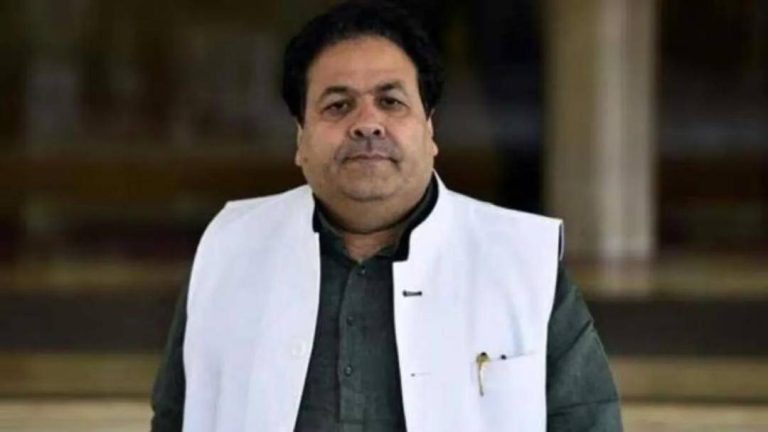
CMs meeting CMs in Switzerland to sign deals, criminal waste of money: Rajiv Shukla
The World Economic Forum (WEF) in Davos, Switzerland, is an annual gathering of global leaders, entrepreneurs, and thinkers to discuss and shape the future of the world. However, this year’s edition has sparked controversy, with Rajya Sabha MP Rajeev Shukla criticizing the participation of Indian Chief Ministers in the event. According to Shukla, the presence of Indian CMs in Davos is a “criminal waste of money” as they are meeting with other Indian leaders and signing agreements with Indian companies, which could have been done in India.
Shukla’s statement has raised eyebrows, and many are wondering if the criticism is justified. On one hand, the WEF provides a platform for global leaders to come together and discuss pressing issues, such as climate change, economic inequality, and technological advancements. It is an opportunity for Indian leaders to engage with their international counterparts, learn from their experiences, and showcase India’s growth story. On the other hand, Shukla’s argument that Indian CMs are meeting with other Indian leaders and signing agreements with Indian companies in Switzerland, rather than in India, does seem to be a valid point.
The question is, what is the purpose of Indian CMs traveling all the way to Davos to meet with other Indian leaders and sign agreements with Indian companies? Could this not have been done in India, saving the taxpayers’ money? Shukla’s criticism is not just about the financial aspect, but also about the lack of transparency and accountability. He is questioning the need for Indian CMs to travel to a foreign country to meet with other Indian leaders, when they could have done so in India.
Moreover, the WEF is an expensive affair, with the cost of attending the event running into thousands of dollars. The Indian government, which is already facing financial constraints, is spending a significant amount of money to send its leaders to Davos. This has raised questions about the priorities of the government and whether the money could have been better spent on more pressing issues, such as education, healthcare, and infrastructure development.
Shukla’s criticism has also sparked a debate about the role of Indian leaders in international events. While it is important for India to be represented on the global stage, it is equally important to ensure that the representation is meaningful and effective. Simply attending events and signing agreements is not enough; Indian leaders need to engage with their international counterparts, build relationships, and negotiate deals that benefit India.
In recent years, the WEF has become a platform for Indian leaders to showcase their states as investment destinations. Many Indian CMs have used the event to sign agreements with foreign companies, promising them incentives and subsidies to set up operations in their states. While this may seem like a good way to attract foreign investment, it has also raised concerns about the lack of transparency and accountability in these deals.
Furthermore, the WEF has also been criticized for being an elitist event, where the rich and powerful gather to discuss issues that affect the rest of the world. The event has been accused of being out of touch with the reality on the ground, and the discussions often seem to be more focused on the interests of the wealthy and powerful, rather than the needs of the common people.
In conclusion, Rajeev Shukla’s criticism of Indian CMs attending the WEF in Davos is not entirely unfounded. While it is important for India to be represented on the global stage, it is equally important to ensure that the representation is meaningful and effective. The government needs to be more transparent and accountable in its dealings, and the money spent on attending international events needs to be justified.
The Indian government needs to rethink its strategy for attending international events and ensure that the benefits of attending such events outweigh the costs. The government also needs to be more transparent about the agreements signed and the deals negotiated, and ensure that they are in the best interests of the country.
As Shukla said, “It’s strange…Indians are going to Davos to meet Indians. State governments are signing agreements with Indian companies in Switzerland which they could’ve done in India.” This statement highlights the need for the government to re-evaluate its priorities and ensure that the money spent on attending international events is used more effectively.
News Source: https://x.com/ShuklaRajiv/status/2013664724563726652
About the Author