China & US like square & circle, that’s why we turned to India but it’s hard nut to crack: US
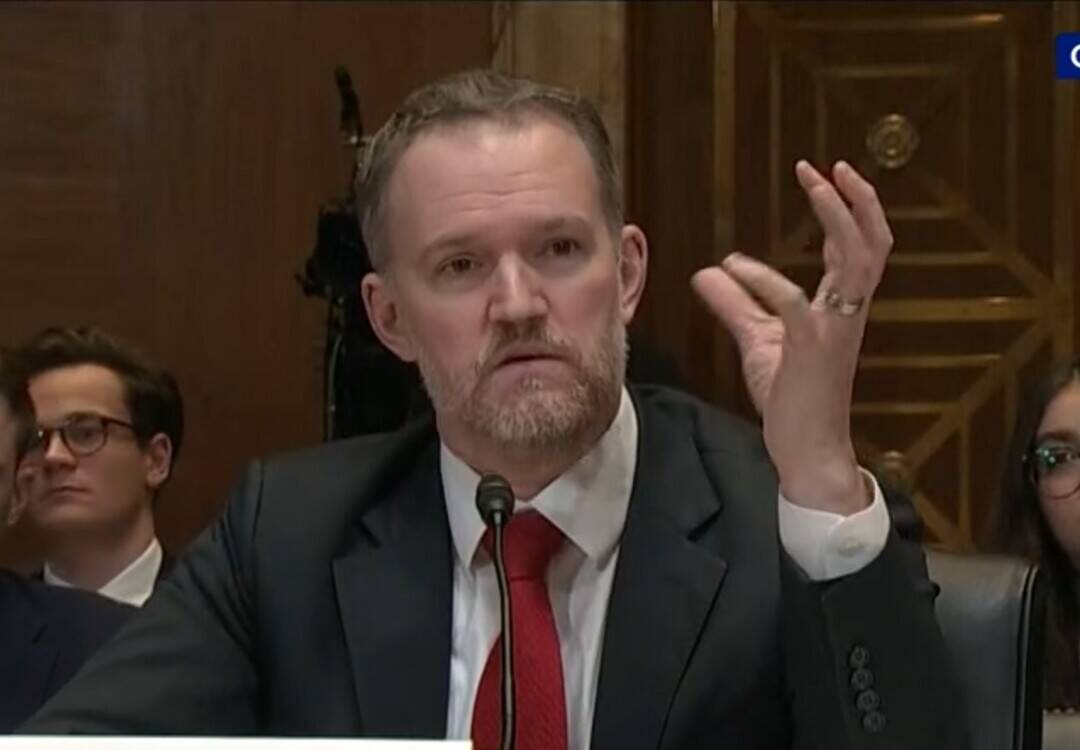
The United States and China have been embroiled in a trade war for several years, with tensions between the two nations showing no signs of easing. The US has been actively seeking to diversify its trade relationships and reduce its dependence on China, with India emerging as a key target for a bilateral trade agreement. However, according to US Trade Representative Jamieson Greer, the task of negotiating a trade deal with India is proving to be a challenging one.
Speaking about the difficulties of negotiating with China, Greer noted that the two economies are like “square and circle” that don’t sit together. This analogy highlights the fundamentally different approaches to trade and commerce that exist between the two nations. While the US has a more open and market-oriented economy, China’s economy is characterized by a high degree of state control and intervention.
The differences between the two economies have made it difficult for the US to negotiate a trade deal with China that addresses its concerns about issues such as intellectual property protection, market access, and trade imbalances. As a result, the US has been seeking to diversify its trade relationships and reduce its dependence on China.
One area where the US is seeking to diversify its trade relationships is in crop exports. The US is a major producer of crops such as soybeans, corn, and wheat, and is seeking to expand its exports to other countries. India, with its large and growing population, is an attractive market for US crop exporters.
However, Greer noted that there is resistance in India to US row crops, such as soybeans and corn. This resistance is driven in part by India’s desire to protect its own agricultural sector, as well as concerns about the impact of imported crops on the country’s food security.
Despite these challenges, the US is keen to pursue a bilateral trade agreement with India. Such an agreement would provide a framework for the two countries to negotiate trade liberalization and other economic cooperation measures. It would also help to reduce trade barriers and increase market access for US exporters.
Greer described India as a “very difficult nut to crack” in terms of negotiating a trade deal. This reflects the complexities and challenges of negotiating with India, which has a reputation for being a tough and demanding trade partner.
The US has been seeking to negotiate a trade deal with India for several years, but progress has been slow. One of the main sticking points has been India’s resistance to opening up its agricultural sector to US exports. India has also been seeking greater access to the US market for its own exports, particularly in areas such as textiles and pharmaceuticals.
Despite these challenges, the US remains committed to pursuing a trade deal with India. The two countries have been engaged in ongoing negotiations, and there are hopes that a deal could be reached in the near future.
The potential benefits of a US-India trade deal are significant. India is a large and growing market, with a population of over 1.3 billion people. The country is also a major producer of goods such as textiles, pharmaceuticals, and IT services, and has the potential to become an important trade partner for the US.
In addition to the economic benefits, a US-India trade deal could also have strategic implications. The US is seeking to strengthen its relationships with countries in the Indo-Pacific region, as part of its efforts to counterbalance China’s growing influence. A trade deal with India would be an important step in this direction, and would help to cement the two countries’ relationships in areas such as trade, investment, and security.
In conclusion, the US is facing significant challenges in its efforts to negotiate a trade deal with India. While the potential benefits of such a deal are substantial, the task of negotiating with India is proving to be a difficult one. As Greer noted, India is a “very difficult nut to crack” when it comes to trade negotiations. However, the US remains committed to pursuing a deal, and is hopeful that the two countries can reach an agreement in the near future.
News Source: https://x.com/Sputnik_India/status/1998714309367521298
About the Author