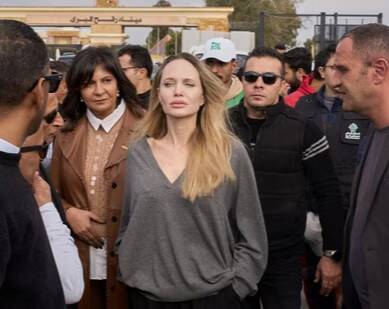
Angelina Jolie Visits Gaza’s Rafah Crossing Amid Israeli Suspension
The Gaza Strip has been a focal point of international attention in recent years, with the region facing numerous challenges, including poverty, violence, and limited access to basic necessities like food, water, and healthcare. The situation has been further complicated by the Israeli government’s recent announcement to suspend aid organizations operating in the Gaza Strip without renewed registrations. In the midst of this turmoil, Hollywood actress and former UN special envoy Angelina Jolie made a visit to the Rafah Crossing in Gaza, highlighting the dire conditions faced by the people living in the region.
On Friday, Jolie walked through the Rafah Crossing, a key entry point for goods and aid into the Gaza Strip. Her visit came at a time when Israel has tightened its grip on the region, imposing strict regulations on aid organizations and restricting the flow of essential items. As she made her way through the crossing, Jolie witnessed firsthand the impact of these restrictions, seeing a large warehouse filled with items that had been denied entry into the Gaza Strip. Most of these items, she noted, were medical supplies, which are desperately needed by the local population.
“I walked through a large warehouse that was full of items that were denied entry, most of them medical,” Jolie said, highlighting the severity of the situation. The denial of medical supplies is particularly concerning, given the already strained healthcare system in the Gaza Strip. The region has been plagued by poverty, malnutrition, and a lack of access to basic healthcare services, making the need for medical aid more pressing than ever.
Jolie’s visit to the Rafah Crossing is a significant gesture, as it draws attention to the plight of the people living in the Gaza Strip. As a former UN special envoy, Jolie has a deep understanding of the complexities of the region and the challenges faced by its inhabitants. Her presence in Gaza serves as a reminder of the importance of international support and solidarity with the people of the region.
The Israeli government’s decision to suspend aid organizations without renewed registrations has been widely criticized by human rights groups and international organizations. The move is seen as a further attempt to restrict the flow of aid into the Gaza Strip, exacerbating an already dire humanitarian crisis. The suspension of aid organizations will have far-reaching consequences, affecting not only the delivery of medical supplies but also food, shelter, and other essential services.
The Gaza Strip has been under an Israeli blockade since 2007, which has had a devastating impact on the local economy and living standards. The region’s infrastructure is in shambles, with limited access to electricity, water, and sanitation. The blockade has also restricted the movement of people, making it difficult for Palestinians to leave the Gaza Strip or for international aid workers to enter.
Jolie’s visit to the Rafah Crossing is a powerful statement of support for the people of Gaza. Her presence highlights the need for international action to address the humanitarian crisis in the region and to ensure that aid organizations can operate freely. The visit also serves as a reminder of the importance of protecting human rights and dignity, particularly in regions affected by conflict and occupation.
As the situation in the Gaza Strip continues to deteriorate, it is essential that the international community takes a firm stance in support of the Palestinian people. This includes advocating for an end to the Israeli blockade, ensuring the free flow of aid and essential supplies, and promoting a negotiated settlement to the conflict. Jolie’s visit to the Rafah Crossing is a significant step in this direction, as it brings attention to the plight of the people living in the Gaza Strip and underscores the need for urgent action to address their suffering.
In conclusion, Angelina Jolie’s visit to the Rafah Crossing in Gaza is a powerful gesture of solidarity with the people of the region. Her presence highlights the dire conditions faced by the local population and the need for international support to address the humanitarian crisis in the Gaza Strip. As the situation continues to unfold, it is essential that the international community takes a firm stance in support of the Palestinian people, advocating for an end to the Israeli blockade and promoting a negotiated settlement to the conflict.
About the Author