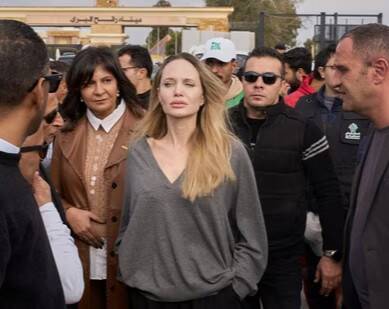
Angelina Jolie Visits Gaza’s Rafah Crossing Amid Israeli Suspension
The humanitarian crisis in the Gaza Strip has been a longstanding issue, with the region facing numerous challenges, including poverty, lack of access to basic necessities, and limited freedom of movement. The situation has been further exacerbated by the Israeli suspension of aid organizations working in the Gaza Strip, leaving many to wonder about the future of humanitarian efforts in the region. Amidst this uncertainty, Hollywood actress and former UN special envoy Angelina Jolie visited the Rafah Crossing in Gaza on Friday, shedding light on the plight of the people living in the region.
Jolie’s visit to the Rafah Crossing, a critical entry and exit point for the Gaza Strip, came at a time when Israel announced the suspension of aid organizations without renewed registrations, working in the Gaza Strip. This move has sparked widespread concern among humanitarian groups, who fear that the suspension will severely impact their ability to provide essential services to the people of Gaza. The Israeli government has stated that the suspension is intended to prevent the misuse of aid, but many argue that it will only serve to worsen the already dire humanitarian situation in the region.
During her visit, Jolie witnessed firsthand the impact of the Israeli suspension on the people of Gaza. She walked through a large warehouse that was full of items that were denied entry, most of them medical. The sight of these essential supplies, which are desperately needed by the people of Gaza, being held up at the border is a stark reminder of the human cost of the conflict. “I walked through a large warehouse that was full of items that were denied entry, most of them medical,” said Angelina, highlighting the urgency of the situation.
The Rafah Crossing, which is the primary entry and exit point for the Gaza Strip, has been the subject of much controversy over the years. The crossing has been closed on numerous occasions, leaving thousands of people stranded and unable to access basic necessities, including medical care. The Israeli government has cited security concerns as the reason for the closures, but many argue that the move is a form of collective punishment, which is prohibited under international law.
The suspension of aid organizations working in the Gaza Strip has also raised concerns about the impact on the region’s already fragile economy. The Gaza Strip is one of the most densely populated places on earth, with a population of over 2 million people living in a area of just 360 square kilometers. The region’s economy has been severely impacted by the Israeli blockade, which has limited access to markets, raw materials, and other essential resources. The suspension of aid organizations will only serve to worsen the economic situation, leaving many people without access to basic necessities, including food, shelter, and healthcare.
Angelina Jolie’s visit to the Rafah Crossing is a powerful reminder of the need for urgent action to address the humanitarian crisis in the Gaza Strip. The visit highlights the importance of allowing aid organizations to operate freely in the region, without fear of suspension or reprisal. It also underscores the need for the international community to take a more active role in addressing the root causes of the conflict, including the Israeli occupation and the blockade of the Gaza Strip.
The situation in the Gaza Strip is complex and multifaceted, with no easy solutions. However, it is clear that the suspension of aid organizations working in the region will only serve to worsen the humanitarian situation, leaving many people without access to basic necessities. The international community must take a more active role in addressing the crisis, including providing support to aid organizations and working to address the root causes of the conflict.
In conclusion, Angelina Jolie’s visit to the Rafah Crossing in Gaza is a powerful reminder of the need for urgent action to address the humanitarian crisis in the region. The suspension of aid organizations working in the Gaza Strip is a worrying development, which will only serve to worsen the already dire humanitarian situation. The international community must take a more active role in addressing the crisis, including providing support to aid organizations and working to address the root causes of the conflict. As the situation in the Gaza Strip continues to deteriorate, it is essential that we take action to protect the rights and dignity of the people living in the region.
About the Author