Why most space telescope images could be blurry in next decade?
The advent of space telescopes has revolutionized our understanding of the universe, allowing us to gaze deeper into the cosmos than ever before. From the Hubble Space Telescope to the latest generation of observatories, these instruments have captured stunning images of distant galaxies, stars, and planets. However, a recent NASA-linked study has raised concerns that the next decade may see a significant decline in the quality of space telescope images. The culprit? Satellite reflections.
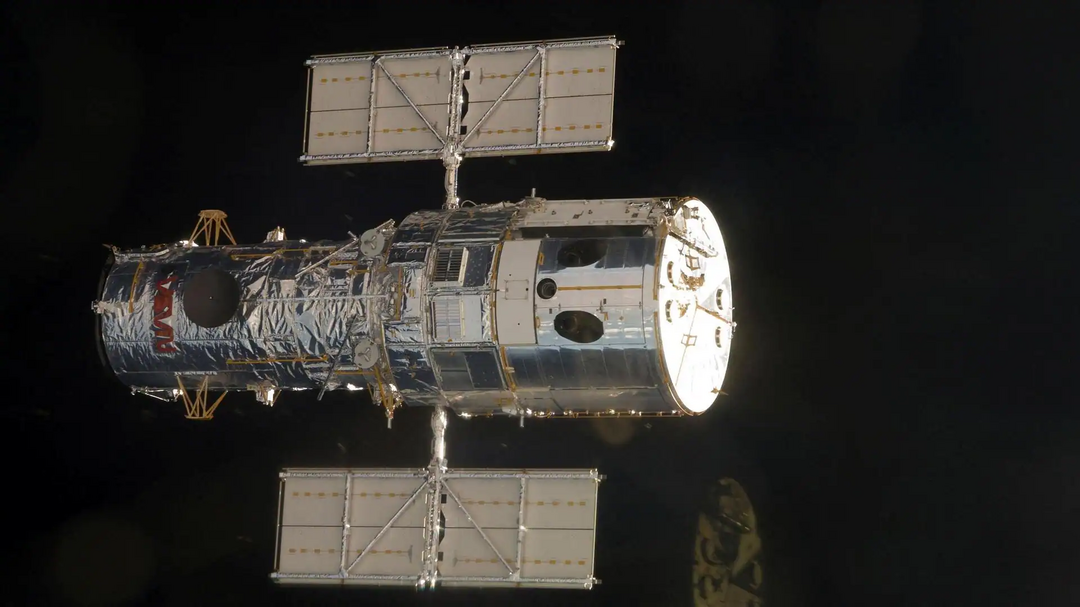
As the number of satellites in Earth’s orbit continues to grow, astronomers are warning that the reflections from these satellites could contaminate many space-telescope images. This phenomenon, known as “satellite trailing,” occurs when the light from a satellite reflects off its surface and into the telescope’s field of view, creating a bright streak or trail across the image. The study suggests that some telescopes may see more than 96% of exposures affected if planned megaconstellations launch, while telescopes like Hubble would face about 40% contamination.
The impact of satellite reflections on space telescope images is not just a matter of aesthetics; it can have serious consequences for scientific research. Astronomers rely on high-quality images to study celestial objects and events, and satellite trails can obscure critical details or even render observations useless. For example, if a satellite trail crosses a critical observation, such as a supernova or a gamma-ray burst, it could be lost forever. The study’s findings have significant implications for the field of astronomy, and researchers are cautioning that urgent action is needed to mitigate the effects of satellite reflections.
One of the primary drivers of satellite reflections is the growing number of megaconstellations, which are large networks of satellites designed to provide global internet connectivity. Companies like SpaceX, Amazon, and OneWeb are planning to launch thousands of satellites into low Earth orbit, which will significantly increase the amount of reflective surface area in space. While these constellations promise to revolutionize global communication, they also pose a significant threat to astronomical research.
The study’s authors used computer simulations to model the impact of satellite reflections on space telescope images. They found that the effects will be most pronounced for telescopes that operate at low Earth orbit, such as the Hubble Space Telescope. However, even telescopes in higher orbits, such as the James Webb Space Telescope, will not be immune to the effects of satellite reflections. The study’s findings are alarming, and astronomers are calling for urgent action to address the issue.
So, what can be done to mitigate the effects of satellite reflections on space telescope images? One possible solution is to implement strategies to reduce the reflectivity of satellites. This could involve using materials with lower reflectivity or designing satellites with shapes that minimize their reflective surface area. Another approach is to develop algorithms that can remove satellite trails from images, although this can be a complex and time-consuming process.
Astronomers are also calling for greater coordination between the space industry and the astronomical community. By working together, it may be possible to develop guidelines or regulations that minimize the impact of satellite reflections on space telescope images. For example, satellite operators could be required to provide notice of upcoming launches or to implement measures to reduce the reflectivity of their satellites.
In conclusion, the next decade may see a significant decline in the quality of space telescope images due to satellite reflections. The study’s findings are a wake-up call for the astronomical community, and urgent action is needed to mitigate the effects of satellite reflections. By working together, we can ensure that the next generation of space telescopes continues to capture stunning images of the universe, unobscured by the trails of satellites.
News Source: https://www.newsbytesapp.com/news/science/satellite-reflections-could-ruin-over-95-of-space-telescope-images/story
About the Author