Why most space telescope images could be blurry in next decade?
The universe has always been a subject of fascination for humans, and with the help of space telescopes, we have been able to explore and understand it in greater detail. However, a recent NASA-linked study has warned that the images captured by these telescopes could be severely affected in the coming decade. The culprit behind this potential problem is not a natural phenomenon, but rather human-made satellites that are being launched into space at an unprecedented rate.
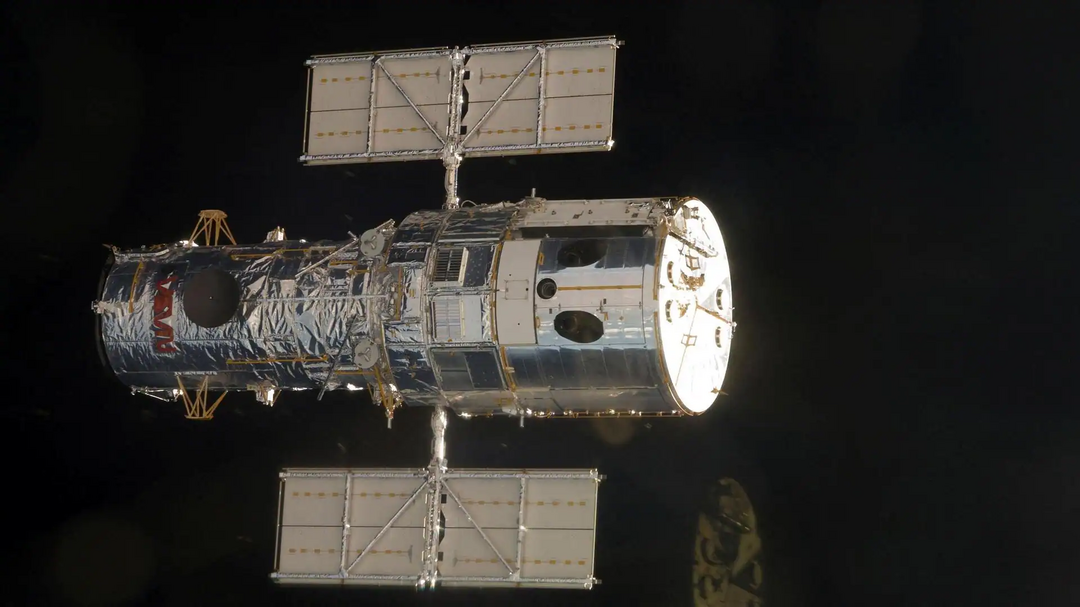
The study, which has sent shockwaves through the astronomical community, suggests that the reflections from these satellites could contaminate many space-telescope images, rendering them blurry and useless for scientific research. The affected telescopes include some of the most powerful and iconic ones, such as the Hubble Space Telescope, which has been instrumental in helping us understand the universe.
According to the study, some telescopes may see more than 96% of exposures affected if the planned megaconstellations are launched. This means that nearly all the images captured by these telescopes would be unusable, which would be a significant setback for astronomers who rely on these images to make new discoveries.
The Hubble Space Telescope, which is one of the most successful and enduring space telescopes, would also be affected, although to a lesser extent. The study estimates that around 40% of its exposures would be contaminated by satellite reflections. While this is a significant percentage, it is still lower than the estimated impact on other telescopes.
So, what exactly is causing this problem? The answer lies in the rapid proliferation of satellites in Earth’s orbit. In recent years, there has been a surge in the number of satellites being launched into space, with many more planned for the future. These satellites are being used for a variety of purposes, including communication, navigation, and Earth observation.
However, these satellites are also reflecting sunlight, which is then captured by space telescopes. This reflected light can overwhelm the faint signals from distant astronomical objects, making it difficult or impossible to capture clear images. The problem is exacerbated by the fact that many of these satellites are being launched into low-Earth orbit, which is the same region of space where many space telescopes operate.
The impact of this problem could be significant, as it could lead to the loss of critical observations and data. Astronomers use space telescopes to study a wide range of phenomena, from the formation of stars and galaxies to the detection of exoplanets and dark matter. If the images captured by these telescopes are contaminated by satellite reflections, it could hinder our ability to make new discoveries and understand the universe.
Furthermore, the problem is not just limited to the quality of the images. The satellite trails could also cross critical observations, such as the detection of supernovae or gamma-ray bursts. These events are rare and fleeting, and if they are obscured by satellite trails, they could be lost forever.
The study’s findings have sparked concerns among astronomers and space agencies, who are calling for urgent action to mitigate the problem. One possible solution is to implement regulations or guidelines for satellite operators to minimize the impact of their satellites on space telescopes. This could include measures such as adjusting the orbits of satellites or using specialized materials to reduce reflections.
Another solution is to develop new technologies that can help space telescopes to better detect and remove satellite trails from their images. This could involve the use of advanced algorithms or machine learning techniques to identify and subtract the satellite reflections.
In conclusion, the study’s warning that most space telescope images could be blurry in the next decade is a stark reminder of the challenges that astronomers face in their quest to understand the universe. The proliferation of satellites in Earth’s orbit is a significant problem that needs to be addressed, and it requires a concerted effort from space agencies, satellite operators, and astronomers to find a solution.
As we continue to explore and understand the universe, it is essential that we take steps to protect the integrity of our space telescopes and the data they capture. The universe is full of mysteries and wonders, and it is our responsibility to ensure that we can continue to study and learn from it without hindrance.
News source: https://www.newsbytesapp.com/news/science/satellite-reflections-could-ruin-over-95-of-space-telescope-images/story
About the Author