Why most space telescope images could be blurry in next decade?
The advent of space telescopes has revolutionized our understanding of the universe, allowing us to capture stunning images of distant galaxies, stars, and planets. However, a recent NASA-linked study has raised concerns that the increasing number of satellites in orbit around the Earth could contaminate many space-telescope images in the coming decade. The study warns that satellite reflections could lead to blurry images, potentially affecting up to 96% of exposures for some telescopes.
The culprit behind this issue is the planned launch of megaconstellations, which are large groups of satellites that will be launched into low-Earth orbit to provide global internet coverage. While these satellites will bring many benefits, such as increased internet accessibility and faster communication, they also pose a significant threat to astronomical research. The reflective surfaces of these satellites will scatter sunlight, causing streaks and trails to appear in space-telescope images.
The impact of satellite reflections on space-telescope images will vary depending on the location and type of telescope. According to the study, telescopes that are sensitive to blue light, such as those used to study the formation of galaxies, will be most affected. Some telescopes may see more than 96% of exposures affected, while others, like the Hubble Space Telescope, will face about 40% contamination.
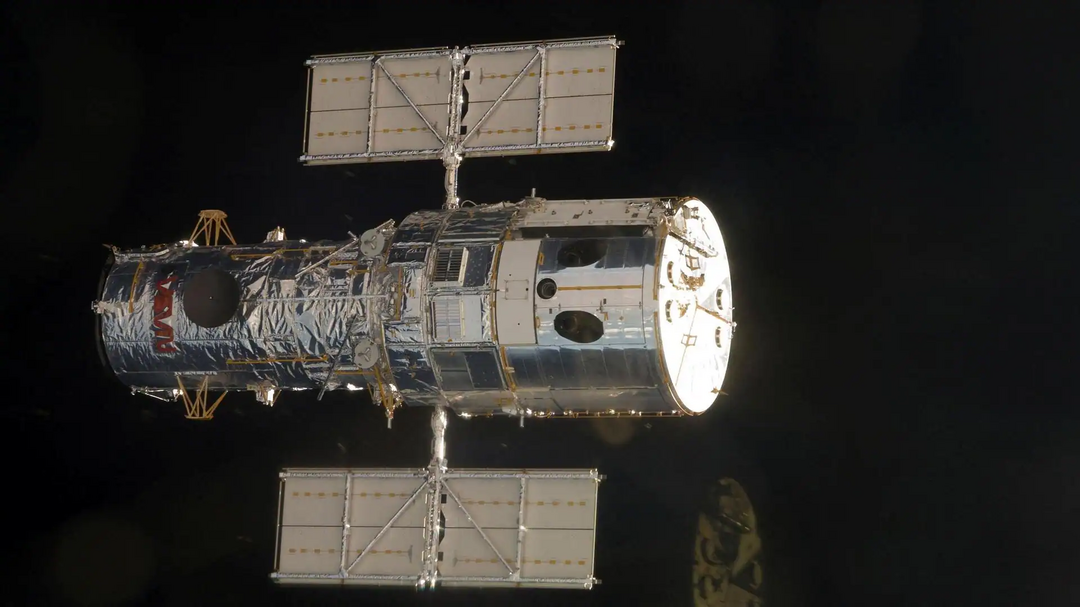
The Hubble Space Telescope, which has been in operation since 1990, is one of the most iconic and successful space telescopes in history. It has captured stunning images of the universe, from the birth and death of stars to the formation of galaxies. However, even the Hubble Space Telescope will not be immune to the effects of satellite reflections. The study estimates that about 40% of Hubble’s observations will be affected, which could lead to a significant loss of valuable data.
The contamination of space-telescope images is not just a matter of aesthetics; it also has significant scientific implications. Astronomers rely on high-quality images to make precise measurements and observations. When satellite trails cross critical observations, it can lead to a loss of valuable data and potentially even the discovery of new astronomical events. For example, if a satellite trail were to pass through an image of a supernova, it could obscure the details of the explosion and make it difficult for scientists to study the event.
The problem of satellite reflections is not limited to optical telescopes; it also affects radio telescopes. Radio telescopes use large dishes to detect radio waves from space, but they can also be affected by the radio frequency interference (RFI) emitted by satellites. This interference can overwhelm the faint signals from distant galaxies and stars, making it difficult for scientists to study the universe.
To mitigate the effects of satellite reflections, astronomers and engineers are exploring several solutions. One approach is to use advanced image-processing techniques to remove satellite trails from images. This can be done using algorithms that detect and subtract the trails, allowing scientists to recover the underlying data. Another approach is to use telescopes that are designed to be less sensitive to satellite reflections, such as those that use infrared or ultraviolet light.
In addition to these technical solutions, there are also efforts underway to regulate the launch of satellites and minimize their impact on astronomical research. The International Astronomical Union (IAU) has issued guidelines for satellite operators, recommending that they take steps to reduce the reflectivity of their satellites and avoid launching them during periods of high astronomical activity. The IAU is also working with satellite operators to develop new technologies that can reduce the impact of satellite reflections on space-telescope images.
In conclusion, the increasing number of satellites in orbit around the Earth poses a significant threat to astronomical research. Satellite reflections could contaminate up to 96% of space-telescope images, potentially leading to a loss of valuable data and the discovery of new astronomical events. While there are solutions being explored to mitigate the effects of satellite reflections, it is essential that astronomers, engineers, and policymakers work together to address this issue. By taking steps to reduce the impact of satellite reflections, we can ensure that space telescopes continue to capture stunning images of the universe and advance our understanding of the cosmos.
News source: https://www.newsbytesapp.com/news/science/satellite-reflections-could-ruin-over-95-of-space-telescope-images/story
About the Author