Why most space telescope images could be blurry in next decade?
The universe has always been a subject of fascination for humans, and with the help of space telescopes, we have been able to study it in greater detail. From the majestic spiral arms of galaxies to the majestic rings of Saturn, space telescopes have allowed us to capture stunning images of the cosmos. However, a recent NASA-linked study warns that satellite reflections could contaminate many space-telescope images in the coming decade, potentially ruining our chances of capturing clear and sharp images of the universe.
The study suggests that the increasing number of satellites in Earth’s orbit could lead to a significant increase in satellite reflections, which could, in turn, affect the quality of images captured by space telescopes. This is because satellites can reflect sunlight, which can then be captured by telescopes, causing streaks or trails in the images. These streaks can be particularly problematic when they cross critical observations, such as astronomical events, making it difficult for scientists to study them.
According to the study, some telescopes may see more than 96% of exposures affected if planned megaconstellations launch. Megaconstellations are large groups of satellites that are launched into Earth’s orbit to provide global internet coverage. While they have the potential to revolutionize the way we communicate, they also pose a significant threat to astronomical observations. The study warns that the sheer number of satellites in these constellations could lead to a significant increase in satellite reflections, making it difficult for telescopes to capture clear images.
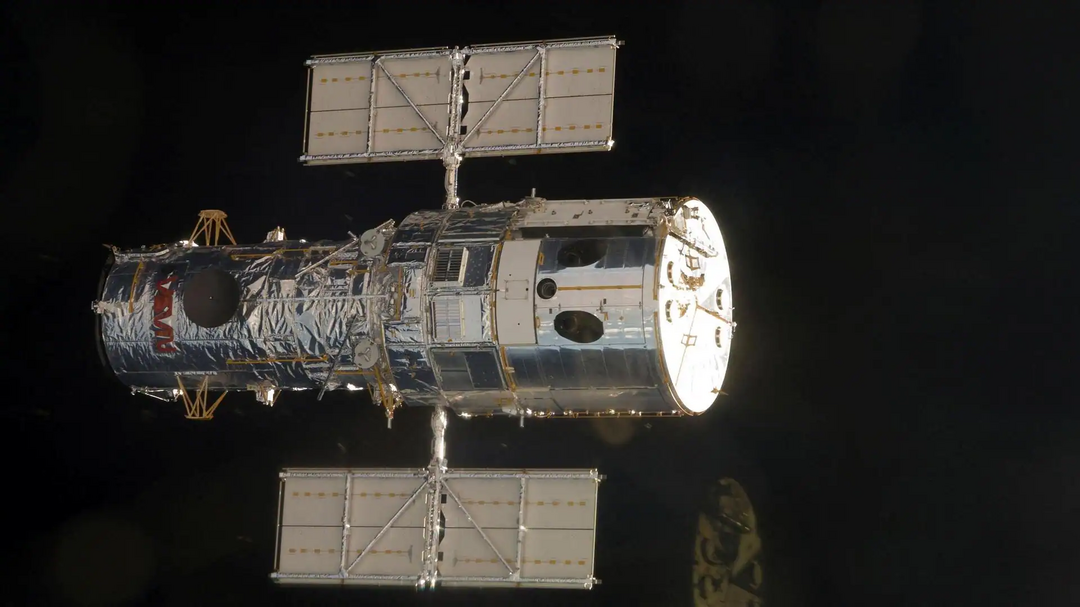
Telescopes like the Hubble Space Telescope, which has been instrumental in capturing stunning images of the universe, would face about 40% of exposures affected. While this may seem like a relatively small percentage, it is still significant, given the importance of the Hubble Space Telescope in astronomical research. The Hubble Space Telescope has been in operation for over three decades and has captured some of the most iconic images of the universe. Any disruption to its operations could have significant implications for our understanding of the cosmos.
The problem of satellite reflections is not new, and astronomers have been aware of it for some time. However, the increasing number of satellites in Earth’s orbit has made it a more pressing issue. The study suggests that the number of satellites in Earth’s orbit could increase from around 5,000 to over 100,000 in the coming decade, leading to a significant increase in satellite reflections.
The impact of satellite reflections on space-telescope images could be significant. Astronomers use space telescopes to study a wide range of phenomena, from the formation of galaxies to the detection of exoplanets. Satellite reflections could make it difficult for them to capture clear images of these phenomena, which could, in turn, hinder our understanding of the universe.
The study warns that astronomical events could be lost when satellite trails cross critical observations. For example, if a satellite trail were to cross the image of a supernova, it could make it difficult for astronomers to study the supernova in detail. Supernovae are rare and fleeting events, and any disruption to their observation could have significant implications for our understanding of the universe.
The problem of satellite reflections is not limited to space telescopes. It could also affect ground-based telescopes, which are used to study a wide range of astronomical phenomena. The study suggests that ground-based telescopes could also be affected by satellite reflections, particularly those that are used to study faint objects, such as distant galaxies.
To mitigate the impact of satellite reflections, astronomers are exploring a range of solutions. One possible solution is to use algorithms to remove satellite trails from images. These algorithms could be used to detect and remove satellite trails, allowing astronomers to capture clear images of the universe. Another possible solution is to use telescopes that are designed to minimize the impact of satellite reflections. For example, some telescopes use specialized optics to reduce the impact of satellite reflections.
In conclusion, the increasing number of satellites in Earth’s orbit poses a significant threat to astronomical observations. Satellite reflections could contaminate many space-telescope images in the coming decade, potentially ruining our chances of capturing clear and sharp images of the universe. The impact of satellite reflections could be significant, with some telescopes seeing more than 96% of exposures affected. Astronomers are exploring a range of solutions to mitigate the impact of satellite reflections, but it is clear that the problem of satellite reflections is a pressing one that needs to be addressed.
News source: https://www.newsbytesapp.com/news/science/satellite-reflections-could-ruin-over-95-of-space-telescope-images/story
About the Author