Why most space telescope images could be blurry in next decade?
The vast expanse of space has always been a subject of human fascination, with scientists and astronomers continually striving to explore and understand the mysteries of the universe. Space telescopes have been instrumental in this pursuit, providing us with breathtaking images of distant galaxies, stars, and planets. However, a recent NASA-linked study has raised concerns that the quality of these images may be compromised in the coming decade. The culprit behind this potential degradation? Satellite reflections.
Astronomers have long been aware of the potential impact of satellite trails on space telescope images. However, the magnitude of the problem is expected to worsen significantly in the next decade, thanks to the planned launch of megaconstellations. These constellations, comprising thousands of small satellites, are designed to provide global internet coverage. While they may bring numerous benefits to our daily lives, they also pose a significant threat to astronomical research.
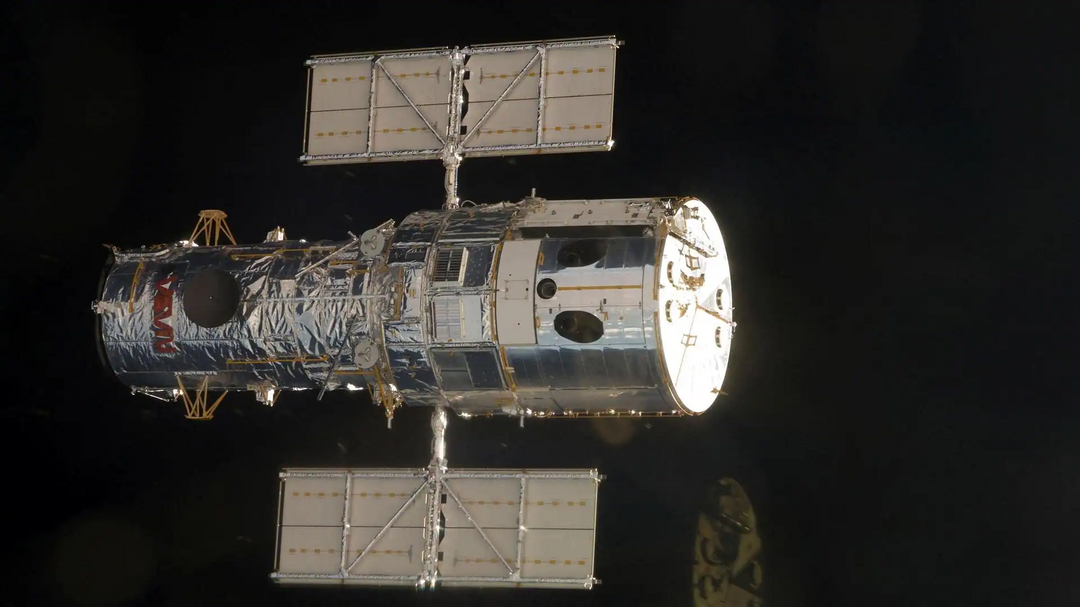
The study, which warns of the impending crisis, suggests that some space telescopes may see more than 96% of their exposures affected by satellite reflections. This means that nearly all images captured by these telescopes could be contaminated with streaks of light caused by the reflection of sunlight off the satellites’ surfaces. The Hubble Space Telescope, one of the most iconic and productive space telescopes in history, is expected to face a slightly lower but still significant impact, with around 40% of its exposures affected.
The reason behind this contamination is relatively straightforward. Satellites in low Earth orbit reflect sunlight, which can then enter the field of view of space telescopes. As the number of satellites in orbit increases, so does the likelihood of their reflections interfering with astronomical observations. The problem is exacerbated by the fact that many of these satellites are designed to be highly reflective, in order to maintain communication with Earth.
The consequences of this contamination could be severe. Astronomical events, such as supernovae or gamma-ray bursts, may be lost or obscured by satellite trails crossing critical observations. This could not only hinder our understanding of the universe but also limit our ability to make new discoveries. Furthermore, the affected images may require significant processing to remove the satellite trails, which could be a time-consuming and labor-intensive task.
The researchers behind the study caution that the impact of satellite reflections on space telescope images is not limited to the quantity of affected exposures. The quality of the images themselves may also be compromised, making it challenging for scientists to extract meaningful data from them. This could have far-reaching implications for various fields of astronomy, from cosmology to planetary science.
So, what can be done to mitigate this problem? The study’s authors suggest that satellite operators and astronomers must work together to find solutions. One possible approach is to design satellites with reduced reflectivity, or to implement strategies for minimizing the impact of satellite trails on space telescope images. Additionally, astronomers may need to adapt their observation schedules and techniques to avoid periods when satellite reflections are most likely to occur.
In conclusion, the next decade may witness a significant decline in the quality of space telescope images, thanks to the growing number of satellites in low Earth orbit. While this may seem like a minor concern in the grand scheme of things, it has the potential to hinder our understanding of the universe and limit the discovery of new astronomical phenomena. As we continue to push the boundaries of space exploration and astronomical research, it is essential that we address this issue and find ways to minimize the impact of satellite reflections on space telescope images.
The importance of preserving the integrity of space telescope images cannot be overstated. These images have the power to inspire and educate, sparking our imagination and curiosity about the universe. They also serve as a vital tool for scientists, allowing us to study the cosmos in unprecedented detail. As we move forward, it is crucial that we prioritize the protection of our space telescopes and the images they produce, ensuring that future generations can continue to explore and understand the wonders of the universe.
News source: https://www.newsbytesapp.com/news/science/satellite-reflections-could-ruin-over-95-of-space-telescope-images/story
About the Author