Why most space telescope images could be blurry in next decade?
The advent of space telescopes has revolutionized our understanding of the universe, allowing us to capture stunning images of distant galaxies, stars, and planets. However, a recent NASA-linked study has raised concerns that the next decade may see a significant decline in the quality of these images. The culprit behind this potential degradation is not a technical glitch or a lack of funding, but rather the increasing number of satellites in Earth’s orbit. According to the study, satellite reflections could contaminate many space-telescope images, rendering them blurry and potentially useless for scientific research.
The problem lies in the fact that many private companies, such as SpaceX and Amazon, are planning to launch massive constellations of satellites into low-Earth orbit. These satellites will be designed to provide global internet coverage, but they will also reflect a significant amount of sunlight, which can interfere with the sensitive instruments on board space telescopes. The study warns that some telescopes may see more than 96% of exposures affected if these planned megaconstellations launch, while telescopes like the Hubble Space Telescope would face about 40% contamination.
The implications of this study are far-reaching and alarming. Astronomers rely on space telescopes to study a wide range of phenomena, from the formation of galaxies to the detection of exoplanets. If satellite reflections contaminate a significant portion of these images, it could lead to a loss of valuable scientific data and potentially hinder our understanding of the universe. Moreover, the contamination could also affect the detection of rare and fleeting astronomical events, such as supernovae or gamma-ray bursts.
The study’s findings are based on simulations that take into account the number of satellites planned for launch and their expected reflectivity. The researchers used a computer model to predict the amount of light that would be reflected by the satellites and how it would affect the images captured by space telescopes. The results show that the contamination would be most severe for telescopes that operate in the visible and infrared wavelengths, which are commonly used for astronomical observations.
One of the most affected telescopes would be the upcoming Large Synoptic Survey Telescope (LSST), which is designed to capture wide-field images of the sky. The study predicts that the LSST could see up to 96% of its exposures contaminated by satellite reflections, making it difficult for astronomers to detect faint objects and study the large-scale structure of the universe. Other telescopes, such as the Wide Field Infrared Survey Telescope (WFIRST) and the James Webb Space Telescope, would also be affected, although to a lesser extent.
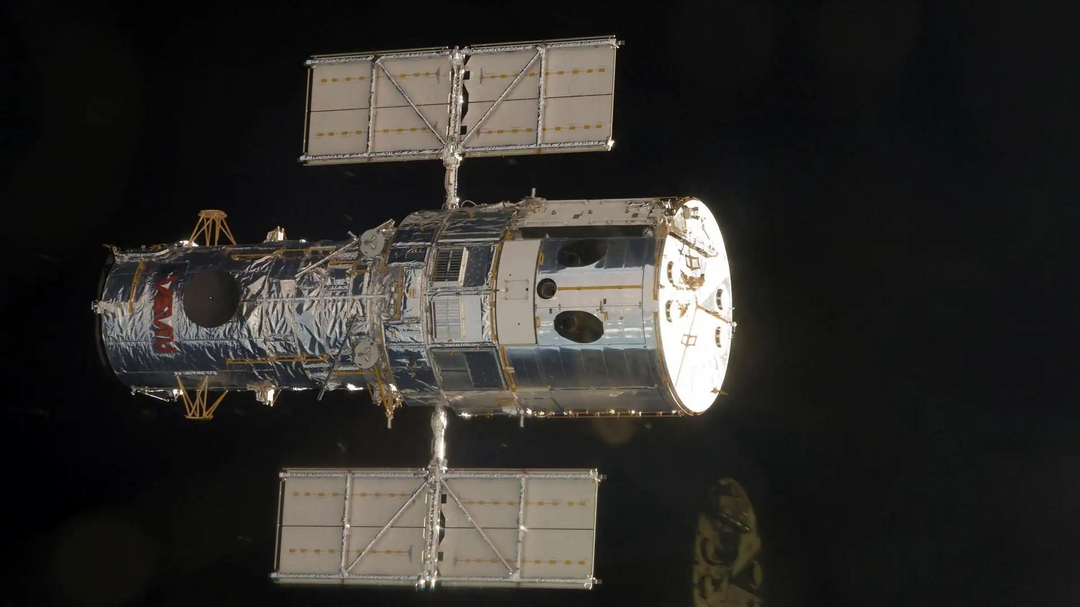
The Hubble Space Telescope, which has been in operation since 1990, would face about 40% contamination, according to the study. While this is a significant amount, it is still lower than the contamination expected for newer telescopes like the LSST. However, the Hubble telescope is still a vital tool for astronomical research, and any degradation in its image quality could have significant implications for the scientific community.
The researchers caution that the contamination could be mitigated by implementing certain strategies, such as scheduling observations during times when the satellites are not visible or using algorithms to remove the satellite trails from the images. However, these solutions may not be foolproof, and the study’s authors emphasize the need for a more comprehensive approach to address the problem.
The study’s findings have significant implications for the future of space astronomy. As the number of satellites in Earth’s orbit continues to grow, it is essential to develop strategies to mitigate the effects of satellite reflections on space-telescope images. This could involve collaborating with satellite operators to reduce the reflectivity of their spacecraft or developing new technologies to remove satellite trails from images.
In conclusion, the next decade may see a significant decline in the quality of space-telescope images due to satellite reflections. The study’s findings are a wake-up call for the astronomical community, highlighting the need for a comprehensive approach to address the problem. As we continue to explore the universe and push the boundaries of human knowledge, it is essential to ensure that our tools and technologies are not hindered by human activities in Earth’s orbit.
News Source: https://www.newsbytesapp.com/news/science/satellite-reflections-could-ruin-over-95-of-space-telescope-images/story
About the Author