Why most space telescope images could be blurry in next decade?
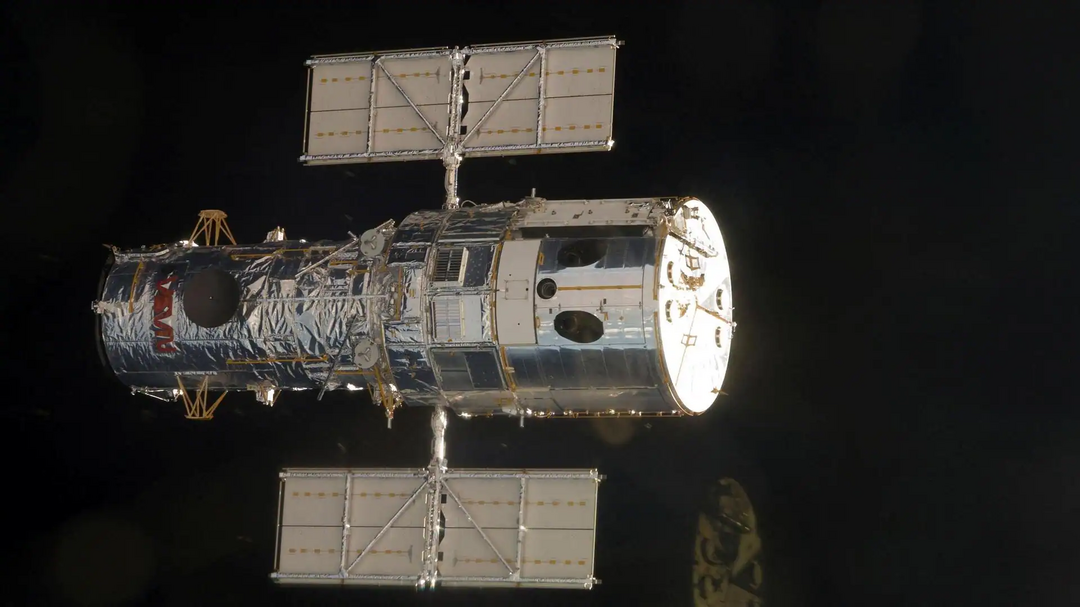
The advent of space telescopes has revolutionized the field of astronomy, allowing us to study the universe in unprecedented detail. From the Hubble Space Telescope to the latest generation of telescopes like the James Webb Space Telescope, these instruments have enabled us to make groundbreaking discoveries about the cosmos. However, a recent NASA-linked study has raised concerns that the proliferation of satellite megaconstellations in the coming decade could contaminate many space-telescope images, rendering them blurry and potentially useless.
The study, which has sent shockwaves through the astronomical community, warns that the reflections from thousands of satellites in low-Earth orbit could interfere with the observations of space telescopes. This phenomenon, known as “satellite trailing,” occurs when the bright reflection from a satellite crosses the field of view of a telescope, leaving a streak or trail on the image. While this may seem like a minor issue, the sheer number of satellites planned for launch in the next decade could make it a major problem for astronomers.
According to the study, some space telescopes may see more than 96% of their exposures affected by satellite trails if the planned megaconstellations are launched. This means that nearly all of the images captured by these telescopes could be contaminated by satellite reflections, making it difficult or impossible to extract useful scientific data from them. Even telescopes like the Hubble Space Telescope, which has been operating for over three decades, could face significant disruption, with up to 40% of its exposures affected by satellite trails.
The implications of this problem are far-reaching and could have significant consequences for the field of astronomy. Astronomers rely on space telescopes to study a wide range of phenomena, from the formation of stars and galaxies to the detection of exoplanets and the search for dark matter. If satellite reflections contaminate a large proportion of space-telescope images, it could lead to a loss of valuable scientific data and potentially even the detection of rare astronomical events.
One of the most significant concerns is that satellite trails could cross critical observations, rendering them useless. For example, if a satellite trail were to pass through the field of view of a telescope during a rare astronomical event, such as a supernova or a gamma-ray burst, it could make it impossible to study the event in detail. This could lead to a loss of valuable scientific insights and potentially even the discovery of new phenomena.
The problem of satellite trailing is not limited to space telescopes. Ground-based telescopes could also be affected, although to a lesser extent. The study suggests that ground-based telescopes could see up to 10% of their exposures affected by satellite trails, although this number could be higher or lower depending on the specific telescope and its location.
So, what can be done to mitigate the problem of satellite trailing? One possible solution is to implement strategies to avoid or reduce the impact of satellite reflections on space-telescope images. For example, telescopes could be designed with satellite-trail avoidance systems, which would allow them to adjust their observations to avoid periods when satellites are passing through the field of view. Alternatively, astronomers could use sophisticated image-processing techniques to remove satellite trails from images, although this could be a time-consuming and complex process.
Another possible solution is to regulate the launch of satellite megaconstellations, which are the primary cause of the problem. Governments and regulatory agencies could impose stricter rules on the deployment of satellites, requiring companies to take steps to minimize the impact of their satellites on astronomical observations. This could include measures such as adjusting the orbit of satellites, using less reflective materials, or implementing systems to reduce the brightness of satellite reflections.
In conclusion, the problem of satellite trailing is a significant concern for the astronomical community, and it has the potential to contaminate a large proportion of space-telescope images in the coming decade. While there are potential solutions to this problem, it will require a concerted effort from astronomers, policymakers, and industry leaders to mitigate its impact. As we continue to explore the universe and push the boundaries of human knowledge, it is essential that we take steps to protect the integrity of our astronomical observations and ensure that we can continue to make groundbreaking discoveries about the cosmos.
News source: https://www.newsbytesapp.com/news/science/satellite-reflections-could-ruin-over-95-of-space-telescope-images/story
About the Author