Why most space telescope images could be blurry in next decade?
The universe has always been a subject of fascination for humans, and with the help of space telescopes, we have been able to explore and understand it better. However, a recent NASA-linked study has warned that the increasing number of satellites in the Earth’s orbit could contaminate many space-telescope images in the coming decade. This could lead to a significant loss of valuable astronomical data, making it challenging for scientists to study the universe.
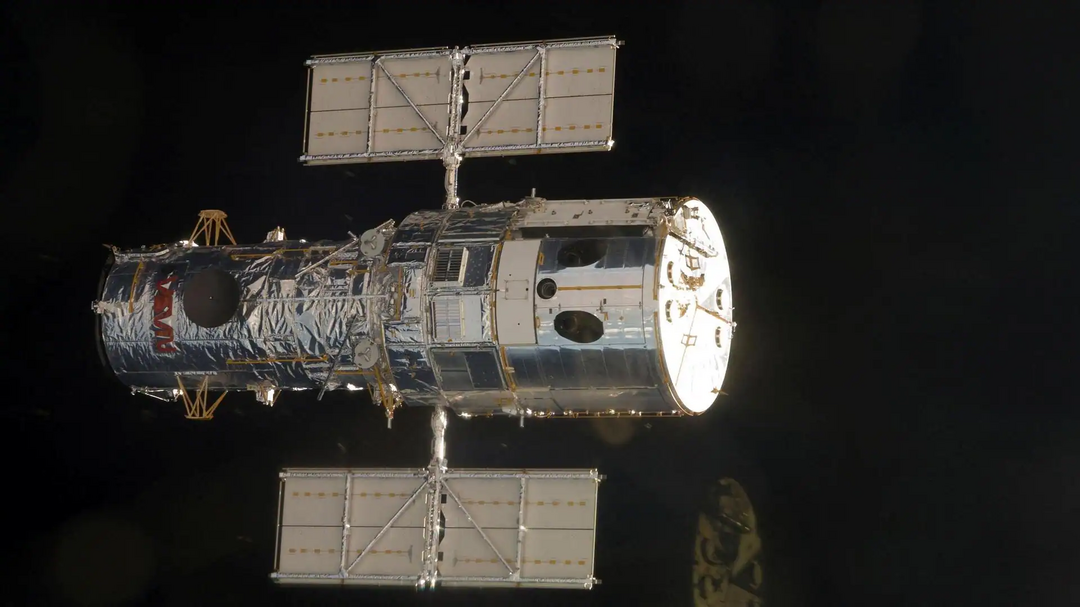
The study suggests that the reflections from the satellites could cause many space-telescope images to become blurry, making it difficult to obtain clear and accurate data. This is a significant concern, as space telescopes like Hubble have been instrumental in helping us understand the universe. The Hubble Space Telescope, in particular, has been a groundbreaking instrument, providing us with stunning images and valuable data about the universe.
According to the study, some telescopes may see more than 96% of exposures affected if the planned megaconstellations launch. This means that almost all the images captured by these telescopes could be contaminated with satellite reflections, making them unusable for scientific research. Even telescopes like Hubble, which is considered one of the most advanced space telescopes, would face about 40% of exposures affected. This is a significant concern, as Hubble has been a reliable instrument for astronomers, providing us with valuable data about the universe.
The main culprit behind this problem is the growing number of satellites in the Earth’s orbit. With the increasing demand for satellite-based services like internet connectivity, navigation, and weather forecasting, many companies are launching megaconstellations of satellites into the Earth’s orbit. While these satellites provide many benefits, they also pose a significant threat to astronomical research.
The reflections from these satellites could contaminate space-telescope images in several ways. One of the main concerns is that the satellites could reflect sunlight, causing streaks or trails in the images. These trails could be particularly problematic when they cross critical observations, such as the detection of exoplanets or the study of distant galaxies. In such cases, the satellite trails could mask the signal from the astronomical object, making it impossible to obtain accurate data.
Another concern is that the satellites could also reflect the light from the space telescopes themselves, causing a kind of “echo” effect. This could lead to a significant degradation of the image quality, making it challenging to obtain clear and accurate data.
The loss of valuable astronomical data could have significant consequences for our understanding of the universe. Astronomers rely on space telescopes to study a wide range of phenomena, from the formation of stars and galaxies to the detection of exoplanets and the study of dark matter. If the images captured by these telescopes are contaminated with satellite reflections, it could lead to a significant loss of knowledge and understanding.
The study highlights the need for urgent action to mitigate the effects of satellite reflections on space-telescope images. One possible solution is to implement regulations on the launch of megaconstellations, ensuring that the satellites are designed and operated in a way that minimizes their impact on astronomical research. Another solution is to develop new technologies that could help reduce the effects of satellite reflections, such as advanced image processing algorithms or specialized optics.
In conclusion, the increasing number of satellites in the Earth’s orbit poses a significant threat to astronomical research. The reflections from these satellites could contaminate many space-telescope images, making it challenging to obtain clear and accurate data. It is essential to take urgent action to mitigate the effects of satellite reflections, ensuring that we can continue to explore and understand the universe. As we look to the future, it is crucial that we balance the benefits of satellite-based services with the need to protect our ability to study the universe.
News Source: https://www.newsbytesapp.com/news/science/satellite-reflections-could-ruin-over-95-of-space-telescope-images/story
About the Author