Why most space telescope images could be blurry in next decade?
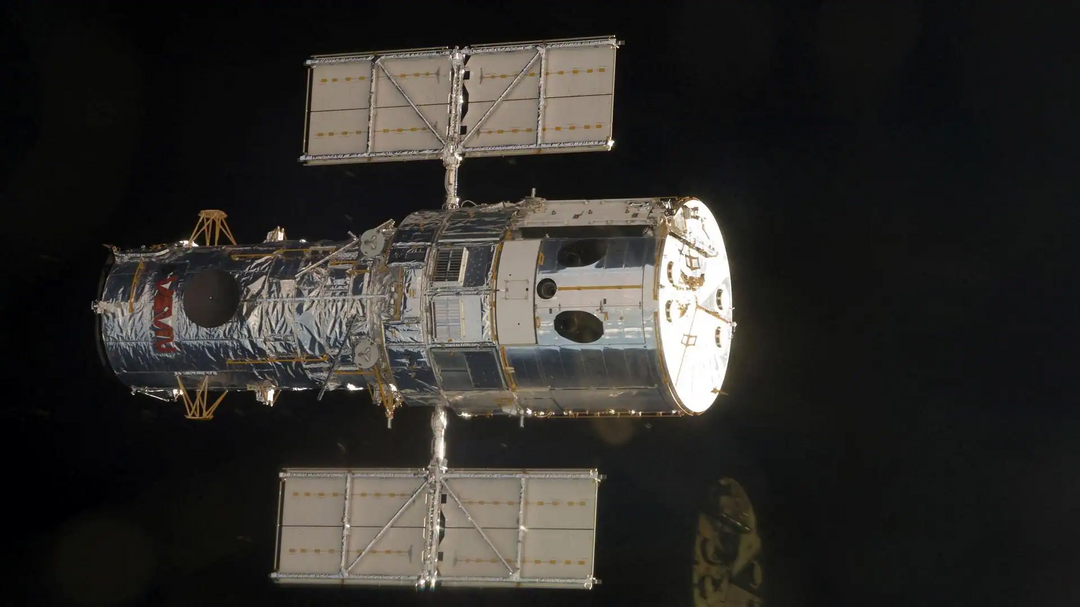
The advancement of space technology has enabled us to capture stunning images of the universe, thanks to powerful space telescopes like the Hubble Space Telescope. However, a recent study linked to NASA has raised concerns that the next decade may see a significant decline in the quality of these images. The culprit behind this potential decline is not a technical glitch or a lack of funding, but rather the increasing number of satellites in Earth’s orbit. According to the study, satellite reflections could contaminate many space-telescope images, rendering them blurry and potentially useless for scientific research.
The problem lies in the fact that many private companies, such as SpaceX and Amazon, are planning to launch massive constellations of satellites into Earth’s orbit. These satellites will be used to provide global internet coverage, but they will also reflect sunlight, which can interfere with the observations of space telescopes. The study warns that some telescopes may see more than 96% of exposures affected by these satellite reflections, while others, like the Hubble Space Telescope, may face a slightly lower but still significant impact of around 40%.
To understand the severity of the issue, it’s essential to consider how space telescopes work. These telescopes are designed to capture faint light from distant stars, galaxies, and other celestial objects. However, when a satellite reflects sunlight into the telescope’s field of view, it can overwhelm the faint light from the celestial object, making it impossible to obtain a clear image. This is particularly problematic for telescopes that are designed to study faint or distant objects, as the satellite reflections can completely mask the signal from these objects.
The impact of satellite reflections on space telescope images will not be limited to a few isolated incidents. Rather, it will be a persistent problem that will affect a large proportion of observations. For example, the study suggests that the upcoming Vera C. Rubin Observatory, which is designed to conduct a wide-area survey of the sky, may see up to 96% of its exposures affected by satellite reflections. This means that nearly all of the images captured by this telescope will be contaminated by satellite trails, rendering them useless for scientific research.
The consequences of this problem are far-reaching and potentially catastrophic for the field of astronomy. Many astronomical events, such as supernovae or gamma-ray bursts, are rare and fleeting, and they may only be observable for a short period. If a satellite trail crosses the field of view of a telescope during one of these events, it could be lost forever, and scientists may miss out on a unique opportunity to study a rare phenomenon.
Furthermore, the problem of satellite reflections is not limited to optical telescopes. Radio telescopes, which study the universe in radio waves, may also be affected by the increasing number of satellites in Earth’s orbit. While the impact may be less severe than for optical telescopes, it could still contaminate a significant proportion of observations, particularly for telescopes that operate at higher frequencies.
So, what can be done to mitigate the impact of satellite reflections on space telescope images? One possible solution is to implement strategies to minimize the reflection of sunlight from satellites. For example, satellite manufacturers could design their spacecraft to have a lower albedo, or reflectivity, which would reduce the amount of sunlight that is reflected into the field of view of telescopes. Alternatively, telescopes could be designed with specialized optics or software that can remove or mitigate the effects of satellite reflections.
Another solution is to establish regulations or guidelines for the launch of satellites, particularly those that will be used for megaconstellations. For example, regulatory agencies could require satellite manufacturers to design their spacecraft to minimize reflections, or to launch them into orbits that will minimize their impact on space telescopes. International cooperation will be essential in addressing this issue, as the problem of satellite reflections is a global one that requires a global response.
In conclusion, the next decade may see a significant decline in the quality of space telescope images due to the increasing number of satellites in Earth’s orbit. The reflections from these satellites will contaminate many observations, rendering them blurry and potentially useless for scientific research. While there are potential solutions to this problem, it will require a concerted effort from astronomers, satellite manufacturers, and regulatory agencies to mitigate the impact of satellite reflections on space telescope images.
News Source: https://www.newsbytesapp.com/news/science/satellite-reflections-could-ruin-over-95-of-space-telescope-images/story
About the Author