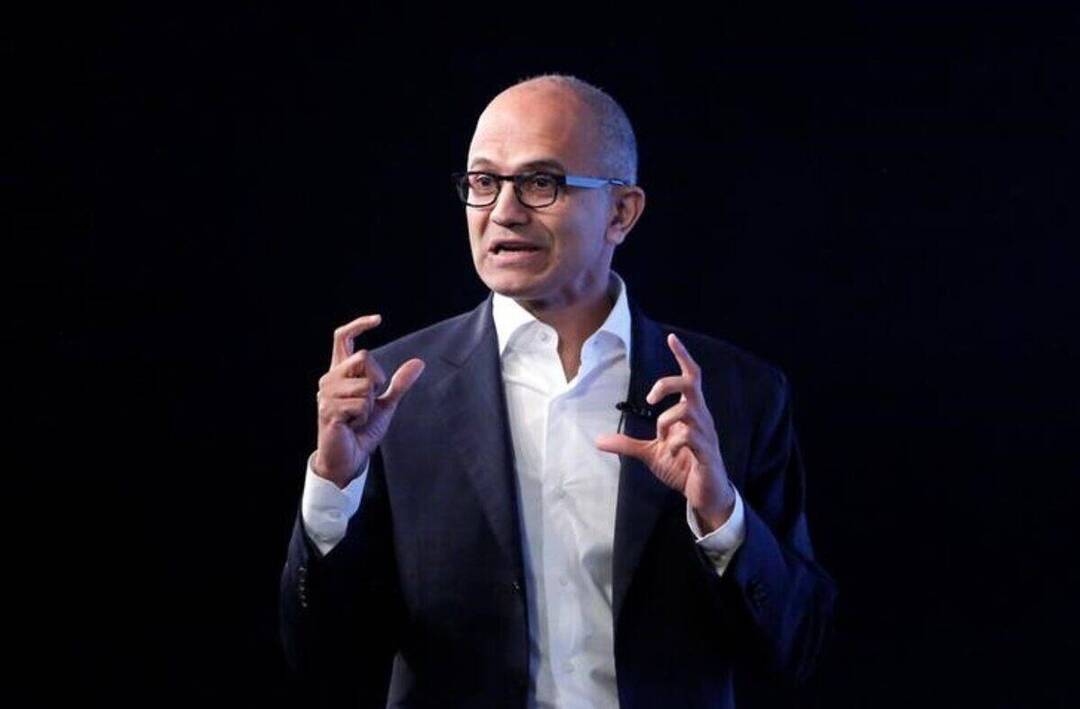
We need to move beyond AI slop debates: Microsoft CEO Nadella
The world of artificial intelligence (AI) has been abuzz with debates and discussions about the potential and limitations of this technology. While some argue that AI is a revolutionary force that will transform the way we live and work, others claim that it is overhyped and lacks real-world applications. However, according to Microsoft CEO Satya Nadella, it’s time to move beyond these debates and focus on the real-world impact of AI.
In a recent statement, Nadella said that the world needs to “get beyond the arguments of slop vs sophistication.” He emphasized that what matters isn’t the power of any particular AI model, but how people choose to apply it. “We need to…develop a new equilibrium…that accounts for humans being equipped with these new cognitive amplifier tools as we relate to each other,” he added.
Nadella’s comments come at a time when AI is increasingly being used in various industries, from healthcare and finance to education and transportation. While AI has the potential to bring about significant benefits, such as improved efficiency and productivity, it also raises important questions about accountability, transparency, and ethics.
One of the key challenges in the development and deployment of AI is the need to balance the benefits of this technology with the potential risks and downsides. For example, AI systems can be biased and discriminatory, perpetuating existing social and economic inequalities. Moreover, the use of AI in certain industries, such as healthcare, raises important questions about patient safety and data privacy.
To address these challenges, Nadella argues that we need to develop a new equilibrium that takes into account the impact of AI on human relationships and society as a whole. This requires a nuanced understanding of the complex interplay between technology, humans, and society. It also requires a willingness to experiment, learn, and adapt, as we navigate the uncharted territory of AI.
So, what does this new equilibrium look like? According to Nadella, it involves developing AI systems that are transparent, explainable, and accountable. It also involves creating new social and economic structures that support the development and deployment of AI, while minimizing its risks and downsides.
One way to achieve this is by investing in education and re-skilling programs that prepare workers for an AI-driven economy. This includes providing training and support for workers who may be displaced by automation, as well as developing new curricula and programs that teach students about AI, data science, and related fields.
Another way to achieve this new equilibrium is by promoting diversity, inclusion, and equity in the development and deployment of AI. This includes ensuring that AI systems are designed and tested with diverse datasets, as well as promoting greater representation and participation of underrepresented groups in the tech industry.
Ultimately, the development and deployment of AI requires a collective effort and a shared sense of responsibility. It requires policymakers, business leaders, and civil society to work together to create a future where AI benefits all of humanity, rather than just a privileged few.
As Nadella noted, “What matters isn’t the power of any…model, but how people choose to apply it.” This is a powerful reminder that the impact of AI is not predetermined, but rather depends on the choices we make as individuals and as a society. By working together to develop a new equilibrium that accounts for the impact of AI on human relationships and society, we can create a future where this technology brings about real-world benefits, rather than just hype and debate.
In conclusion, the debate about AI is not just about the technology itself, but about the kind of future we want to create. As Nadella argued, we need to move beyond the arguments of slop vs sophistication and focus on the real-world impact of AI. By doing so, we can create a future where AI is a force for good, rather than just a source of controversy and debate.
About the Author