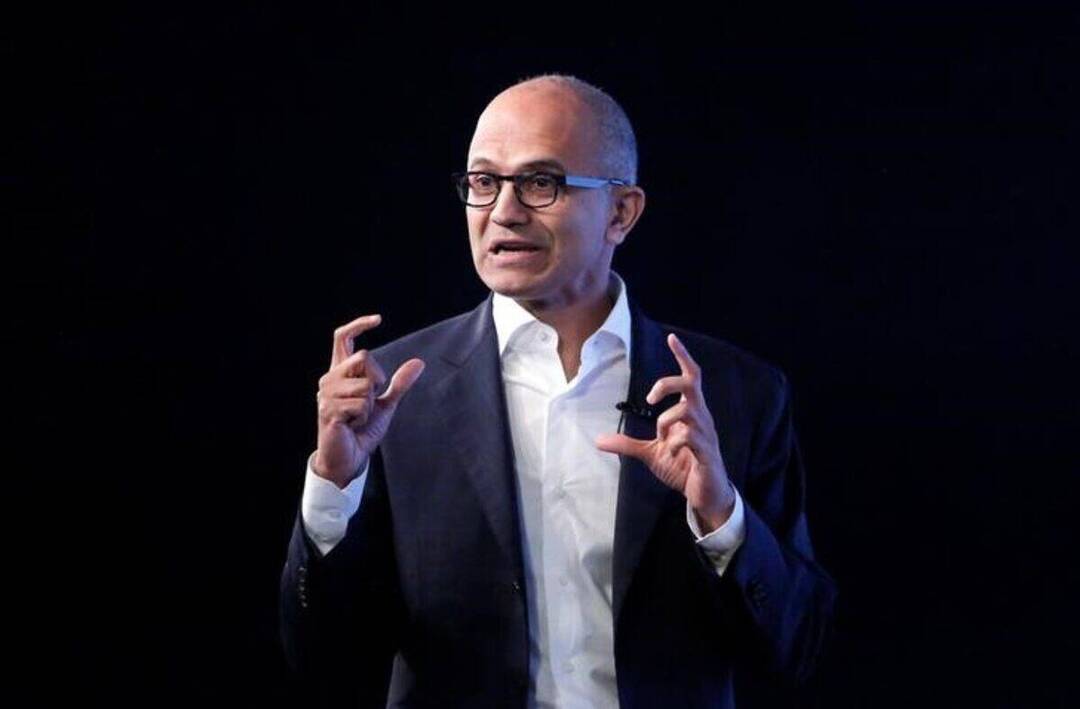
We need to move beyond AI slop debates: Microsoft CEO Nadella
The world of artificial intelligence (AI) has been abuzz with debates and discussions about the potential and limitations of this technology. While some experts argue that AI is a revolutionary tool that can transform industries and improve lives, others are more skeptical, warning about the potential risks and downsides of relying on AI. However, according to Microsoft CEO Satya Nadella, it’s time to move beyond these debates and focus on the real-world impact of AI.
In a recent statement, Nadella said that the world needs to “get beyond the arguments of slop vs sophistication.” He emphasized that the power of AI models is not the most important factor, but rather how people choose to apply them. “What matters isn’t the power of any…model, but how people choose to apply it,” he stated. This shift in focus is crucial, as it recognizes that AI is a tool, not an end in itself. The true value of AI lies in its ability to augment human capabilities, enhance decision-making, and drive positive change.
Nadella’s comments come at a time when AI is becoming increasingly pervasive in various aspects of our lives. From virtual assistants and chatbots to predictive analytics and automation, AI is transforming the way we work, communicate, and interact with each other. However, as AI becomes more ubiquitous, it’s essential to consider the social and economic implications of this technology. We need to develop a new equilibrium, one that accounts for humans being equipped with these new cognitive amplifier tools as we relate to each other.
The concept of cognitive amplifier tools is particularly interesting. AI can be seen as a tool that amplifies human cognition, enabling us to process vast amounts of data, recognize patterns, and make more informed decisions. However, this amplification also raises important questions about the future of work, education, and social relationships. As AI assumes more routine and repetitive tasks, humans will need to focus on higher-level cognitive tasks that require creativity, empathy, and critical thinking.
To develop this new equilibrium, we need to consider several factors. First, we need to invest in education and re-skilling programs that prepare workers for an AI-driven economy. This includes training in areas such as data science, machine learning, and human-computer interaction. Second, we need to redesign our social safety nets and economic systems to account for the potential displacement of jobs due to automation. This could involve initiatives such as universal basic income, job retraining programs, and social entrepreneurship schemes.
Third, we need to prioritize transparency, accountability, and ethics in AI development and deployment. This includes ensuring that AI systems are fair, unbiased, and respectful of human rights and dignity. We also need to establish clear guidelines and regulations for the use of AI in various industries, such as healthcare, finance, and education.
Finally, we need to recognize the potential of AI to drive positive social change. From improving healthcare outcomes and enhancing environmental sustainability to promoting social justice and reducing inequality, AI can be a powerful tool for creating a better world. By focusing on the real-world impact of AI, we can unlock its full potential and create a future that is more equitable, just, and prosperous for all.
In conclusion, Nadella’s call to move beyond AI slop debates is a timely reminder that the true value of AI lies in its ability to enhance human capabilities and drive positive change. By developing a new equilibrium that accounts for humans being equipped with cognitive amplifier tools, we can unlock the full potential of AI and create a brighter future for all. As we continue to explore the possibilities and limitations of AI, let us remember that the power of this technology lies not in its sophistication, but in how we choose to apply it.
About the Author