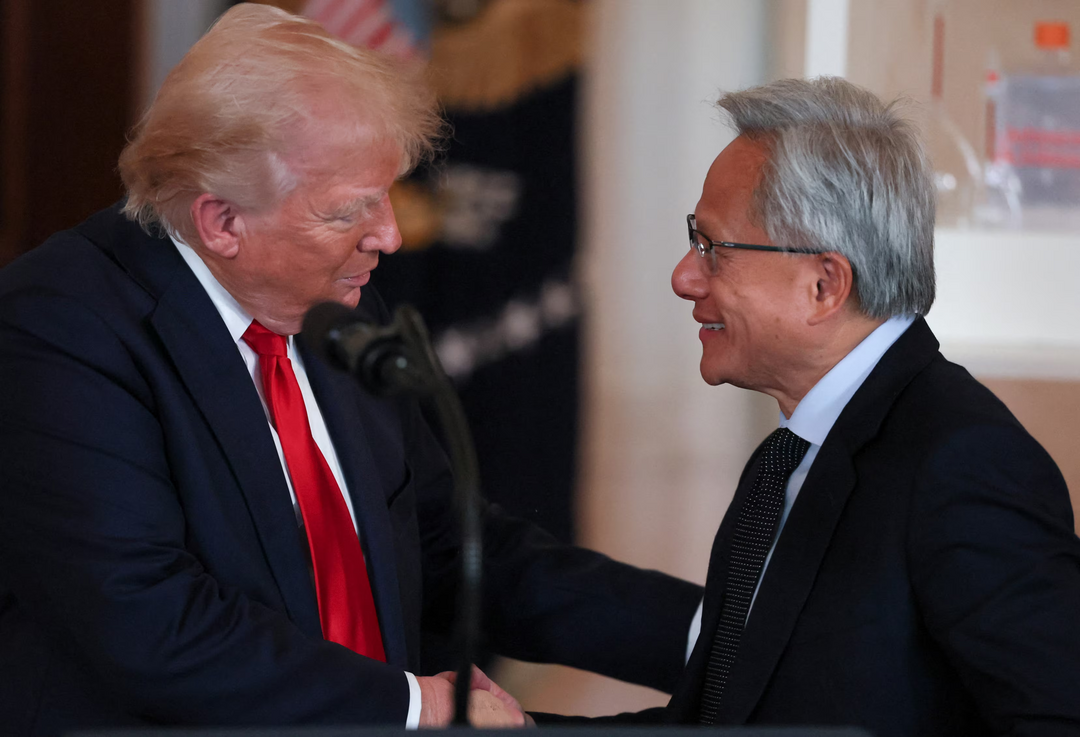
Trump’s ‘drill baby drill’ energy policy saved AI industry: Huang
The technology industry has been abuzz with the latest comments from NVIDIA CEO Jensen Huang, who has credited US President Donald Trump’s pro-growth energy policy with saving the AI industry. In a surprising turn of events, Huang praised Trump’s “drill, baby, drill” approach to energy policy, stating that it has been instrumental in the growth and development of the AI industry.
According to Huang, Trump’s energy policy has been a game-changer for the AI industry. “He came into office and the first thing…he said was ‘drill, baby, drill’. His point is…we need energy growth,” Huang said. “If not for his…policies, we’d not be able to build factories for AI…We surely wouldn’t be able to build supercomputer factories,” he added. These comments have sent shockwaves throughout the tech industry, with many experts and analysts weighing in on the impact of Trump’s energy policy on the AI industry.
To understand the significance of Huang’s comments, it’s essential to examine the context of Trump’s energy policy. The “drill, baby, drill” slogan was a hallmark of Trump’s 2016 presidential campaign, symbolizing his commitment to increasing domestic energy production and reducing reliance on foreign oil. Upon taking office, Trump implemented a series of policies aimed at promoting energy growth, including the rollback of regulations on fossil fuel production and the approval of new pipelines.
The impact of these policies on the energy sector has been significant. The US has become one of the world’s leading oil producers, with domestic production increasing by over 50% since 2016. This surge in energy production has had a ripple effect throughout the economy, with the energy sector contributing to GDP growth and creating new jobs.
But how exactly has Trump’s energy policy saved the AI industry? According to Huang, the answer lies in the energy-intensive nature of AI production. Building factories for AI requires massive amounts of energy, which has been made possible by Trump’s pro-growth energy policy. The construction of supercomputer factories, in particular, requires an enormous amount of power, which has been facilitated by the increased energy production under Trump’s administration.
NVIDIA, a leading manufacturer of graphics processing units (GPUs) and high-performance computing hardware, has been at the forefront of the AI revolution. The company’s GPUs are used in a wide range of applications, from gaming and professional visualization to datacenter and AI computing. The growth of the AI industry has been fueled in part by NVIDIA’s innovations, which have enabled faster and more efficient processing of complex algorithms.
However, the production of these GPUs and other AI-related hardware requires massive amounts of energy. The manufacturing process involves the use of high-powered machinery, which consumes enormous amounts of electricity. Furthermore, the operation of datacenters and supercomputers, which are essential for AI research and development, requires significant amounts of power to cool and run the systems.
In this context, Trump’s energy policy has been instrumental in enabling the growth of the AI industry. The increased energy production has made it possible for companies like NVIDIA to build and operate the massive factories and datacenters required for AI production. Without access to reliable and affordable energy, the AI industry would not have been able to grow at the same pace, and innovations in the field may have been hindered.
Huang’s comments have sparked a debate about the role of energy policy in promoting the growth of the AI industry. While some have praised Trump’s approach to energy policy, others have criticized the environmental impact of increased fossil fuel production. The use of fossil fuels contributes to climate change, and the extraction and transportation of these resources can have devastating effects on local ecosystems.
As the world grapples with the challenges of climate change, it’s essential to consider the long-term implications of energy policy on the environment. The growth of the AI industry, while important for economic development and innovation, must be balanced with the need to reduce carbon emissions and transition to renewable energy sources.
In conclusion, NVIDIA CEO Jensen Huang’s comments on Trump’s energy policy have shed light on the critical role that energy production plays in the growth of the AI industry. While the “drill, baby, drill” approach has been instrumental in promoting energy growth, it’s essential to consider the environmental implications of this policy. As the AI industry continues to evolve, it’s crucial to balance the need for energy production with the need to reduce carbon emissions and promote sustainable development.
About the Author