Trump’s ‘drill baby drill’ energy policy saved AI industry: Huang
The AI industry has been growing at an unprecedented rate in recent years, with advancements in machine learning, natural language processing, and computer vision. However, according to NVIDIA CEO Jensen Huang, the industry’s growth can be attributed, in part, to the pro-growth energy policy of former US President Donald Trump. In a recent statement, Huang praised Trump’s “drill baby drill” approach to energy production, saying that it saved the AI industry.
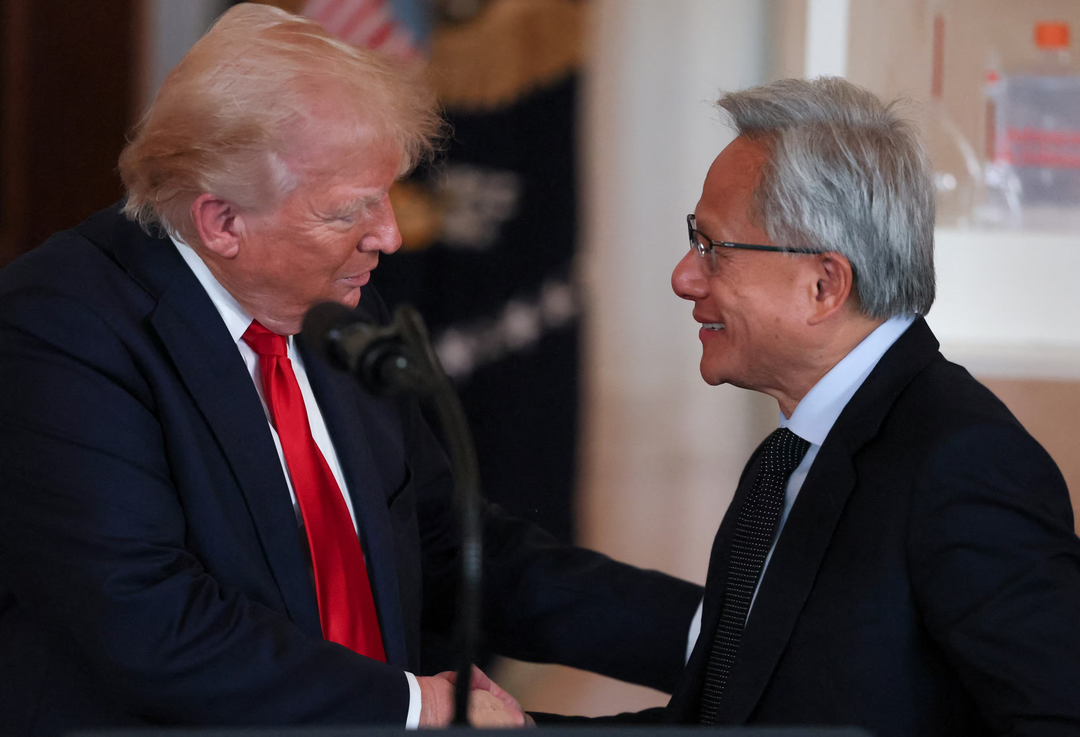
Huang’s comments came after an alleged meeting with Trump, during which the two reportedly discussed the future of the AI industry and the role of energy production in its growth. According to Huang, Trump’s focus on increasing energy production was a key factor in the AI industry’s ability to build factories and produce the high-performance computing equipment needed to drive innovation.
“He came into office and the first thing…he said was ‘drill, baby, drill’,” Huang said. “His point is…we need energy growth. If not for his…policies, we’d not be able to build factories for AI…We surely wouldn’t be able to build supercomputer factories,” he added.
Trump’s “drill baby drill” energy policy was a cornerstone of his 2016 presidential campaign, with the then-candidate promising to increase domestic energy production and reduce the country’s reliance on foreign oil. The policy was met with criticism from environmental groups, who argued that it would lead to increased greenhouse gas emissions and contribute to climate change.
However, for the AI industry, the increased energy production brought about by Trump’s policy has been a game-changer. The industry requires massive amounts of energy to power the high-performance computing equipment needed to train machine learning models and drive innovation. With the increased energy production brought about by Trump’s policy, the AI industry has been able to build larger and more complex factories, driving down costs and increasing efficiency.
NVIDIA, in particular, has been a major beneficiary of Trump’s energy policy. The company is a leading manufacturer of high-performance computing equipment, including graphics processing units (GPUs) and tensor core GPUs. These products are used in a wide range of applications, including AI, machine learning, and data analytics.
According to Huang, the increased energy production brought about by Trump’s policy has allowed NVIDIA to build larger and more complex factories, driving down costs and increasing efficiency. This, in turn, has enabled the company to produce more powerful and efficient computing equipment, driving innovation and growth in the AI industry.
The impact of Trump’s energy policy on the AI industry cannot be overstated. The industry is expected to continue growing at a rapid pace in the coming years, with advancements in machine learning, natural language processing, and computer vision driving innovation and adoption. However, without the increased energy production brought about by Trump’s policy, it is unlikely that the industry would have been able to grow at the same rate.
In fact, a report by the International Energy Agency (IEA) found that the AI industry’s energy consumption is expected to increase by 20% per year from 2020 to 2025, driven by the growing demand for high-performance computing equipment. The report also noted that the industry’s energy consumption could be reduced through the use of more efficient computing equipment and data center design.
In addition to the increased energy production brought about by Trump’s policy, the AI industry has also benefited from other factors, including advancements in technology and increases in investment. The industry has seen a surge in investment in recent years, with venture capital firms and other investors pouring billions of dollars into AI startups and research initiatives.
However, despite these factors, Huang’s comments suggest that Trump’s energy policy was a key factor in the AI industry’s growth. The policy has allowed the industry to build larger and more complex factories, driving down costs and increasing efficiency. This, in turn, has enabled the industry to produce more powerful and efficient computing equipment, driving innovation and growth.
In conclusion, the AI industry’s growth can be attributed, in part, to the pro-growth energy policy of former US President Donald Trump. The “drill baby drill” approach to energy production has allowed the industry to build larger and more complex factories, driving down costs and increasing efficiency. As the industry continues to grow and evolve, it will be important to consider the role of energy production in its development.
About the Author