Trump’s ‘Drill Baby Drill’ Energy Policy Saved AI Industry: Huang
The Artificial Intelligence (AI) industry has been growing at an unprecedented rate in recent years, with advancements in machine learning, natural language processing, and computer vision. However, according to NVIDIA CEO Jensen Huang, the industry’s success can be attributed, in part, to the energy policies of former US President Donald Trump. In a recent statement, Huang praised Trump’s pro-growth energy policy, saying that it saved the AI industry.
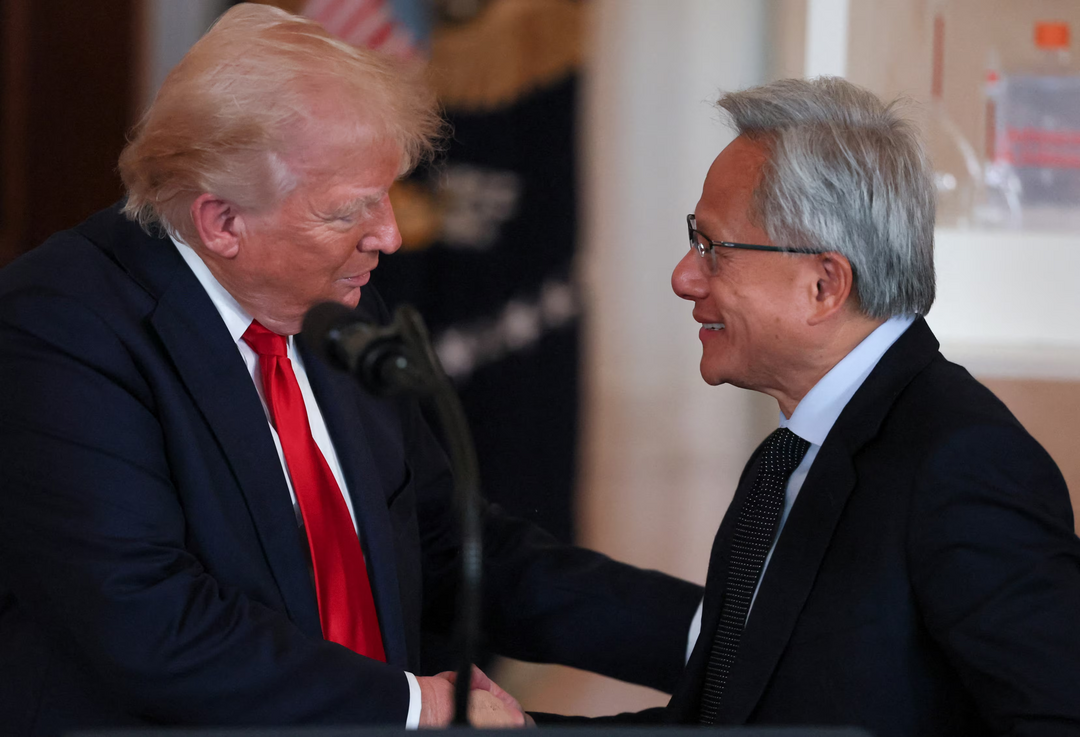
Huang’s comments came after an alleged meeting with Trump, where he discussed the impact of the former President’s energy policies on the AI industry. According to Huang, Trump’s “drill baby drill” approach to energy production was a crucial factor in the growth of the AI industry. “He came into office and the first thing…he said was ‘drill, baby, drill’,” Huang said. “His point is…we need energy growth.” Huang believes that Trump’s policies, which aimed to increase domestic energy production, helped to create an environment that was conducive to the growth of the AI industry.
The “drill baby drill” slogan, which was popularized during Trump’s 2016 presidential campaign, referred to the idea of increasing domestic oil and gas production to reduce the country’s reliance on foreign energy sources. While the policy was met with criticism from environmental groups, Huang believes that it had a positive impact on the AI industry. “If not for his…policies, we’d not be able to build factories for AI…We surely wouldn’t be able to build supercomputer factories,” he added.
So, how did Trump’s energy policy save the AI industry? According to Huang, the increased energy production helped to reduce energy costs, which in turn made it more feasible for companies like NVIDIA to build and operate large-scale data centers and manufacturing facilities. These facilities are essential for the development and production of AI technologies, including graphics processing units (GPUs), tensor processing units (TPUs), and other specialized hardware.
The AI industry is highly energy-intensive, with large data centers and supercomputers requiring massive amounts of power to operate. According to some estimates, the AI industry consumes over 1% of global electricity production, with this number expected to grow to 3% by 2025. The high energy requirements of the AI industry make it essential for companies to have access to reliable and affordable energy sources.
Trump’s energy policy, which aimed to increase domestic energy production, helped to reduce energy costs and increase energy availability. This, in turn, made it more feasible for companies like NVIDIA to build and operate large-scale data centers and manufacturing facilities. The reduced energy costs also helped to make AI technologies more competitive, which has driven adoption and growth in the industry.
While Huang’s comments may come as a surprise to some, they highlight the complex and often unexpected relationships between different industries and policy areas. The AI industry, which is often associated with progressive values and environmental concerns, has benefited from a policy that is often seen as being at odds with these values.
It’s worth noting, however, that the relationship between Trump’s energy policy and the AI industry is not without controversy. Many environmental groups have criticized Trump’s energy policies, arguing that they prioritize short-term economic gains over long-term environmental sustainability. The increased energy production, which has been driven in part by Trump’s policies, has also contributed to increased greenhouse gas emissions and other environmental problems.
In conclusion, NVIDIA CEO Jensen Huang’s comments highlight the complex and often unexpected relationships between different industries and policy areas. While Trump’s energy policy may not have been intended to benefit the AI industry, it has had a positive impact on the sector. The increased energy production and reduced energy costs have helped to drive growth and adoption in the AI industry, which has had a range of benefits for companies, consumers, and society as a whole.
As the AI industry continues to grow and evolve, it’s likely that we will see increased scrutiny of the industry’s environmental impact. While Huang’s comments may have been seen as unexpected, they highlight the need for policymakers and industry leaders to consider the complex relationships between different policy areas and industries.
In the end, the success of the AI industry will depend on a range of factors, including technological advancements, investment, and policy support. While Trump’s energy policy may have played a role in the industry’s growth, it’s unlikely to be the only factor. As the industry continues to evolve, it’s likely that we will see increased focus on sustainability and environmental responsibility, which will be essential for the long-term success of the AI industry.
About the Author