Trump’s ‘drill baby drill’ energy policy saved AI industry: Huang
The artificial intelligence (AI) industry has been growing at an unprecedented rate in recent years, with advancements in machine learning, natural language processing, and computer vision. However, according to NVIDIA CEO Jensen Huang, the industry’s success can be attributed, in part, to the pro-growth energy policy of former US President Donald Trump. In a recent statement, Huang praised Trump’s “drill, baby, drill” policy, saying that it saved the AI industry by providing the necessary energy growth to build factories and supercomputers.
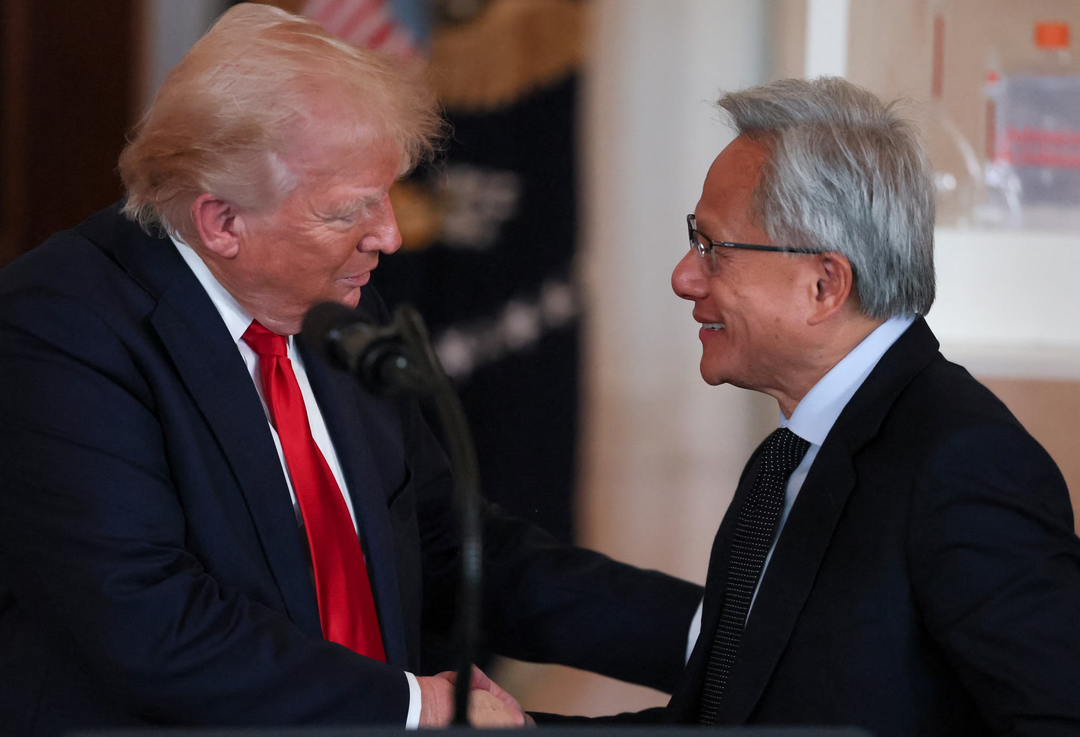
Huang’s comments came after an alleged meeting with Trump, where he expressed his gratitude for the former President’s energy policies. “He came into office and the first thing…he said was ‘drill, baby, drill’,” Huang said. “His point is…we need energy growth.” Huang believes that Trump’s policies were instrumental in providing the energy needed to power the AI industry’s growth. “If not for his…policies, we’d not be able to build factories for AI…We surely wouldn’t be able to build supercomputer factories,” he added.
The “drill, baby, drill” policy was a hallmark of Trump’s energy agenda, which aimed to increase domestic oil and gas production. The policy was met with criticism from environmental groups, who argued that it would lead to increased carbon emissions and harm the environment. However, Huang’s comments suggest that the policy had a positive impact on the AI industry, which relies heavily on energy-intensive computing and manufacturing processes.
The AI industry’s energy requirements are significant, with data centers and supercomputers consuming large amounts of power to process vast amounts of data. According to a report by the International Energy Agency (IEA), the energy consumption of data centers and cloud computing is expected to increase by 15% annually from 2020 to 2025. This growth in energy demand is driven by the increasing adoption of AI and machine learning technologies, which require powerful computing resources to process and analyze large datasets.
Huang’s comments highlight the importance of energy policy in supporting the growth of the AI industry. The development of AI technologies requires significant investments in computing infrastructure, including data centers, supercomputers, and manufacturing facilities. These investments are energy-intensive, and access to reliable and affordable energy is critical to the industry’s success.
The impact of Trump’s energy policy on the AI industry is not limited to the United States. The policy has also had global implications, as the increased availability of energy has enabled companies to invest in AI research and development. According to a report by McKinsey, the global AI market is expected to grow to $190 billion by 2025, with the United States, China, and Europe being the largest markets.
Huang’s praise for Trump’s energy policy is significant, given the controversy surrounding the former President’s environmental policies. While Trump’s “drill, baby, drill” policy was met with criticism from environmental groups, Huang’s comments suggest that the policy had a positive impact on the AI industry. This highlights the complex relationship between energy policy and economic growth, and the need for policymakers to balance competing interests and priorities.
In conclusion, NVIDIA CEO Jensen Huang’s comments highlight the importance of energy policy in supporting the growth of the AI industry. Trump’s “drill, baby, drill” policy, while controversial, has had a positive impact on the industry by providing the necessary energy growth to build factories and supercomputers. As the AI industry continues to grow and evolve, it is essential for policymakers to consider the energy implications of their decisions and to develop policies that support the industry’s energy needs while minimizing its environmental impact.
About the Author