Trump’s ‘drill baby drill’ energy policy saved AI industry: Huang
The artificial intelligence (AI) industry has been one of the fastest-growing sectors in recent years, with advancements in machine learning, natural language processing, and computer vision. However, according to NVIDIA CEO Jensen Huang, the industry’s growth can be attributed, in part, to the energy policies of former US President Donald Trump. In a recent statement, Huang praised Trump’s pro-growth energy policy, saying it saved the AI industry.
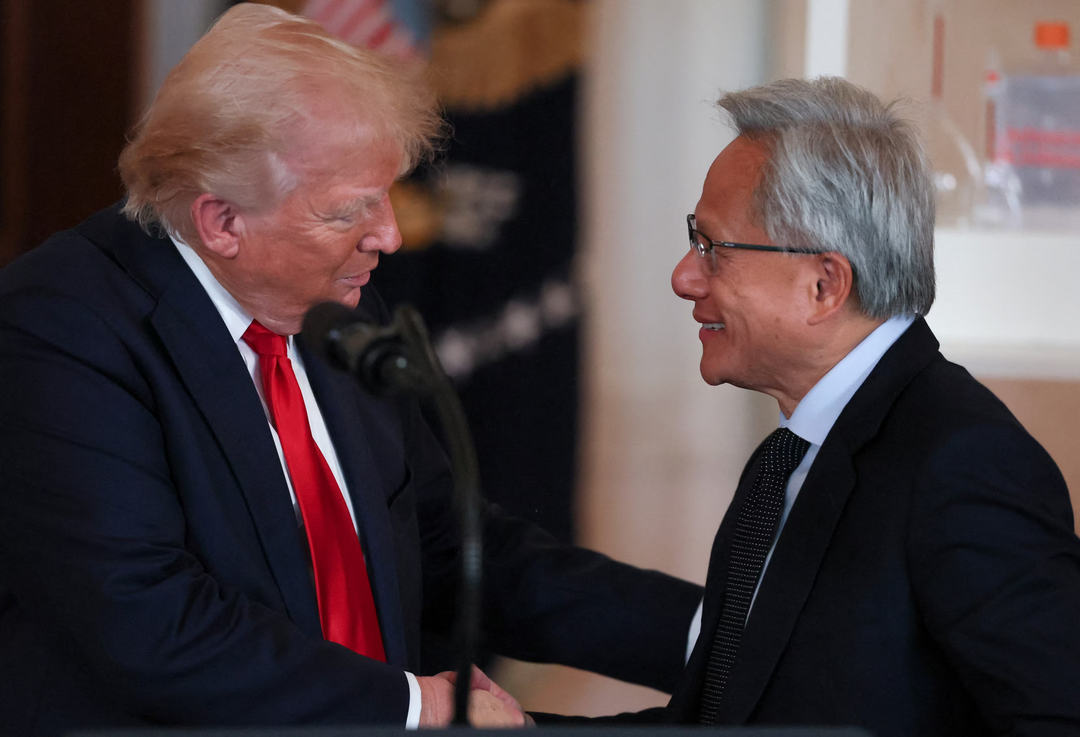
Huang’s comments came after an alleged meeting with Trump, where the NVIDIA CEO expressed his gratitude for the former President’s support of the energy sector. “He came into office and the first thing…he said was ‘drill, baby, drill’. His point is…we need energy growth,” Huang said. “If not for his…policies, we’d not be able to build factories for AI…We surely wouldn’t be able to build supercomputer factories,” he added.
Trump’s “drill baby drill” energy policy, which aimed to increase domestic oil and gas production, was a hallmark of his presidency. The policy was met with criticism from environmental groups, who argued that it would lead to increased greenhouse gas emissions and contribute to climate change. However, for the AI industry, the policy had an unexpected benefit.
The increased energy production resulting from Trump’s policy helped to reduce energy costs, making it more economical for companies like NVIDIA to build and operate large data centers and factories. These facilities are essential for the development and training of AI models, which require massive amounts of computational power and energy.
Huang’s comments highlight the often-overlooked connection between energy policy and the growth of the AI industry. As the demand for AI continues to increase, the industry’s energy requirements will only continue to grow. The development of more efficient AI models and the use of renewable energy sources will be crucial in reducing the industry’s carbon footprint.
However, for now, it seems that Trump’s energy policy has had an unexpected benefit for the AI industry. The increased energy production has helped to reduce costs and make it more feasible for companies to invest in the development of AI technologies.
The AI industry has been a major driver of economic growth in recent years, with the global AI market expected to reach $190 billion by 2025. The industry has also created thousands of jobs, both directly and indirectly, and has had a significant impact on various sectors, including healthcare, finance, and transportation.
NVIDIA, in particular, has been a major beneficiary of the growth of the AI industry. The company’s graphics processing units (GPUs) are widely used in AI applications, including deep learning and natural language processing. The company’s stock price has increased significantly in recent years, making it one of the most valuable companies in the world.
Huang’s comments have sparked a debate about the role of energy policy in the growth of the AI industry. While some have praised Trump’s energy policy for its role in supporting the industry, others have criticized the policy for its environmental impact.
As the AI industry continues to grow and evolve, it will be important to consider the environmental implications of its energy requirements. The development of more efficient AI models and the use of renewable energy sources will be crucial in reducing the industry’s carbon footprint.
In conclusion, Huang’s comments highlight the unexpected benefits of Trump’s energy policy for the AI industry. While the policy was met with criticism from environmental groups, it has helped to reduce energy costs and make it more feasible for companies to invest in the development of AI technologies.
As the industry continues to grow and evolve, it will be important to consider the role of energy policy in supporting its development. The use of renewable energy sources and the development of more efficient AI models will be crucial in reducing the industry’s environmental impact.
About the Author