Trump’s ‘drill baby drill’ energy policy saved AI industry: Huang
The intersection of politics and technology is often a contentious topic, but recent comments from NVIDIA CEO Jensen Huang have shed light on an unexpected beneficiary of US President Donald Trump’s energy policies: the artificial intelligence (AI) industry. In a surprising turn of events, Huang credited Trump’s pro-growth energy policy, particularly his “drill, baby, drill” mantra, with saving the AI industry.
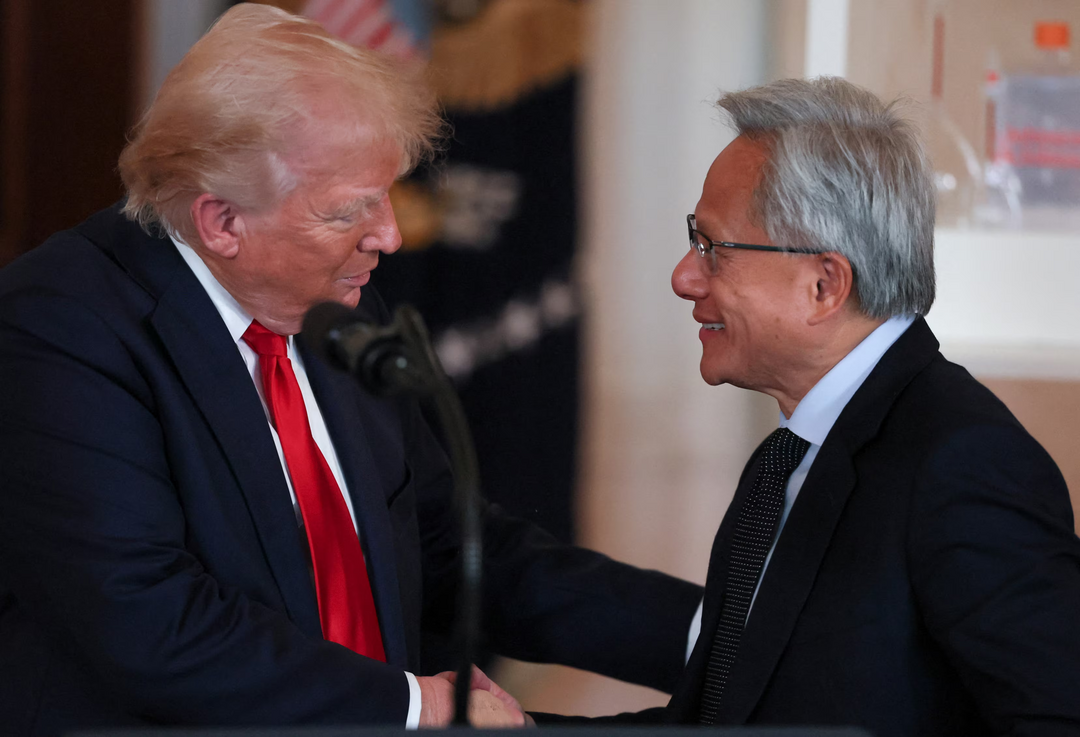
Huang’s comments came after an alleged meeting with Trump, where the NVIDIA CEO expressed his gratitude for the President’s efforts to boost the US energy sector. “He came into office and the first thing…he said was ‘drill, baby, drill’,” Huang recalled. “His point is…we need energy growth.” The NVIDIA CEO went on to explain that Trump’s policies had a direct impact on the AI industry, stating, “If not for his…policies, we’d not be able to build factories for AI…We surely wouldn’t be able to build supercomputer factories.”
To understand the significance of Huang’s comments, it’s essential to delve into the world of AI and its reliance on energy. The development and training of AI models require massive amounts of computational power, which in turn, demands significant amounts of energy. The construction of factories and data centers necessary for AI research and development is a energy-intensive process. Therefore, a stable and growing energy supply is crucial for the growth and advancement of the AI industry.
Trump’s “drill, baby, drill” energy policy, which aims to increase domestic energy production, has been a cornerstone of his administration’s economic agenda. The policy has been controversial, with critics arguing that it prioritizes fossil fuels over renewable energy sources and contributes to climate change. However, from an economic perspective, the policy has been successful in increasing US energy production, making the country a net exporter of oil and natural gas.
Huang’s comments suggest that the increased energy production resulting from Trump’s policies has had a direct impact on the AI industry. By providing a stable and growing energy supply, the US has become an attractive location for companies like NVIDIA to build factories and data centers. This, in turn, has enabled the development and training of more advanced AI models, driving innovation and growth in the industry.
The significance of Huang’s comments extends beyond the AI industry, as it highlights the complex relationship between energy policy and technological advancement. As the world becomes increasingly reliant on technology, the need for stable and sustainable energy sources will only continue to grow. The comments also underscore the importance of considering the unintended consequences of energy policies, which can have far-reaching impacts on various industries and sectors.
It’s worth noting that Huang’s comments have been met with skepticism by some, who argue that the AI industry’s growth is not solely dependent on Trump’s energy policies. Others have pointed out that the industry’s advancement is driven by a complex array of factors, including advances in hardware and software, investment in research and development, and the availability of talent and expertise.
Despite these criticisms, Huang’s comments provide valuable insight into the complex relationships between energy policy, technological advancement, and economic growth. As the world continues to grapple with the challenges of climate change, energy security, and technological innovation, the intersection of these issues will only become more critical.
In conclusion, NVIDIA CEO Jensen Huang’s comments on the impact of Trump’s energy policy on the AI industry are a timely reminder of the complex relationships between energy, technology, and economic growth. While the comments may be controversial, they highlight the importance of considering the unintended consequences of energy policies and the need for sustainable and stable energy sources to drive technological innovation. As the AI industry continues to evolve and grow, it will be essential to monitor the impact of energy policies on its development and to explore new and innovative ways to balance energy production with environmental sustainability.
About the Author