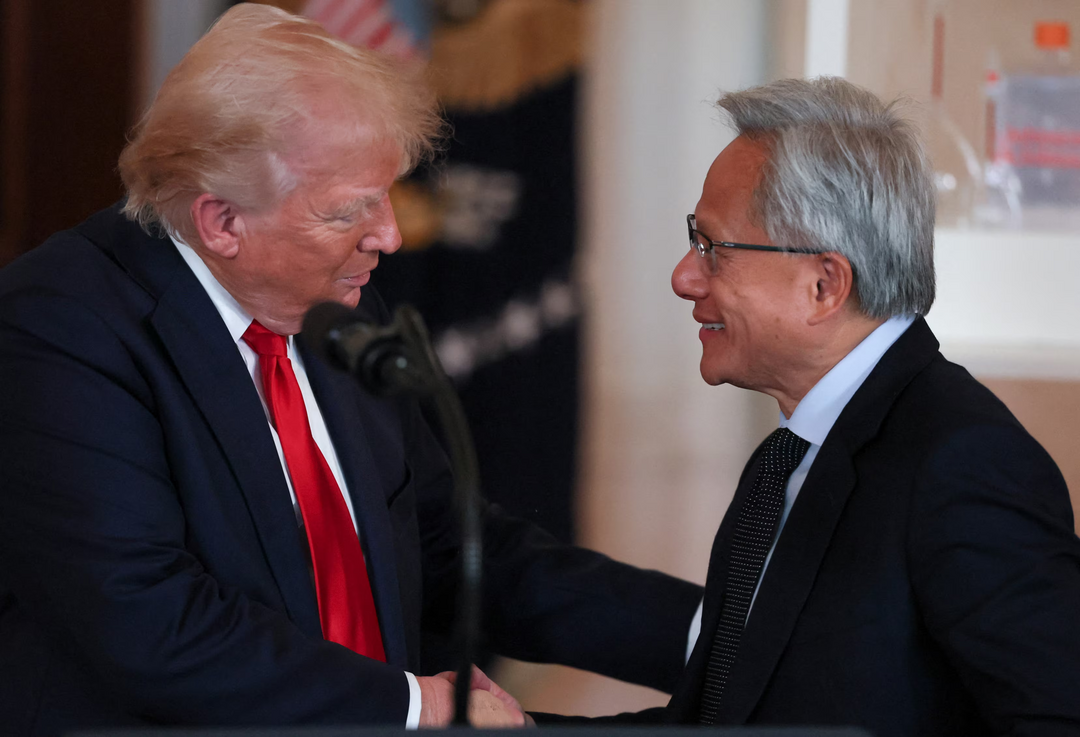
Trump’s ‘drill baby drill’ energy policy saved AI industry: Huang
The world of artificial intelligence (AI) has been rapidly evolving over the past decade, with significant advancements in computing power, data storage, and machine learning algorithms. However, according to NVIDIA CEO Jensen Huang, the AI industry owes a debt of gratitude to former US President Donald Trump’s pro-growth energy policy. In a recent statement, Huang praised Trump’s “drill, baby, drill” approach to energy production, suggesting that it played a crucial role in the development of the AI industry.
Huang’s comments came as a surprise to many, given the often-divisive nature of Trump’s presidency and the fact that the tech industry has traditionally been at odds with the former president’s policies. However, according to Huang, Trump’s emphasis on energy growth was a key factor in the development of the AI industry. “He came into office and the first thing…he said was ‘drill, baby, drill’,” Huang recalled. “His point is…we need energy growth. If not for his…policies, we’d not be able to build factories for AI…We surely wouldn’t be able to build supercomputer factories.”
Huang’s statement highlights the critical role that energy production plays in the development of AI technology. The training of AI models requires massive amounts of computing power, which in turn requires significant amounts of energy. The development of large-scale data centers, which are necessary for the training of AI models, is also heavily dependent on access to reliable and affordable energy. In this sense, Trump’s pro-growth energy policy, which aimed to increase domestic energy production and reduce reliance on foreign oil, may have inadvertently created a favorable environment for the development of the AI industry.
The impact of Trump’s energy policy on the AI industry can be seen in the rapid growth of data centers and cloud computing infrastructure over the past few years. Companies like NVIDIA, Google, Amazon, and Microsoft have invested heavily in the development of large-scale data centers, which are necessary for the training of AI models. These data centers require significant amounts of energy to power the thousands of servers and cooling systems that are necessary to keep them running. The increased availability of energy, thanks in part to Trump’s policies, has made it possible for these companies to build and operate these large-scale data centers, which in turn has driven the development of the AI industry.
It’s worth noting, however, that the relationship between Trump’s energy policy and the development of the AI industry is complex and multifaceted. While Trump’s policies may have created a favorable environment for energy production, they have also been criticized for their potential impact on the environment and public health. The increased production of fossil fuels, for example, has been linked to climate change and air pollution, which can have significant negative impacts on human health and the environment.
Despite these criticisms, Huang’s statement highlights the important role that energy production plays in the development of the AI industry. As the industry continues to grow and evolve, it will be important to consider the impact of energy production on the environment and public health. This may involve the development of more sustainable energy sources, such as solar and wind power, which can help to reduce the carbon footprint of the AI industry.
In conclusion, the development of the AI industry is a complex and multifaceted process that involves a wide range of factors, including energy production, computing power, and data storage. While Trump’s “drill, baby, drill” energy policy may have played a role in the development of the industry, it is also important to consider the potential impacts of this policy on the environment and public health. As the AI industry continues to grow and evolve, it will be important to prioritize sustainability and environmental responsibility, while also ensuring that the industry has access to the energy and resources it needs to continue innovating and developing.
About the Author