Trump’s ‘Drill Baby Drill’ Energy Policy Saved AI Industry: Huang
The artificial intelligence (AI) industry has experienced unprecedented growth in recent years, with advancements in machine learning, natural language processing, and computer vision. However, according to NVIDIA CEO Jensen Huang, the industry’s success can be attributed, in part, to the pro-growth energy policy of former US President Donald Trump. In a surprising statement, Huang credited Trump’s “drill baby drill” energy policy with saving the AI industry.
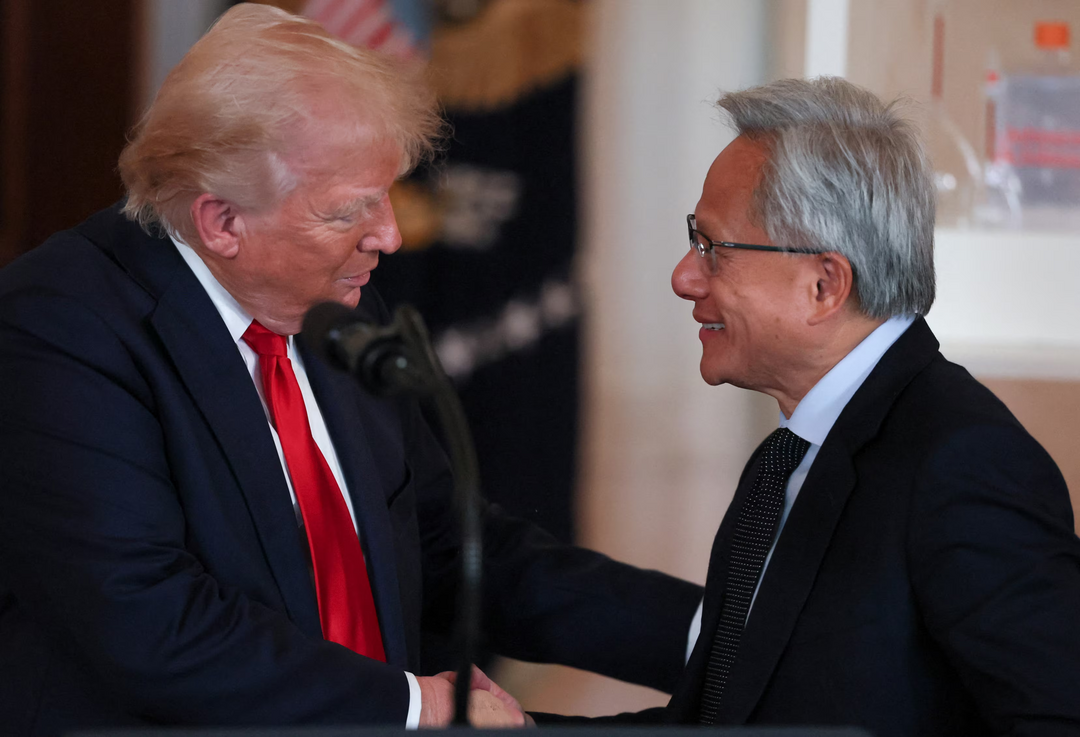
Huang’s comments came after an alleged meeting with Trump, where he praised the former President’s efforts to boost energy production in the United States. “He came into office and the first thing…he said was ‘drill, baby, drill’. His point is…we need energy growth,” Huang said. The NVIDIA CEO emphasized that Trump’s policies were instrumental in enabling the construction of factories and supercomputer facilities that are essential for the development and production of AI technologies.
The “drill baby drill” slogan, which was popularized during Trump’s 2016 presidential campaign, refers to the idea of increasing domestic oil and gas production to reduce reliance on foreign energy sources. Trump’s energy policy, which included rolling back regulations and opening up federal lands for drilling, was designed to stimulate economic growth and create jobs in the energy sector.
While Trump’s energy policy was not specifically aimed at supporting the AI industry, Huang argued that the increased energy production and infrastructure development that resulted from these policies had a positive impact on the industry. “If not for his…policies, we’d not be able to build factories for AI…We surely wouldn’t be able to build supercomputer factories,” he added.
The construction of factories and supercomputer facilities requires significant amounts of energy, which is often generated by fossil fuels. The increased energy production resulting from Trump’s policies helped to reduce energy costs and improve the reliability of the energy supply, making it more feasible for companies like NVIDIA to invest in the construction of these facilities.
The AI industry’s reliance on energy is not limited to the construction of factories and supercomputer facilities. The training of AI models, which involves processing large amounts of data, also requires significant amounts of energy. The development of more advanced AI models, such as those using deep learning, requires even more energy-intensive computing resources.
While some may argue that Trump’s energy policy was not directly aimed at supporting the AI industry, Huang’s comments highlight the interconnectedness of different sectors of the economy. The increased energy production and infrastructure development resulting from Trump’s policies had a positive impact on the AI industry, enabling companies like NVIDIA to invest in the development of new technologies and facilities.
However, it’s worth noting that the AI industry’s growth is not solely dependent on fossil fuels. Many companies, including NVIDIA, are investing in renewable energy sources, such as solar and wind power, to reduce their carbon footprint and dependence on fossil fuels. The development of more energy-efficient AI technologies, such as those using specialized AI chips, is also helping to reduce the industry’s energy consumption.
In conclusion, while Trump’s “drill baby drill” energy policy was not specifically aimed at supporting the AI industry, it had a positive impact on the industry’s growth and development. The increased energy production and infrastructure development resulting from these policies enabled companies like NVIDIA to invest in the construction of factories and supercomputer facilities, which are essential for the development and production of AI technologies. As the AI industry continues to grow and evolve, it will be important to consider the role of energy policy in supporting its development and to invest in renewable energy sources and energy-efficient technologies to reduce the industry’s carbon footprint.
About the Author