Trump’s ‘drill baby drill’ energy policy saved AI industry: Huang
The Artificial Intelligence (AI) industry has been one of the fastest-growing sectors in recent years, with advancements in machine learning, natural language processing, and computer vision. However, according to NVIDIA CEO Jensen Huang, the industry’s success can be attributed, in part, to the pro-growth energy policy of former US President Donald Trump. In a recent statement, Huang praised Trump’s “drill, baby, drill” approach to energy production, saying that it saved the AI industry.
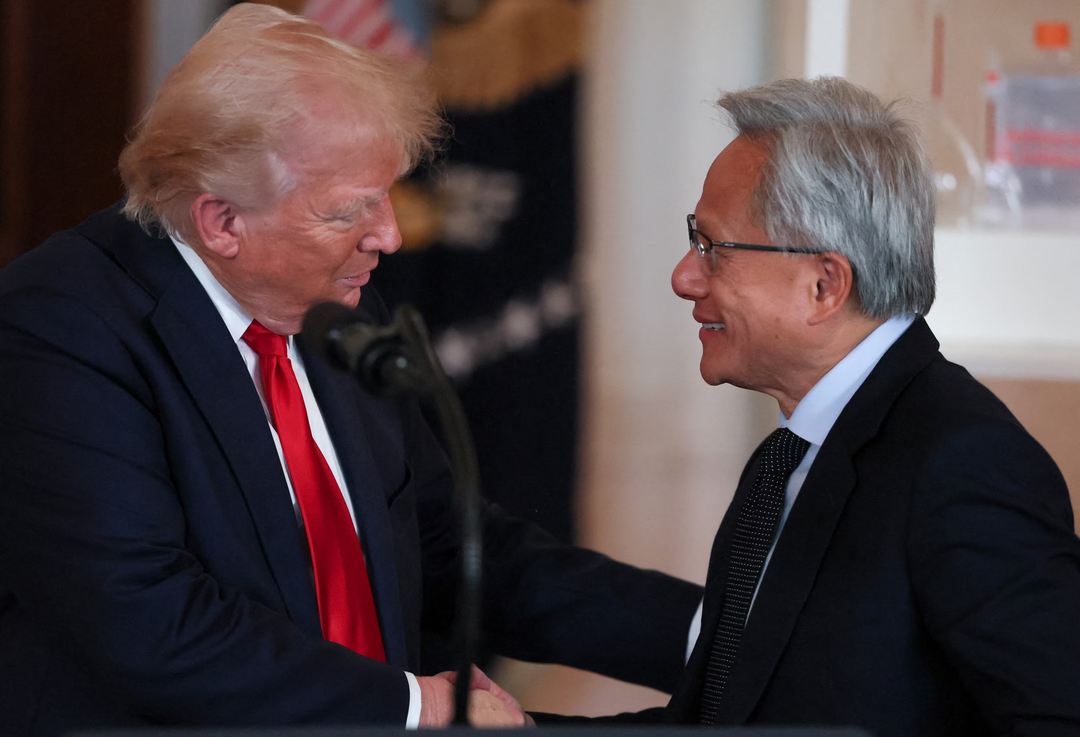
Huang’s comments came after an alleged meeting with Trump, where the NVIDIA CEO expressed his gratitude for the former President’s energy policies. “He came into office and the first thing…he said was ‘drill, baby, drill’. His point is…we need energy growth,” Huang said. “If not for his…policies, we’d not be able to build factories for AI…We surely wouldn’t be able to build supercomputer factories,” he added.
The “drill, baby, drill” slogan was a hallmark of Trump’s 2016 presidential campaign, where he advocated for increased domestic oil and gas production. The policy was aimed at reducing the country’s reliance on foreign energy sources and creating jobs in the energy sector. While the policy was met with criticism from environmental groups, it appears to have had a positive impact on the AI industry.
The connection between energy policy and the AI industry may not be immediately apparent. However, Huang’s comments highlight the importance of energy production in powering the complex algorithms and computations required for AI development. The training of AI models requires vast amounts of computational power, which in turn requires significant amounts of energy. The increased energy production resulting from Trump’s policies has enabled the AI industry to build the large-scale data centers and supercomputer factories needed to support the development of AI technologies.
The growth of the AI industry has been rapid in recent years, with the global AI market expected to reach $190 billion by 2025. The industry has seen significant investments in areas such as autonomous vehicles, healthcare, and finance, with companies like NVIDIA, Google, and Amazon leading the charge. However, the industry’s growth is not without its challenges. The development of AI technologies requires significant amounts of data, computational power, and energy, making it a resource-intensive industry.
Huang’s comments on Trump’s energy policy highlight the importance of considering the broader economic and environmental context in which the AI industry operates. While the industry’s growth has been driven by advancements in technology, it is also dependent on the availability of resources such as energy and data. The “drill, baby, drill” policy may have been controversial, but it has undoubtedly had a positive impact on the AI industry.
The impact of Trump’s energy policy on the AI industry is not limited to the United States. The increased energy production resulting from the policy has had a global impact, enabling companies around the world to develop and deploy AI technologies. The growth of the AI industry has also created new opportunities for international cooperation, with countries such as China, India, and Japan investing heavily in AI research and development.
In conclusion, the comments made by NVIDIA CEO Jensen Huang on the impact of Trump’s energy policy on the AI industry are significant. They highlight the importance of considering the broader economic and environmental context in which the industry operates. While the “drill, baby, drill” policy may have been controversial, it has undoubtedly had a positive impact on the AI industry. As the industry continues to grow and evolve, it is essential to consider the role of energy production and other resources in supporting its development.
The AI industry is expected to continue growing in the coming years, with significant investments in areas such as autonomous vehicles, healthcare, and finance. However, the industry’s growth will depend on the availability of resources such as energy and data. As such, it is essential to consider the impact of energy policies on the industry and to develop strategies that support its growth while minimizing its environmental impact.
In the end, the success of the AI industry will depend on a combination of technological advancements, economic investment, and environmental sustainability. While Trump’s energy policy may have had a positive impact on the industry, it is essential to consider the broader context in which the industry operates. By doing so, we can ensure that the AI industry continues to grow and evolve in a way that benefits both the economy and the environment.
About the Author