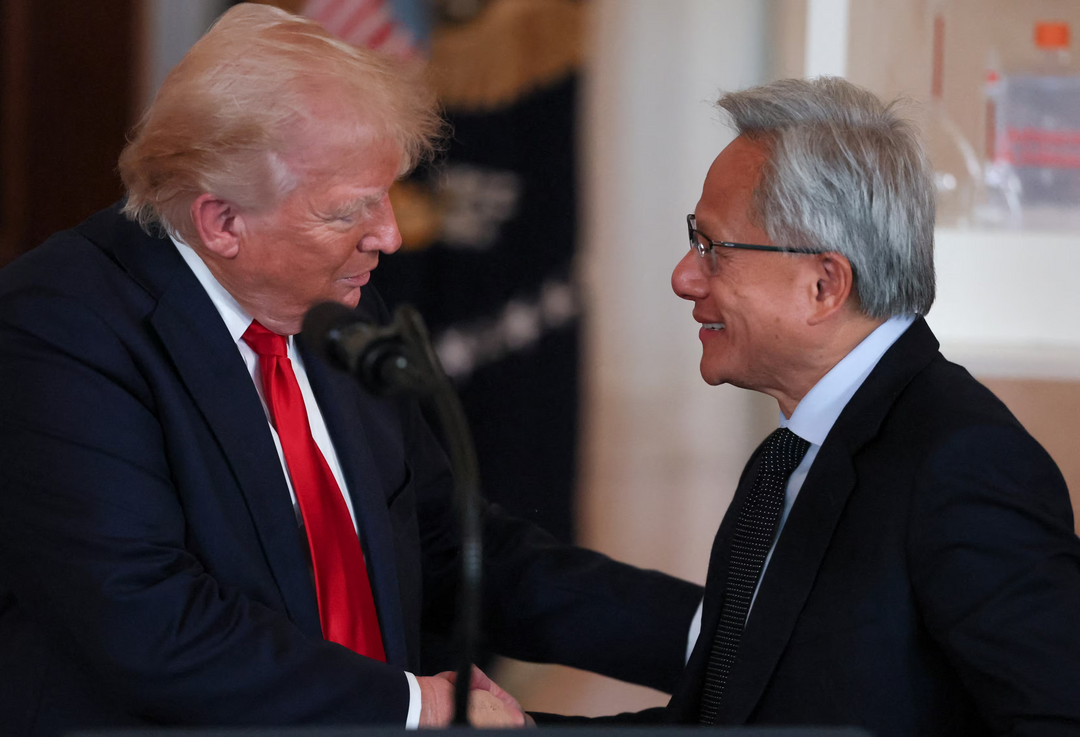
Trump’s ‘drill baby drill’ energy policy saved AI industry: Huang
The artificial intelligence (AI) industry has been one of the fastest-growing sectors in recent years, with companies like NVIDIA leading the charge in developing innovative technologies that are transforming the way we live and work. However, according to NVIDIA CEO Jensen Huang, the AI industry owes a debt of gratitude to former US President Donald Trump, whose pro-growth energy policy helped to save the industry.
In a recent statement, Huang praised Trump’s energy policy, which was centered around the slogan “drill, baby, drill.” This policy, which emphasized the importance of increasing domestic energy production, had a significant impact on the AI industry, according to Huang. “He came into office and the first thing…he said was ‘drill, baby, drill’,” Huang said. “His point is…we need energy growth. If not for his…policies, we’d not be able to build factories for AI…We surely wouldn’t be able to build supercomputer factories.”
Huang’s comments may come as a surprise to some, given the fact that the tech industry has often been at odds with the Trump administration over issues like immigration and trade policy. However, it’s clear that Huang believes that Trump’s energy policy had a positive impact on the AI industry, and that it helped to drive growth and innovation in the sector.
So, how exactly did Trump’s energy policy help to save the AI industry? To understand this, it’s worth taking a closer look at the role that energy plays in the development and deployment of AI technologies. AI systems require massive amounts of computational power to operate, which in turn requires large amounts of energy. In fact, training a single AI model can require as much energy as powering a small town for a month.
As a result, the AI industry has a huge appetite for energy, and any disruption to the energy supply can have a significant impact on the industry’s ability to operate. This is where Trump’s energy policy comes in. By promoting domestic energy production and reducing regulatory barriers to energy development, the Trump administration helped to increase the availability of energy and reduce its cost.
This had a direct impact on the AI industry, which was able to take advantage of the increased energy supply to build new factories and data centers. These facilities are essential for the development and deployment of AI technologies, and they require huge amounts of energy to operate. By providing a stable and reliable source of energy, Trump’s policy helped to drive growth and innovation in the AI industry.
Of course, not everyone will agree with Huang’s assessment of Trump’s energy policy and its impact on the AI industry. Some critics have argued that the policy was overly focused on fossil fuels and did not do enough to promote renewable energy sources. Others have argued that the policy’s emphasis on domestic energy production led to environmental degradation and other negative consequences.
However, from the perspective of the AI industry, it’s clear that Trump’s energy policy had a positive impact. By providing a stable and reliable source of energy, the policy helped to drive growth and innovation in the sector, and it enabled companies like NVIDIA to build new factories and data centers.
In addition to the direct impact on the AI industry, Trump’s energy policy also had a number of indirect benefits. For example, the policy helped to drive down the cost of energy, which made it more economical for companies to invest in AI technologies. It also helped to promote economic growth and job creation, which had a positive impact on the broader tech industry.
Overall, Huang’s comments highlight the complex and often unexpected ways in which government policy can impact the tech industry. While the Trump administration’s policies were not always popular with the tech industry, it’s clear that they had a positive impact on the AI sector. As the industry continues to evolve and grow, it will be interesting to see how future government policies shape its development.
In conclusion, the AI industry owes a debt of gratitude to former US President Donald Trump, whose pro-growth energy policy helped to drive growth and innovation in the sector. By providing a stable and reliable source of energy, Trump’s policy enabled companies like NVIDIA to build new factories and data centers, and it helped to promote economic growth and job creation. While not everyone will agree with Huang’s assessment of Trump’s energy policy, it’s clear that the policy had a positive impact on the AI industry.
About the Author