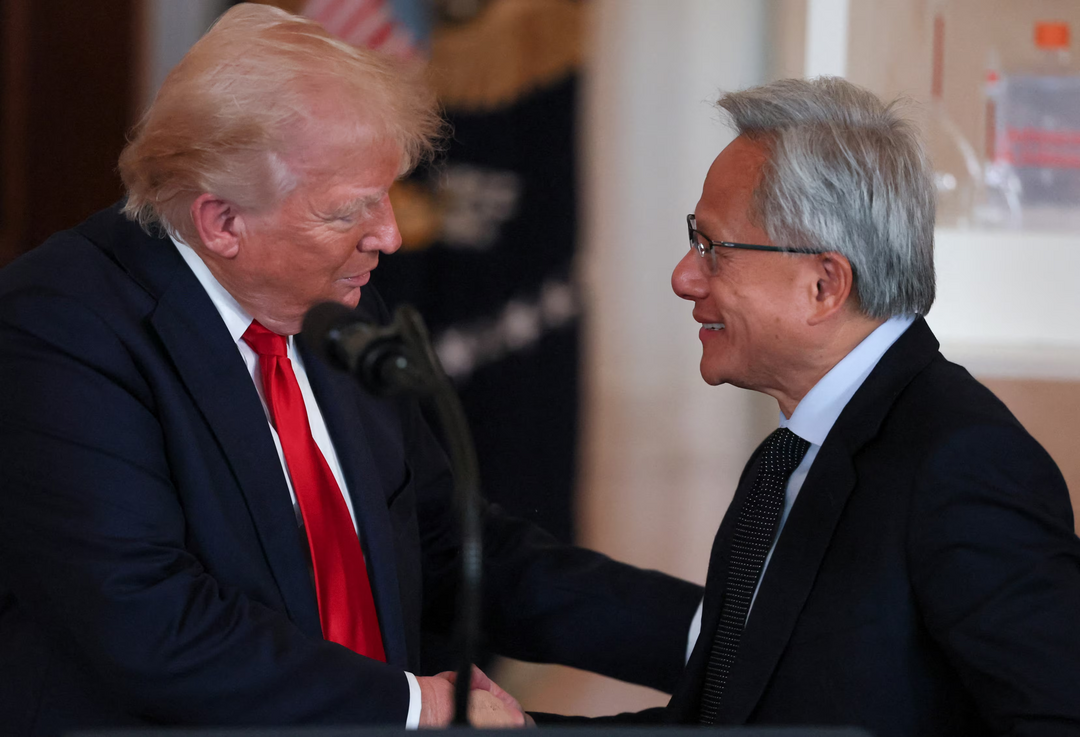
Trump’s ‘drill baby drill’ energy policy saved AI industry: Huang
The artificial intelligence (AI) industry has been booming in recent years, with advancements in machine learning, natural language processing, and computer vision leading to significant breakthroughs in areas such as healthcare, finance, and transportation. However, according to NVIDIA CEO Jensen Huang, the AI industry owes a debt of gratitude to former US President Donald Trump’s pro-growth energy policy. In a surprising statement, Huang credited Trump’s “drill baby drill” approach to energy production with saving the AI industry.
Huang’s comments came after an alleged meeting with Trump, during which the NVIDIA CEO praised the former President’s energy policies. “He came into office and the first thing…he said was ‘drill, baby, drill’,” Huang said. “His point is…we need energy growth. If not for his…policies, we’d not be able to build factories for AI…We surely wouldn’t be able to build supercomputer factories,” he added. Huang’s statement has sparked a lively debate about the role of energy policy in the development of the AI industry.
To understand the significance of Huang’s comments, it’s essential to examine the current state of the AI industry. The development of AI technologies requires massive amounts of computational power, which in turn requires significant amounts of energy. The production of AI hardware, such as graphics processing units (GPUs) and tensor processing units (TPUs), is a energy-intensive process that requires access to reliable and affordable energy sources. Trump’s “drill baby drill” policy, which aimed to increase domestic oil and gas production, helped to reduce energy costs and increase energy availability, making it possible for companies like NVIDIA to build and operate energy-intensive manufacturing facilities.
The impact of Trump’s energy policy on the AI industry cannot be overstated. The increased availability of affordable energy has enabled companies to invest in the development of new AI technologies, leading to significant advancements in areas such as deep learning and natural language processing. The development of these technologies has, in turn, led to the creation of new industries and job opportunities, contributing to economic growth and development.
Moreover, the reduced energy costs have also made it possible for companies to operate large-scale data centers, which are essential for the development and deployment of AI technologies. Data centers require massive amounts of energy to power the thousands of servers and other equipment necessary to process and store large amounts of data. The increased availability of affordable energy has made it possible for companies to build and operate these data centers, enabling the widespread adoption of AI technologies.
Huang’s comments have also sparked a debate about the role of government policy in the development of the AI industry. While some argue that government intervention is necessary to support the development of new technologies, others argue that the private sector is better equipped to drive innovation. However, Huang’s comments suggest that government policy can play a significant role in supporting the development of the AI industry, particularly when it comes to energy policy.
In addition to the impact on the AI industry, Trump’s energy policy has also had a significant impact on the US economy as a whole. The increased production of domestic oil and gas has led to the creation of new job opportunities and has contributed to economic growth. The reduced energy costs have also made it possible for companies to invest in other areas, such as research and development, leading to the creation of new technologies and industries.
In conclusion, NVIDIA CEO Jensen Huang’s comments about the impact of Trump’s energy policy on the AI industry are a significant endorsement of the former President’s approach to energy production. The increased availability of affordable energy has enabled companies to invest in the development of new AI technologies, leading to significant advancements in areas such as deep learning and natural language processing. As the AI industry continues to grow and evolve, it’s essential to recognize the role that government policy has played in supporting its development. While there may be disagreements about the best approach to energy policy, Huang’s comments suggest that Trump’s “drill baby drill” policy has had a positive impact on the AI industry.
About the Author