Trump’s ‘drill baby drill’ energy policy saved AI industry: Huang
The artificial intelligence (AI) industry has been growing at an unprecedented rate in recent years, with advancements in machine learning, natural language processing, and computer vision. However, according to NVIDIA CEO Jensen Huang, the industry owes a debt of gratitude to former US President Donald Trump. In a surprising statement, Huang credited Trump’s pro-growth energy policy with saving the AI industry.
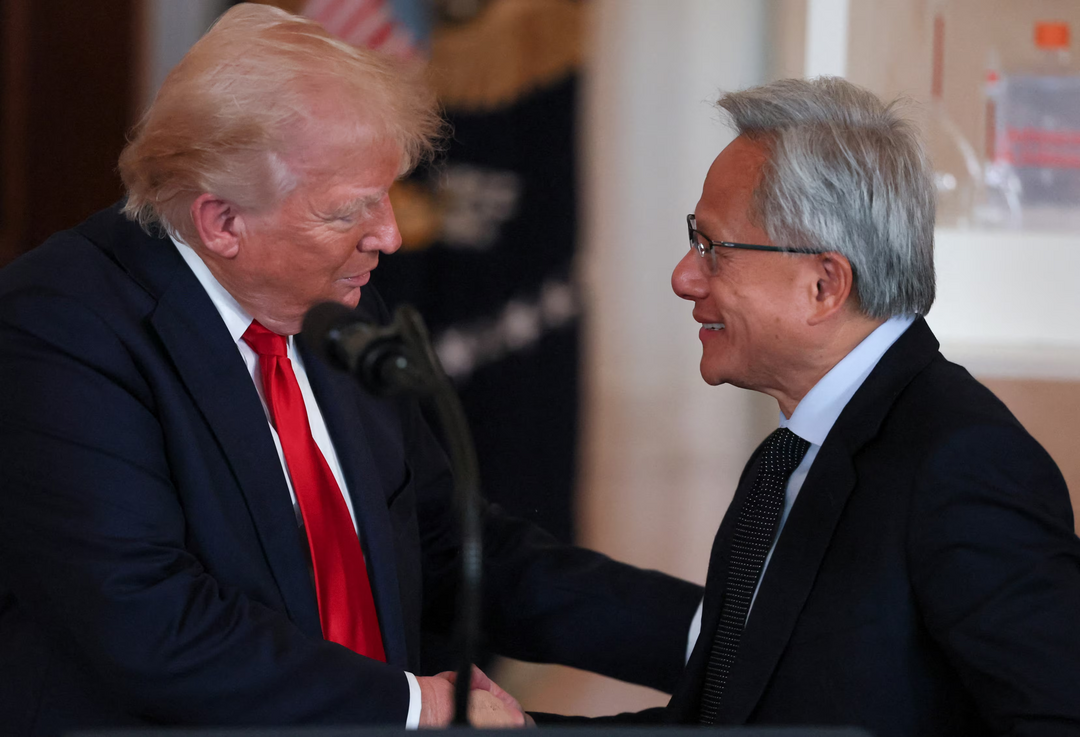
Huang’s comments came after an alleged meeting with Trump, where he praised the former President’s energy policies. “He came into office and the first thing…he said was ‘drill, baby, drill’. His point is…we need energy growth,” Huang said. “If not for his…policies, we’d not be able to build factories for AI…We surely wouldn’t be able to build supercomputer factories,” he added.
Trump’s “drill baby drill” energy policy was a cornerstone of his presidential campaign in 2016. The policy aimed to increase domestic oil and gas production, reduce reliance on foreign energy sources, and create jobs in the energy sector. While the policy was met with criticism from environmental groups, it has had a significant impact on the US energy industry.
The increased energy production and lower energy costs resulting from Trump’s policies have had a ripple effect on various industries, including the AI sector. The development and training of AI models require massive amounts of computational power, which in turn requires significant amounts of energy. The reduced energy costs have made it more feasible for companies like NVIDIA to build and operate large-scale data centers and supercomputer factories.
NVIDIA, a leader in the AI industry, has been at the forefront of developing AI technologies, including graphics processing units (GPUs) and high-performance computing hardware. The company’s products are used in a wide range of applications, from gaming and professional visualization to AI and deep learning.
The AI industry’s growth has been fueled by the increasing demand for AI-powered technologies, such as virtual assistants, self-driving cars, and predictive analytics. However, the industry’s growth is also dependent on the availability of computational resources, including energy and hardware.
Huang’s comments highlight the often-overlooked connection between energy policy and the growth of the AI industry. While the AI industry is often associated with software and algorithms, the development and deployment of AI technologies require significant amounts of energy and hardware.
The impact of Trump’s energy policy on the AI industry is not limited to NVIDIA. Other companies, such as Google, Amazon, and Microsoft, have also benefited from the increased energy production and lower energy costs. These companies have invested heavily in building large-scale data centers and supercomputer factories, which are critical infrastructure for the development and deployment of AI technologies.
While Huang’s comments have sparked debate, they highlight the importance of considering the broader economic and policy context in which the AI industry operates. The growth of the AI industry is dependent on a complex interplay of factors, including technological advancements, investment, and policy decisions.
In conclusion, NVIDIA CEO Jensen Huang’s comments highlight the unexpected connection between Trump’s “drill baby drill” energy policy and the growth of the AI industry. While the policy has been controversial, its impact on the energy sector has had a ripple effect on various industries, including the AI sector. As the AI industry continues to grow and evolve, it is essential to consider the broader policy context in which it operates.
About the Author