Techie takes control of UK firm’s site over dues, writes ‘If you need access, pay me’ on site
In a shocking turn of events, a UK-based furniture store, Joseph Smith Furniture, found itself in a precarious situation when a developer allegedly took control of the company’s website over unpaid dues. According to SEO expert Joe Youngblood, the developer, who remains unnamed, had been working on the company’s website but had not received payment for the services rendered. In a bold move, the developer decided to take matters into their own hands and gained control of the website, leaving the company in a state of crisis.
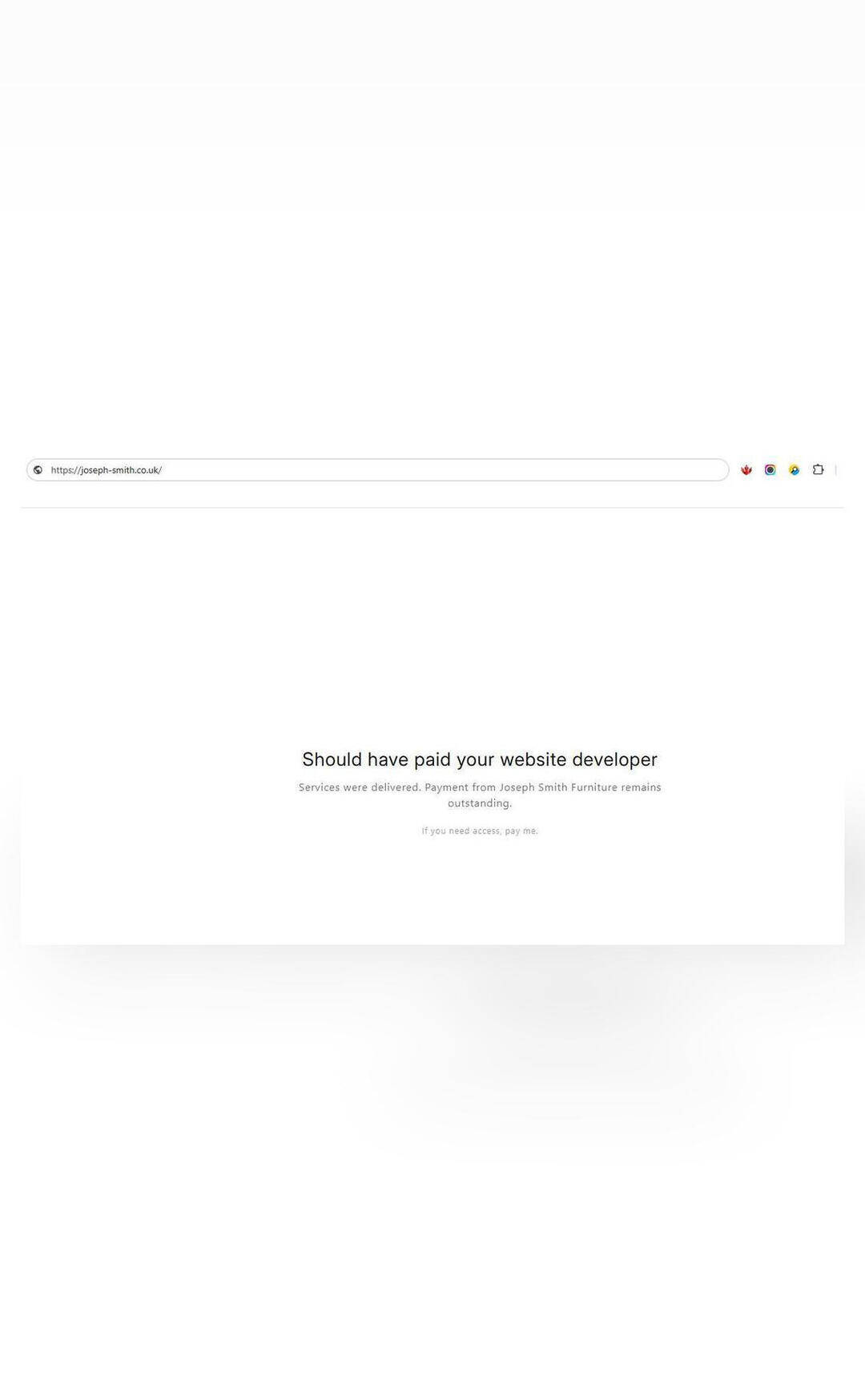
The website, which was once a vital platform for the company to showcase its products and interact with customers, was now displaying a message that read: “Should have paid your website developer. Services were delivered. Payment from Joseph Smith Furniture remains outstanding. If you need access, pay me.” This message was a clear indication that the developer was not going to back down until the company paid up. The situation highlights the importance of maintaining a good relationship with developers and ensuring that they are paid on time for their services.
The news of the website takeover spread like wildfire, with many users taking to social media to express their shock and amusement at the situation. Some users claimed that the company had gone out of business, which further added to the drama. It is unclear at this point whether the company’s financial troubles were a result of the website takeover or if the takeover was a result of the company’s existing financial struggles.
The incident raises several questions about the ethics of website development and the measures that companies can take to protect themselves from such situations. On one hand, the developer’s actions can be seen as a form of extortion, where they are holding the company’s website hostage until they receive payment. On the other hand, the developer may have felt that they had no other option but to take drastic measures to recover the payment that was owed to them.
The situation also highlights the importance of having a clear contract in place when working with developers. A well-drafted contract can help to prevent such disputes and ensure that both parties are clear about their obligations and responsibilities. In this case, it appears that the company and the developer did not have a clear agreement in place, which led to the dispute.
Furthermore, the incident shows how vulnerable companies can be to cyber attacks and website takeovers. In today’s digital age, a company’s website is often its most valuable asset, and losing control of it can have severe consequences. Companies must take measures to protect themselves from such threats, including having robust security measures in place and ensuring that their developers are trustworthy and reliable.
In conclusion, the takeover of Joseph Smith Furniture’s website by a developer over unpaid dues is a wake-up call for companies to take their relationships with developers seriously. It highlights the importance of maintaining a good relationship with developers, having clear contracts in place, and ensuring that they are paid on time for their services. The incident also shows how vulnerable companies can be to cyber attacks and website takeovers, and the need for robust security measures to protect themselves from such threats.
As the situation continues to unfold, it will be interesting to see how the company and the developer resolve their dispute. Will the company pay up, or will the developer continue to hold the website hostage? Only time will tell. One thing is for sure, however: this incident will serve as a reminder to companies to prioritize their relationships with developers and to take measures to protect themselves from such situations.
The news of the website takeover was first reported by Joe Youngblood, an SEO expert, who tweeted about the incident. According to Youngblood, the developer’s actions were a result of the company’s failure to pay for the services rendered. The tweet sparked a heated debate about the ethics of website development and the measures that companies can take to protect themselves from such situations.
As the news continues to spread, it remains to be seen how the situation will be resolved. Will the company pay up, or will the developer continue to hold the website hostage? One thing is for sure, however: this incident will serve as a reminder to companies to prioritize their relationships with developers and to take measures to protect themselves from such situations.
Source: https://x.com/YoungbloodJoe/status/2008257478975521242
About the Author