Somalians turned out to have higher IQ than we thought: Trump on $19-bn daycare fraud
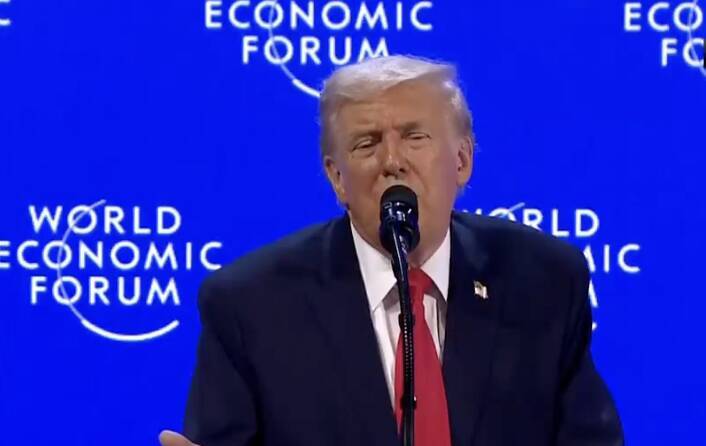
In a recent statement, US President Donald Trump sparked controversy by claiming that Somalian-Americans had committed a staggering $19-billion daycare fraud in the state of Minnesota. The comments, which were made at the World Economic Forum (WEF), have been met with widespread criticism and outrage from various quarters.
According to Trump, “Can you believe that? Somalians turned out to have a higher IQ than we thought…They are pirates.” These remarks not only perpetuate negative stereotypes about the Somali community but also demonstrate a profound lack of understanding about the complexities of the issue at hand.
Trump’s comments were not limited to the alleged daycare fraud. He also took a swipe at Ilhan Omar, a Congresswoman from Minnesota, saying, “This fake congressperson…comes from a country that’s not a country and she’s telling us how to run America.” This personal attack on Omar, who is of Somali descent, is not only unbecoming of a President but also reflects a deep-seated bias against immigrants and minority communities.
The alleged daycare fraud in Minnesota, which Trump referenced, is a complex issue that requires a nuanced understanding of the context and the facts. While it is true that there have been instances of fraud in the daycare system, it is essential to approach this issue with a critical and evidence-based perspective, rather than relying on sweeping generalizations and stereotypes.
Moreover, Trump’s comments about Somalians having a higher IQ than previously thought are not only misleading but also perpetuate a harmful narrative about the community. The idea that an entire ethnic group can be characterized by a single trait, such as intelligence, is a simplistic and inaccurate representation of the complexities of human diversity.
It is also worth noting that Trump’s comments about Somalia not being a “country” are not only factually incorrect but also reflect a profound ignorance about the history and culture of the Somali people. Somalia, like many other countries in Africa, has faced significant challenges in recent years, including conflict, poverty, and instability. However, this does not diminish the fact that it is a sovereign nation with a rich cultural heritage and a proud people.
The reaction to Trump’s comments has been swift and widespread, with many condemning his remarks as racist, xenophobic, and divisive. The Somali-American community, in particular, has been vocal in their criticism of Trump’s comments, with many expressing outrage and disappointment at the President’s words.
In a statement, the Somali-American Council of Minnesota said, “We are appalled by the President’s comments, which are not only factually incorrect but also perpetuate harmful stereotypes about our community. We demand an apology from the President and a retraction of his statements.”
The controversy surrounding Trump’s comments is a stark reminder of the deep-seated biases and prejudices that exist in our society. It is essential that we approach issues like the alleged daycare fraud with a critical and nuanced perspective, rather than relying on simplistic stereotypes and generalizations.
As we move forward, it is crucial that we prioritize empathy, understanding, and respect for all communities, regardless of their background or ethnicity. We must also hold our leaders accountable for their words and actions, and demand that they promote a message of inclusivity, diversity, and respect for all.
In conclusion, Trump’s comments about Somalians and the alleged daycare fraud in Minnesota are a stark reminder of the challenges we face as a society. It is essential that we approach these issues with a critical and nuanced perspective, rather than relying on simplistic stereotypes and generalizations. We must also prioritize empathy, understanding, and respect for all communities, regardless of their background or ethnicity.
News Source: https://x.com/atrupar/status/2013986907684839660
About the Author