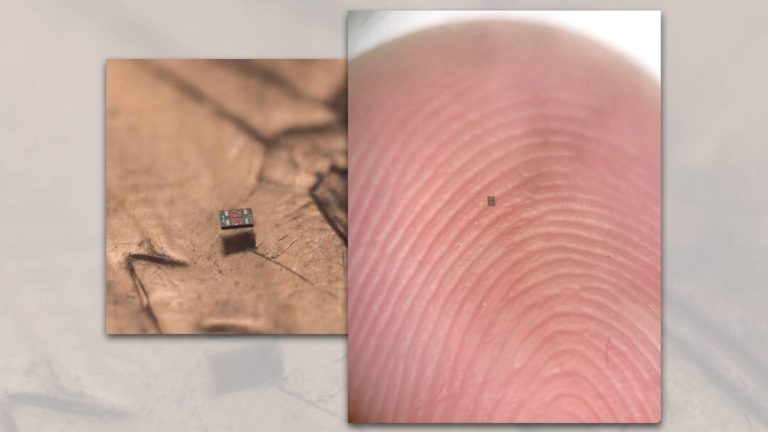
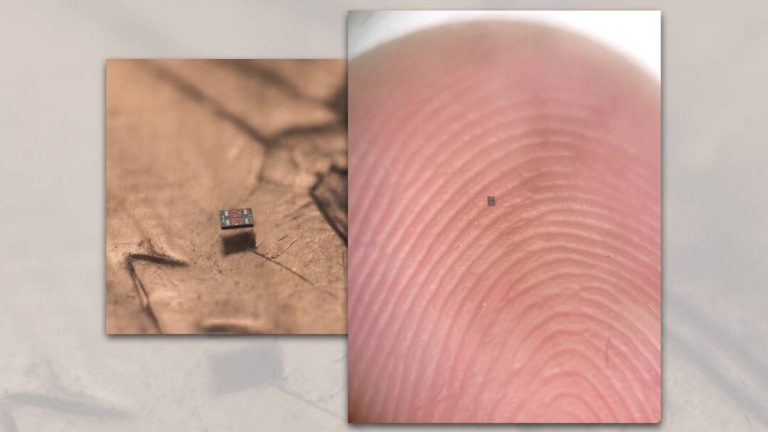
Scientists create world’s smallest programmable robots, share pics
In a groundbreaking achievement, researchers from the Universities of Pennsylvania and Michigan have successfully created the world’s smallest fully programmable and autonomous robots. These microscopic swimming machines are capable of independently sensing and responding to their surroundings, paving the way for a new era of miniaturized robotics. The robots, which measure a mere 0.2 by 0.3 by 0.05 millimeters, are barely visible to the naked eye and can be produced at a cost of just one penny per unit.
The development of these tiny robots is a significant breakthrough in the field of robotics, as it opens up new possibilities for a wide range of applications, from medical interventions to environmental monitoring. The robots’ ability to sense and respond to their environment makes them ideal for tasks that require autonomy and adaptability, such as navigating through complex systems or interacting with their surroundings.
One of the most impressive features of these robots is their ability to swim through fluids with ease, allowing them to navigate through tight spaces and reach areas that were previously inaccessible. This is made possible by the use of a unique propulsion system that utilizes the principles of fluid dynamics to generate movement. The robots’ propulsion system is powered by a tiny electric motor that creates a series of vibrations, which in turn generate a flow of fluid around the robot, allowing it to move through the surrounding environment.
The robots’ programmability is another key feature that sets them apart from other miniaturized robots. The researchers have developed a sophisticated programming language that allows users to control the robots’ movements and actions with precision. This means that the robots can be programmed to perform complex tasks, such as navigating through a maze or interacting with other robots.
The potential applications of these tiny robots are vast and varied. In the medical field, they could be used to deliver targeted treatments or diagnose diseases at the molecular level. In environmental monitoring, they could be used to track water quality or detect pollutants in the air. They could also be used in search and rescue missions, where their small size and agility would allow them to navigate through tight spaces and reach areas that are inaccessible to humans.
The development of these robots is the result of a collaborative effort between researchers from the Universities of Pennsylvania and Michigan. The team, which includes experts in robotics, materials science, and computer science, worked together to design and develop the robots’ unique propulsion system, programmability, and sensing capabilities.
The researchers used a combination of advanced materials and manufacturing techniques to create the robots’ tiny components. The robots’ bodies are made from a specialized polymer that is both flexible and durable, allowing them to withstand the stresses of swimming through fluids. The robots’ electronic components, including their tiny electric motor and sensing systems, were fabricated using advanced microfabrication techniques.
The cost of producing these robots is remarkably low, at just one penny per unit. This is due to the use of inexpensive materials and manufacturing techniques, which makes it possible to produce large quantities of the robots at a low cost. This could make the robots accessible to a wide range of users, from researchers and scientists to hobbyists and educators.
In addition to their potential applications, the robots’ small size and low cost also make them an attractive tool for education and outreach. The researchers envision using the robots as a teaching tool, allowing students to learn about robotics and programming in a hands-on and interactive way. The robots could also be used in science fairs and other public outreach events, where they could be used to demonstrate the principles of robotics and inspire young people to pursue careers in science and engineering.
Overall, the development of the world’s smallest fully programmable and autonomous robots is a significant achievement that has the potential to revolutionize a wide range of fields. From medical interventions to environmental monitoring, these tiny robots could play a major role in shaping the future of robotics and beyond.
For more information on this groundbreaking achievement, please visit the University of Pennsylvania’s website at https://www.seas.upenn.edu/stories/penn-and-umich-create-worlds-smallest-programmable-autonomous-robots/.
News Source: https://www.seas.upenn.edu/stories/penn-and-umich-create-worlds-smallest-programmable-autonomous-robots/
About the Author