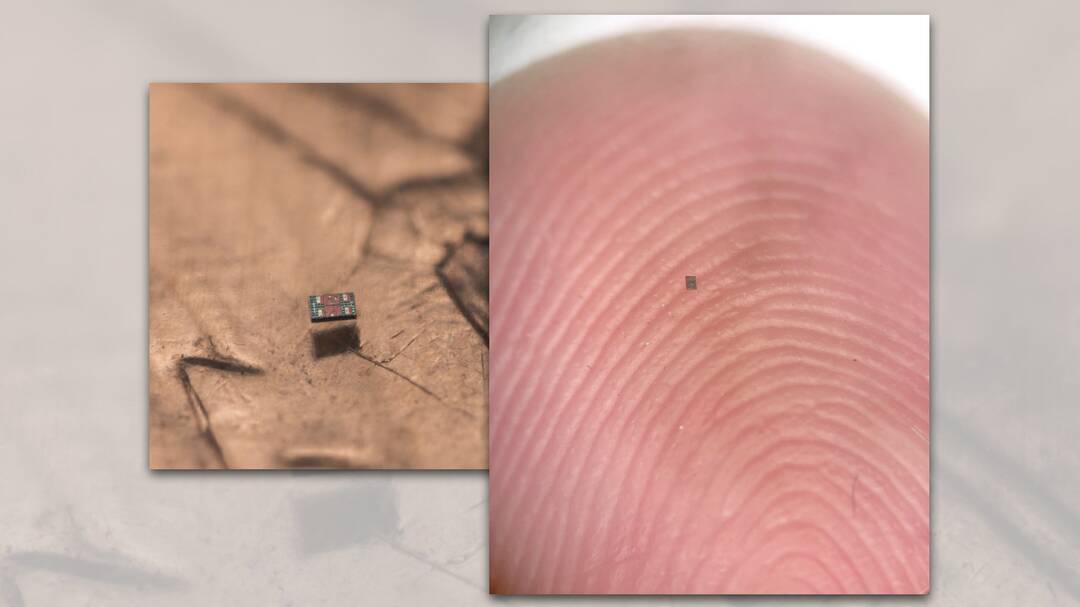
Scientists create world’s smallest programmable robots, share pics
The field of robotics has witnessed tremendous advancements in recent years, with innovations ranging from humanoid robots to miniature machines that can navigate through the human body. However, researchers from the Universities of Pennsylvania and Michigan have taken this to a whole new level by creating the world’s smallest fully programmable and autonomous robots. Measuring a mere 0.2 by 0.3 by 0.05 millimeters, these microscopic swimming machines are barely visible to the naked eye.
According to the researchers, these tiny robots can independently sense and respond to their surroundings, making them a significant breakthrough in the field of robotics. The robots are so small that they can be mass-produced at a cost of just one penny per unit, making them an attractive option for a wide range of applications.
The development of these microscopic robots is the result of a collaborative effort between the Universities of Pennsylvania and Michigan. The researchers used a combination of advanced materials and manufacturing techniques to create the robots, which are powered by a tiny motor that allows them to swim through fluids.
One of the most significant advantages of these robots is their ability to operate independently, without the need for external control. This is made possible by a sophisticated sensor system that allows the robots to detect changes in their environment and respond accordingly. For example, the robots can detect changes in temperature, light, or chemical composition, and adjust their behavior in response.
The potential applications of these microscopic robots are vast and varied. They could be used in a range of fields, including medicine, environmental monitoring, and industrial inspection. For example, they could be used to deliver targeted treatments to specific areas of the body, or to monitor water quality in remote or hard-to-reach areas.
The researchers behind the project are excited about the potential of their creation, and are already exploring new ways to use the robots. “These microscopic swimming machines can independently sense and respond to their surroundings,” they stated. “We believe that this technology has the potential to revolutionize a wide range of fields, from medicine to environmental monitoring.”
The development of these microscopic robots is also a significant achievement in terms of engineering and manufacturing. The researchers had to overcome a number of challenges to create the robots, including the need to develop new materials and manufacturing techniques that could be used to produce the robots at such a small scale.
Despite the challenges, the researchers were able to create a robot that is not only small but also highly functional. The robot is powered by a tiny motor that allows it to swim through fluids, and it is equipped with a sophisticated sensor system that allows it to detect changes in its environment.
The researchers have shared pictures of the robots, which show just how small they are. The pictures are remarkable, and they give a sense of just how tiny these machines are. The robots are so small that they are almost invisible to the naked eye, and they are only visible under a microscope.
Overall, the creation of the world’s smallest fully programmable and autonomous robots is a significant achievement that has the potential to revolutionize a wide range of fields. The robots are small, functional, and highly versatile, and they could be used in a range of applications, from medicine to environmental monitoring.
As research in this field continues to advance, we can expect to see even more innovative applications of these microscopic robots. The potential for these robots to improve our lives and our world is vast, and it will be exciting to see how they are used in the years to come.
For more information on this breakthrough, visit the University of Pennsylvania’s website, which has a detailed article on the development of these microscopic robots. The article includes pictures and videos of the robots, as well as interviews with the researchers behind the project.
News Source: https://www.seas.upenn.edu/stories/penn-and-umich-create-worlds-smallest-programmable-autonomous-robots/
About the Author