Roblox ban in Russia sparks protest, debate on censorship
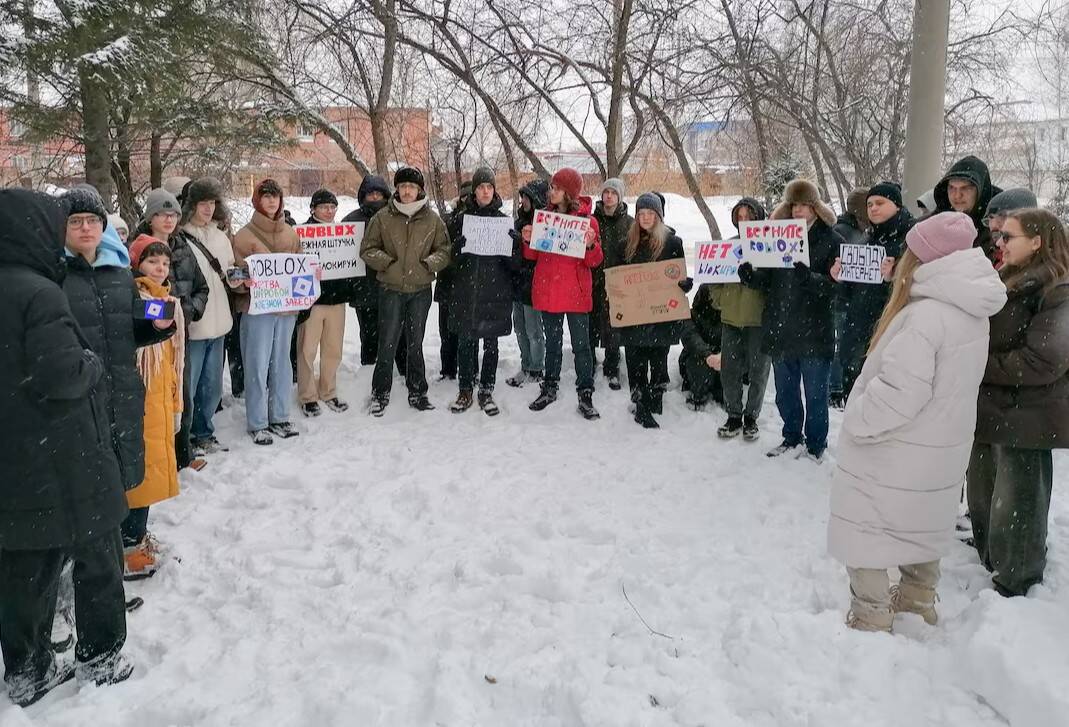
In a move that has sparked widespread opposition and debate, Russia has banned the popular online gaming platform Roblox in the country. The ban, which was implemented in early December, has been met with rare protests in the Siberian city of Tomsk, where gamers and parents have taken to the streets to express their discontent. The ban on Roblox has also triggered a debate over censorship, child safety, and the effectiveness of such measures in a world where children can easily bypass bans using Virtual Private Networks (VPNs).
The Russian government has cited concerns over child safety and the potential for the platform to be used for malicious activities as the reason for the ban. However, many have questioned the motives behind the ban, arguing that it is a form of censorship and an attempt to restrict access to information and entertainment. The ban on Roblox is not an isolated incident, as Russia has a history of blocking or restricting access to social media platforms such as Snapchat, Facebook, Instagram, and YouTube.
The protests in Tomsk, which have been largely peaceful, have brought together gamers, parents, and concerned citizens who are opposed to the ban. Many of the protesters have argued that the ban is unfair and that it restricts their freedom to access information and entertainment. Some have also pointed out that the ban is ineffective, as children can easily bypass it using VPNs or other technologies.
The debate over censorship and child safety has been ongoing for some time, with many arguing that such measures are necessary to protect children from harmful content and activities. However, others have argued that censorship can be overly broad and restrictive, and that it can have unintended consequences. The ban on Roblox has brought this debate to the forefront, with many questioning whether such measures are effective in achieving their intended goals.
One of the main concerns surrounding the ban on Roblox is the potential impact on children’s access to information and entertainment. Roblox is a popular platform that allows users to create and play a wide range of games, and it has been praised for its creativity and educational value. By banning the platform, the Russian government may be restricting children’s access to a valuable resource that can help them develop important skills such as problem-solving and critical thinking.
Another concern is the potential for the ban to drive children to seek out alternative platforms that may be less safe and less regulated. By pushing children towards unregulated platforms, the ban may actually increase the risk of children being exposed to harmful content and activities. This is a particular concern in Russia, where the government has a history of restricting access to information and entertainment.
The use of VPNs and other technologies to bypass bans has also been a topic of debate. Many children and young people are tech-savvy and can easily use these technologies to access banned platforms and content. This has raised questions about the effectiveness of censorship and the ability of governments to restrict access to information and entertainment.
In addition to the concerns over child safety and censorship, the ban on Roblox has also sparked a debate over the role of technology in society. Many have argued that technology should be used to promote freedom and creativity, rather than to restrict access to information and entertainment. The ban on Roblox has been seen as a step backwards in this regard, and it has sparked calls for greater freedom and openness in the use of technology.
In conclusion, the ban on Roblox in Russia has sparked a rare protest and debate over censorship, child safety, and the effectiveness of such measures. While the Russian government has cited concerns over child safety as the reason for the ban, many have questioned the motives behind it and argued that it is a form of censorship. The use of VPNs and other technologies to bypass bans has also raised questions about the effectiveness of censorship and the ability of governments to restrict access to information and entertainment. As the debate over censorship and child safety continues, it is clear that the ban on Roblox is just one part of a larger conversation about the role of technology in society and the balance between freedom and regulation.
News Source: https://www.reuters.com/business/media-telecom/russian-ban-roblox-gaming-platform-sparks-rare-protest-2025-12-14/
About the Author