Roblox ban in Russia sparks protest, debate on censorship
In a move that has sent shockwaves through the online gaming community, Russia has banned the popular gaming platform Roblox, sparking rare protests in the Siberian city of Tomsk. The ban, which was implemented in early December, has not only led to opposition from gamers but has also triggered a debate over censorship, child safety, and the effectiveness of such measures in the digital age.
Roblox, a platform that allows users to create and play a wide range of games, has been a favorite among children and teenagers in Russia, with millions of active users. However, the Russian government has cited concerns over the platform’s content, claiming that it promotes “gay propaganda” and “extremist ideologies.” The ban is part of a broader crackdown on social media platforms and online content, with Russia having previously blocked or restricted access to platforms like Snapchat, Facebook, Instagram, and YouTube.
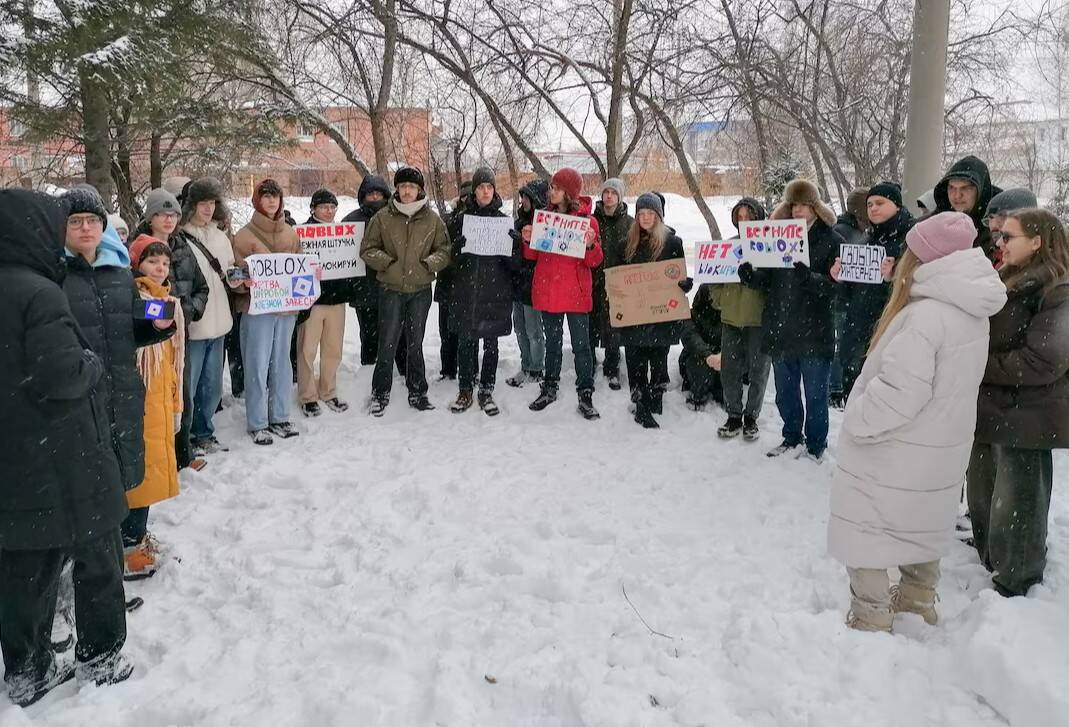
The protests in Tomsk, a city in western Siberia, were a rare display of public dissent in a country where opposition to government policies is often met with repression. The protesters, mostly young people, gathered in the city’s central square, holding signs and chanting slogans against the ban. The protests were peaceful, but they highlight the depth of feeling among Russians who feel that the government is overstepping its bounds by restricting their access to online content.
The ban on Roblox has also sparked a debate over censorship and child safety. While the Russian government claims that the platform is not suitable for children, many parents and experts argue that the ban is an overreaction. They point out that Roblox has a robust system of moderation and content controls, which are designed to protect children from inappropriate content.
Moreover, the ban has raised questions about the effectiveness of censorship in the digital age. With the widespread availability of virtual private networks (VPNs) and other tools that can bypass internet restrictions, many children are likely to find ways to access Roblox and other banned platforms anyway. This has led some to argue that the ban is not only unnecessary but also counterproductive, as it may drive children to seek out more unsavory content online.
The debate over censorship and child safety is not unique to Russia, of course. Governments around the world are grappling with the challenges of regulating online content and protecting children from harm. However, the Russian government’s approach has been criticized for being heavy-handed and overly broad. By banning entire platforms, rather than targeting specific types of content, the government may be inadvertently driving children to seek out more extreme or unsavory content online.
The ban on Roblox has also highlighted the tension between the Russian government’s desire to control the online narrative and the growing demand for online freedom and autonomy. As the internet becomes an increasingly important part of modern life, people are pushing back against government efforts to restrict their access to online content. The protests in Tomsk are a testament to this growing desire for online freedom, and they may be a harbinger of more widespread opposition to government censorship in the future.
In conclusion, the ban on Roblox in Russia has sparked a rare protest and a heated debate over censorship, child safety, and the effectiveness of such measures. While the Russian government claims that the ban is necessary to protect children, many experts and parents argue that it is an overreaction that may drive children to seek out more unsavory content online. As the world becomes increasingly digital, governments must find a balance between regulating online content and protecting children, while also respecting the rights of citizens to access information and express themselves online.
About the Author